An interpretation of Xenophon's Anabasis of Cyrus, paralleling the text to Machiavelli's The Prince, and focusing on the question: How did the Socratic education help Xenophon reconcile morality with effectiveness, the noble with the good, as a ruler?
Hace 25 años, el cirujano Pedro Clarós decidió salir de su zona de confort en su clínica privada de Barcelona para prestar ayuda a personas sin recursos.
This unique collection of essays focuses on various aspects of Plato's Philosophy of Art, not only in The Republic , but in the Phaedrus, Symposium, Laws and related dialogues.
Paidea, the yearning for, and display of knowledge, reached its' height as a cultural concept in the works of the Second Sophistic, an elite literary and philosophical movement seeking to ape the style and achievements of the 5th and 4th centuries BC.
Caesars »Commentarii über den Gallischen Krieg« sind eines der berühmtesten Werke der lateinischen Literatur, geschrieben vom prominentesten Römer aller Zeiten mit sich selbst als Hauptperson, gelesen von Millionen in Antike und Moderne, verehrt, imitiert, parodiert – und in ihrer Bewertung hochumstritten.
This book provides close historical, theological and cultural analyses of an important, but neglected, Late Antique writer, Isaac of Antioch, who was active during the second half of the fifth century.
This book explores the different functions and metaphorical concepts of alchemy in fourteenth- and fifteenth-century Middle English poetry and bridges them together with the exempla tradition in late medieval English literature.
This collection of essays, the result of a 2006 conference at the University of Wales in Lampeter, look at the influence of philosophical texts on the ancient novel.
This innovative collection explores the vital role played by fictional narratives in Christian and Jewish self-fashioning in the early Roman imperial period.
Intertextuality has been recognised as an important feature of ancient prose fiction and yet it has only received sporadic attention in modern scholarship, despite the recent explosion of interest in the ancient novels.
This is the OCR-endorsed publication from Bloomsbury for the Latin A-Level (Group 4) prescription of Ovid's Heroides, giving full Latin text, commentary and vocabulary for Heroides I lines 1 68, and Heroides VII lines 1 140, with a detailed introduction that also covers the prescribed text to be read in English.
This is the OCR-endorsed publication from Bloomsbury for the Latin AS and A-Level (Group 1) prescription of Cicero's Pro Cluentio, sections 1 7 and 10 11, and the A-Level (Group 2) prescription of sections 27 32 and 35 37, giving full Latin text, commentary and vocabulary, with a detailed introduction that also covers the prescribed poems to be read in English for A Level.
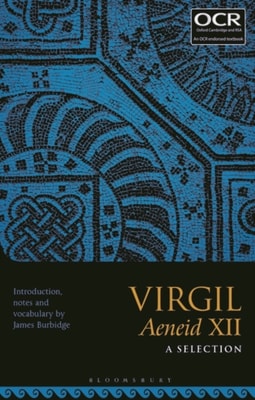
This is the OCR-endorsed publication from Bloomsbury for the Latin AS and A-Level (Group 3) prescription of Aeneid Book XII, lines 1 106, 614 727, and the A-Level (Group 4) prescription of Aeneid Book XII, lines 728 952, giving full Latin text, commentary and vocabulary, with a detailed introduction that also covers the prescribed text to be read in English for A Level.
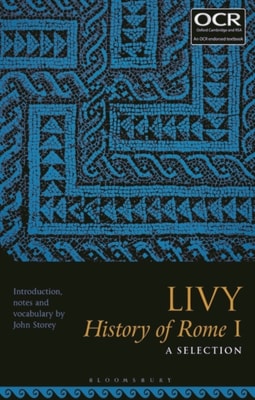
This is the OCR-endorsed publication from Bloomsbury for the Latin A-Level (Group 2) prescription of Livy's History of Rome, Book I, giving full Latin text, commentary and vocabulary for chapters 53 54, 56 (haec agenti ) 60, with a detailed introduction that also covers the prescribed text to be read in English.
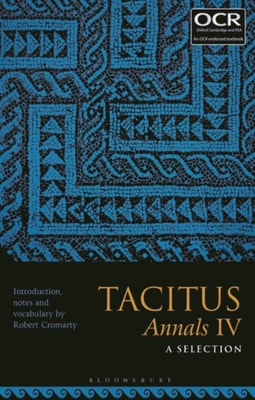
This is the OCR-endorsed publication from Bloomsbury for the Latin AS and A-Level (Group 1) prescription of Tacitus' Annals IV, sections 1 4 ( non adversus habebatur), 7 12, and 39 41, and the A-Level (Group 2) prescription of sections 52 54, 57 60, 67 71 and 74 75, giving full Latin text, commentary and vocabulary, with a detailed introduction that also covers the prescribed sections to be read in English for A Level.
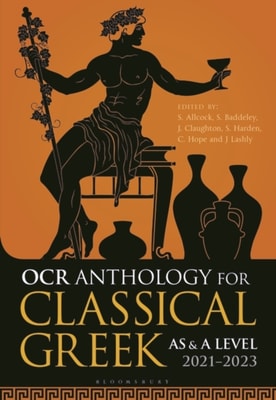
PLEASE NOTE that due to the previous text options being set for an extra exam year (summer 2021 for AS; summer 2022 for A Level) the dates given in the title, on the cover and inside this book are incorrect.
This is the OCR-endorsed publication from Bloomsbury for the Latin AS and A-Level (Group 3) prescription of Catullus' poems 5, 6, 7, 8, 10, 11, 17, 40, 70, 76, 85, 88, 89, 91 and 107, and the A-Level (Group 4) prescription of poems 1, 34, 62 and 64 lines 124 264, giving full Latin text, commentary and vocabulary, with a detailed introduction that also covers the prescribed poems to be read in English for A Level.
This collection of fourteen original essays by leading authorities offers, for the first time, a comprehensive overview of the significant authors and important aspects of fifteenth-century English poetry.
700 years after Dante Alighieri's death, this book intertwines the voice of the great poet with that of an exceptional contemporary, Marco Polo, who was equally curious about the geography of both earthly and celestial worlds.
A first-of-its-kind combination of the legendary wisdom stories of Islam's great comic foil with spiritual insights for seekers of all traditions-or none.
A fascinating insider's account of Sufi life in contemporary EgyptFor centuries Sufism-Islamic mysticism-held a major place in Islamic spirituality, intellectual life, and popular religion.
Holyer an Gof Winner 2024: Non-Fiction Class 5a Sacrament an Alter (The Sacrament of the Altar) is a Cornish patristic catena selected and translated from Foxe s Book of Martyrs, which is attached to the translation of Bishop Bonner s Homilies in the Tregear Manuscript (BL Add.
In this volume, John Farrell shows that political utopias-societies with laws and customs designed to short-circuit the foibles of human nature for the benefit of our collective existence-have a perennial opponent, the honor-based culture of aristocracy that dominated most of the world from ancient times into early modernity and whose status-based competitive psychology persists to the present day.
In this volume, John Farrell shows that political utopias-societies with laws and customs designed to short-circuit the foibles of human nature for the benefit of our collective existence-have a perennial opponent, the honor-based culture of aristocracy that dominated most of the world from ancient times into early modernity and whose status-based competitive psychology persists to the present day.
Often described as a period of decline and decadence, the history of the Byzantine Empire under the emperors of the Palaiologan dynasty (1261-1453) has undergone a considerable historiographical revival that has allowed this deeply negative image to be nuanced.
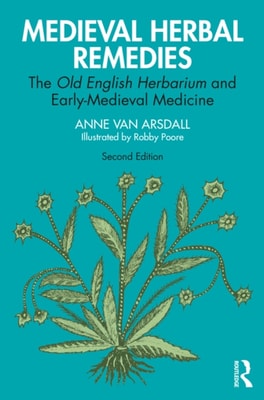
Featured here is a modern translation of a medieval herbal, with a study showing how this technical treatise on herbs was turned into a literary curiosity in the nineteenth century.
Featured here is a modern translation of a medieval herbal, with a study showing how this technical treatise on herbs was turned into a literary curiosity in the nineteenth century.