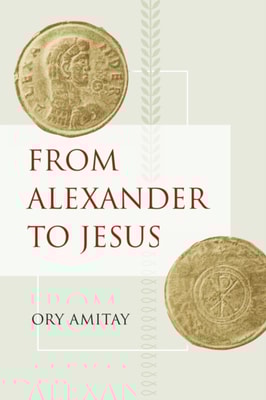
A compelling account of Christianity’s Jewish beginnings, from one of the world’s leading scholars of ancient religion How did a group of charismatic, apocalyptic Jewish missionaries, working to prepare their world for the impending realization of God’s promises to Israel, end up inaugurating a movement that would grow into the gentile church?
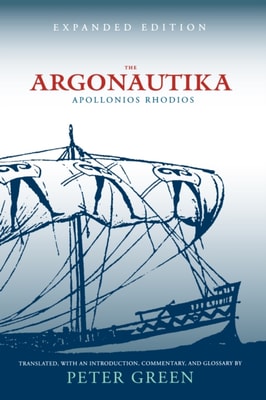
The Argonautika, the only surviving epic of the Hellenistic era, is a retelling of the tale of Jason and the Golden Fleece, probably the oldest extant Greek myth.
One of the oldest extant works of Western literature, the Iliad is a timeless epic poem of great warriors trapped between their own heroic pride and the arbitrary, often vicious decisions of fate and the gods.
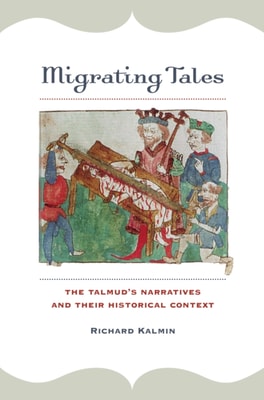
Migrating Tales situates the Babylonian Talmud, or Bavli, in its cultural context by reading several rich rabbinic stories against the background of Greek, Syriac, Arabic, Persian, and Mesopotamian literature of late antiquity and the early Middle Ages, much of it Christian in origin.
Scholars have long recognized the relevance to Christianity of the many stories surrounding the life of Alexander the Great, who claimed to be the son of Zeus.
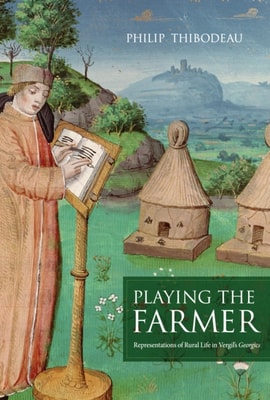
Playing the Farmer reinvigorates our understanding of Vergil's Georgics, a vibrant work written by Rome's premier epic poet shortly before he began the Aeneid.
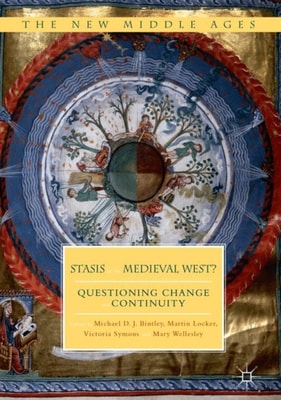
This volume questions the extent to which Medieval studies has emphasized the period as one of change and development through reexamining aspects of the medieval world that remained static.
This fascinating cultural and intellectual history focuses on education as practiced by the imperial age Romans, looking at what they considered the value of education and its effect on children.
Sufism is often understood to be the mystical dimension of Islam, and many works have focused on the nature of "e;mystical experiences"e; and the relationship between man and God.
The origins of present-day Ibero-American racialization can be traced to the period when Europe straddled the boundary between the Middle Ages and the era of New World exploration.
This book explores the influence of literacy on eleventh and twelfth-century life and though on social organization, on the criticism of ritual and symbol, on the rise of empirical attitudes, on the relationship between language and reality, and on the broad interaction between ideas and society.
This introduction to Greek tragedy, the origin of much of our modern drama, is the work of a remarkable scholar who is also a practical man of theater.
Ajax, the archetypal Greek warrior, has over the years been trivialized as a peripheral character in the classics through Hollywood representations, and by the use of his name on household cleaning products.
Focusing on modern-day fiction set in the Middle Ages or that incorporates medieval elements, this study examines storytelling components and rhetorical tropes in more than 60 works in five languages by more than 40 authors.
This book takes on a key problem in the history of drama: the 'exceptional' staging of the life of Catherine of Siena by a female actor and a female patron in 1468 Metz.
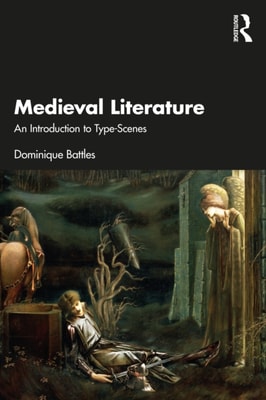
This is the first book-length exploration of the type-scenes of western medieval literature from the ninth to the fifteenth centuries, spanning both the Latinate and Germanic traditions.
From medieval contemplation to the early modern cosmopoetic imagination, to the invention of aesthetic experience, to nineteenth-century decadent literature, and to early-twentieth century essayistic forms of writing and film, Niklaus Largier shows that mystical practices have been reinvented across the centuries, generating a notion of possibility with unexpected critical potential.
This book provocatively argues that much of what English writers of the seventeenth, eighteenth and nineteenth centuries remembered about medieval English geography, history, religion and literature, they remembered by means of medieval and modern Scandinavia.
Translated for the first time from the original Persian into English, these selected treatises from Aziz O-Din Nasafi's thirteenth-century work The Perfect Being provide a fascinating and rare, yet applicable, introduction to Sufism.
Hamlet stands as a high water mark of canonical art, yet it has equally attracted rebels and experimenters, those avant-garde writers, dramatists, performers, and filmmakers who, in their adaptations and appropriations, seek new ways of expressing innovative and challenging thoughts in the hope that they can change perceptions of their own world.
By focusing on one literary character, as interpreted in both verbal art and visual art at a point midway in time between the author's era and our own, this study applies methodology appropriate for overcoming limitations posed by historical periodization and by isolation among academic specialities.