From Pulitzer Prize-winner Garry Wills, the story of Augustine's ConfessionsIn this brief and incisive book, Pulitzer Prize-winning historian Garry Wills tells the story of the Confessions--what motivated Augustine to dictate it, how it asks to be read, and the many ways it has been misread in the one-and-a-half millennia since it was composed.
How the Ottomans refashioned and legitimated their rule through mystical imageries of authorityThe medieval theory of the caliphate, epitomized by the Abbasids (750-1258), was the construct of jurists who conceived it as a contractual leadership of the Muslim community in succession to the Prophet Muhammed's political authority.
In his play Bacchae, Euripides chooses as his central figure the god who crosses the boundaries among god, man, and beast, between reality and imagination, and between art and madness.
Recognizing Persius is a passionate and in-depth exploration of the libellus--or little book--of six Latin satires left by the Roman satirical writer Persius when he died in AD 62 at the age of twenty-seven.
A major reinterpretation of Horace's famous literary manualFor two millennia, the Ars Poetica (Art of Poetry), the 476-line literary treatise in verse with which Horace closed his career, has served as a paradigmatic manual for writers.
A groundbreaking biography that recreates the cosmopolitan world in which a wine merchant's son became one of the most celebrated of all English poets More than any other canonical English writer, Geoffrey Chaucer lived and worked at the centre of political life-yet his poems are anything but conventional.
This book takes on a key problem in the history of drama: the 'exceptional' staging of the life of Catherine of Siena by a female actor and a female patron in 1468 Metz.
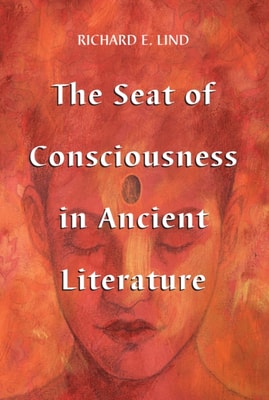
For early civilizations, consciousness and the sense of self were experienced as located in the center of the body, most often near to or within the physical heart.
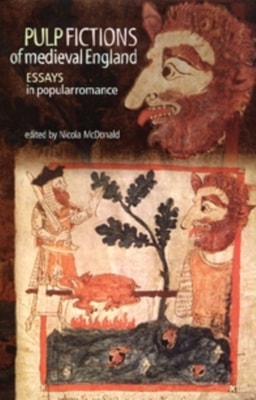
Pulp Fictions of Medieval England demonstrates that popular romance not only merits and rewards serious critical attention, but that we ignore it to the detriment of our understanding of the complex and conflicted world of medieval England.
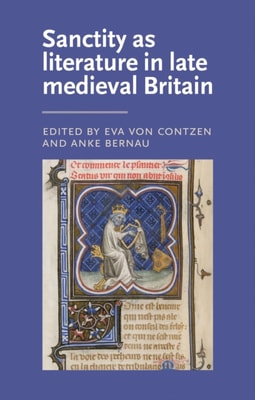
This collection explores some of the many ways in which sanctity was closely intertwined with the development of literary strategies across a range of writings in late medieval Britain.
This collection explores some of the many ways in which sanctity was closely intertwined with the development of literary strategies across a range of writings in late medieval Britain.
Author of The Canterbury Tales and foundation of the English literary tradition, Geoffrey Chaucer has been popular with readers, writers and scholars for over 600 years.
Long before the Romantics embraced nature, people in the West saw the human and nonhuman worlds as both intimately interdependent and violently antagonistic.
Women Mystics and Sufi Shrines in India combines historical data with years of ethnographic fieldwork to investigate women's participation in the culture of Sufi shrines in India and the manner in which this participation both complicates and sustains traditional conceptions of Islamic womanhood.
Sufi Aesthetics argues that the interpretive keys to erotic Sufi poems and their medieval commentaries lie in understanding a unique perceptual experience.
The scribes of early medieval England wrote out their vernacular poems using a format that looks primitive to our eyes because it lacks the familiar visual cues of verse lineation, marks of punctuation, and capital letters.
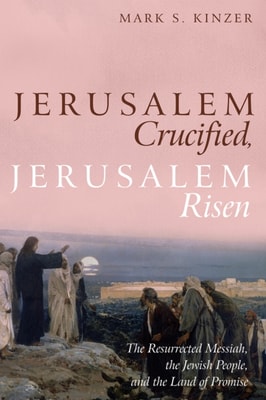
The good news (euangelion) of the crucified and risen Messiah was proclaimed first to Jews in Jerusalem, and then to Jews throughout the land of Israel.
Paul's letter to the Philippians has often been read as one of the apostle's clearest denials of his (previous) Jewish identity in order to preempt the "e;Judaizing"e; tactics of false teachers who might infiltrate the congregation.
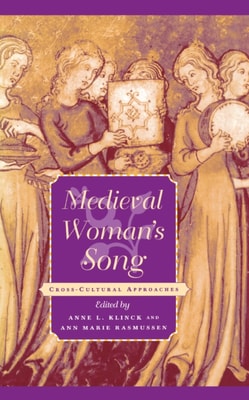
The number of surviving medieval secular poems attributed to named female authors is small, some of the best known being those of the trobairitz the female troubadours of southern France.
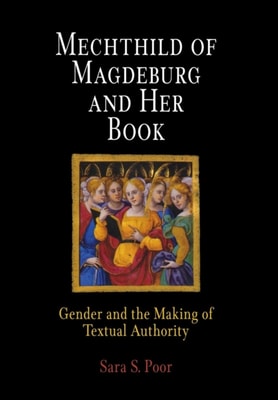
Sometime around 1230, a young woman left her family and traveled to the German city of Magdeburg to devote herself to worship and religious contemplation.
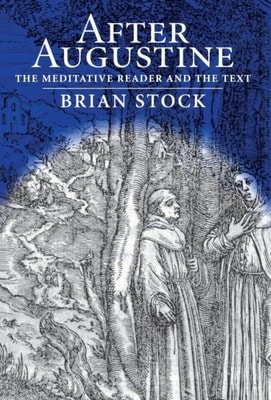
Augustine of Hippo was the most prolific and influential writer on reading between antiquity and the Renaissance, though he left no systematic treatise on the subject.
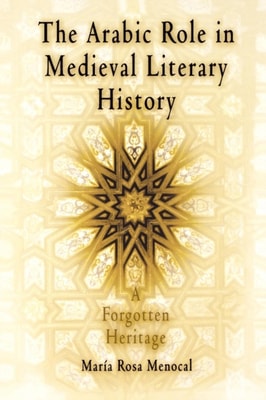
Arabic culture was a central and shaping phenomenon in medieval Europe, yet its influence on medieval literature has been ignored or marginalized for the last two centuries.
Mit diesem Band liegt erstmalig eine literarische Analyse der beiden Konzepte ergi und níð vor, die das Gesamtcorpus der Isländersagas in den Blick nimmt.
The origins of satyr drama, and particularly the reliability of the account in Aristotle, remains contested, and several of this volume's contributions try to make sense of the early relationship of satyr drama to dithyramb and attempt to place satyr drama in the pre-Classical performance space and traditions.
This book meets the need to revise the standard interpretations of an apparently aporetic dialogue, full of eloquent silences and tricky suggestions, as it explores, among many other topics, the dramatis personae, including Plato's self-references behind the scene and the role of Socrates on stage, the question of method and refutation and the way dialectics plays a part in the dialogue.