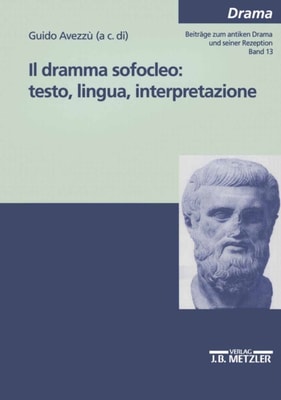
Dieser Band vereint die überarbeiteten Beiträge, die auf einer internationalen Tagung zu dem griechischen Tragiker Sophokles in Verona im Jahr 2002 gehalten wurden.
Wenn die Getreidelieferungen aus den Provinzen ausblieben, wurde es für 95 Prozent der Bevölkerung des antiken Rom eng; nur eine dünne Oberschicht konnte den sprichwörtlichen Tafelluxus der Römer zelebrieren.
This book explores the insights that Cultural Astronomy provides into the classical Roman world by unveiling the ways in which the Romans made use of their knowledge concerning the heavens, and by shedding new light on the interactions between astronomy and heritage in ancient Roman culture.
Affect Theory and Literary Critical Practice develops new approaches to reading literature that are informed by the insights of scholars working in affect studies across many disciplines, with essays that consider works of fiction, drama, poetry and memoir ranging from the medieval to the postmodern.
This book explores the insights that Cultural Astronomy provides into the classical Roman world by unveiling the ways in which the Romans made use of their knowledge concerning the heavens, and by shedding new light on the interactions between astronomy and heritage in ancient Roman culture.
This volume explores film and television sources in problematic conversation with classical antiquity, to better understand the nature of artistic reception and classical reception in particular.
This book offers a provocative and groundbreaking re-appraisal of the demands of acting ancient tragedy, informed by cutting-edge scholarship in the fields of actor training, theatre history, and classical reception.
This book critically explores the development of radical criminology through a range of written Ancient Greek works including epic and lyrical poetry, drama and philosophy, across different chapters.
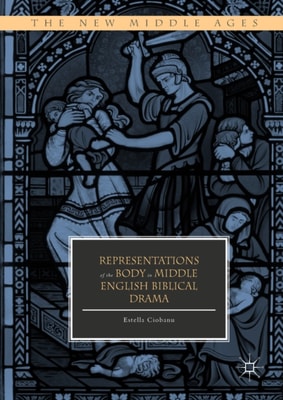
Representations of the Body in Middle English Biblical Drama combines epistemological enquiry, gender theory and Foucauldian concepts to investigate the body as a useful site for studying power, knowledge and truth.
Samson and Delilah in Medieval Insular French investigates several different adaptations of the story of Samson that enabled it to move from a strictly religious sphere into vernacular and secular artworks.
Whereas traditional scholarship assumed that William Shakespeare used the medieval past as a negative foil to legitimate the present, Shakespeare, Catholicism, and the Middle Ages offers a revisionist perspective, arguing that the playwright valorizes the Middle Ages in order to critique the oppressive nature of the Tudor-Stuart state.
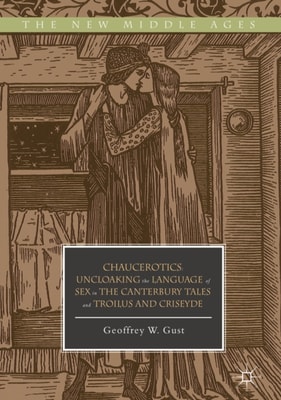
Chaucerotics examines the erotic language in Chaucerian literature through a unique lens, utilizing the tools of "e;pornographic literary theory"e; to open up Chaucer's ribald poetry to fresh modes of analysis.
This book offers a discussion of the kalam cosmological argument, and presents a defence of a version of that argument after critically evaluating three of the most important versions of the argument.
The historical relationship between the Catalan and Occitan languages had a definitive impact on the linguistic identity of the powerful Crown of Aragon and the emergent Spanish Empire.
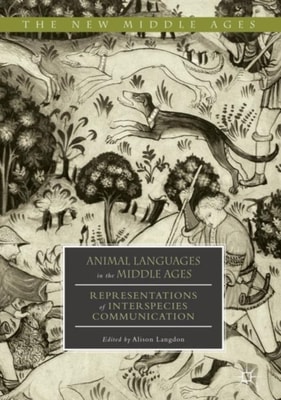
The essays in this interdisciplinary volume explore language, broadly construed, as part of the continued interrogation of the boundaries of human and nonhuman animals in the Middle Ages.
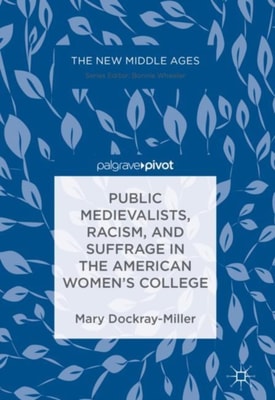
This study, part of growing interest in the study of nineteenth-century medievalism and Anglo-Saxonism, closely examines the intersections of race, class, and gender in the teaching of Anglo-Saxon in the American women's colleges before World War I, interrogating the ways that the positioning of Anglo-Saxon as the historical core of the collegiate English curriculum also silently perpetuated mythologies about Manifest Destiny, male superiority, and the primacy of northern European ancestry in United States culture at large.
Byzantine Ecocriticism: Women, Nature, and Power in the Medieval Greek Romance applies literary ecocriticism to the imaginative fiction of the Greek world from the twelfth to fifteenth centuries.
This book explores the tangled relationship between literary production and epistemological foundation as exemplified in one of the masterpieces of Italian literature.