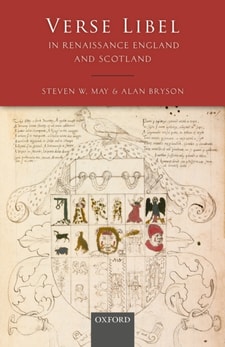
In Renaissance England and Scotland, verse libel was no mere sub-division of verse satire but a fully-developed, widely-read poetic genre in its own right.
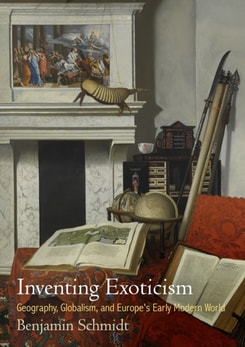
As early modern Europe launched its multiple projects of global empire, it simultaneously embarked on an ambitious program of describing and picturing the world.
In classical mythology Astraea, the goddess of justice, chastity, and truth, was the last of the immortals to leave Earth with the decline of the ages.
If there is one thing that people agree about concerning the massive, leaderless, spontaneous protests that have spread across the globe over the past decade, it's that they were failures.
If there is one thing that people agree about concerning the massive, leaderless, spontaneous protests that have spread across the globe over the past decade, it's that they were failures.
This volume tackles a quickly-evolving field of inquiry, mapping the existing discourse as part of a general attempt to place current developments in historical context; at the same time, breaking new ground in taking on novel subjects and pursuing fresh approaches.
This volume tackles a quickly-evolving field of inquiry, mapping the existing discourse as part of a general attempt to place current developments in historical context; at the same time, breaking new ground in taking on novel subjects and pursuing fresh approaches.
**Shortlisted for Waterstones Book of the Year**The Penguin Classics Book is a reader's companion to the largest library of classic literature in the world.
One of the most important works of the Enlightenmentin the first new, unabridged English translation in more than two centuriesPublished in four volumes between 1784 and 1791, Herder's Ideas for the Philosophy of the History of Mankind is one of the most important works of the Enlightenmenta bold, original, and encyclopedic synthesis of, and contribution to, the era's philosophical debates over nature, history, culture, and the very meaning of human experience.
The unlikely story of how Americans canonized Adam Smith as the patron saint of free marketsOriginally published in 1776, Adam Smith's The Wealth of Nations was lauded by America's founders as a landmark work of Enlightenment thinking about national wealth, statecraft, and moral virtue.
A panoramic history of American individualism from its nineteenth-century origins to today's bitterly divided politicsIndividualism is a defining feature of American public life.
This book explores the meaning of 'influence', which has played a central role in the formation of the canon, or tradition, of Western political thought.
An accessible and authoritative new history of French literature, written by a highly distinguished transatlantic group of scholarsThis book provides an engaging, accessible, and exciting new history of French literature from the Renaissance through the twentieth century, from Rabelais and Marguerite de Navarre to Samuel Beckett and Assia Djebar.
The decades following the end of World War II witnessed the establishment of a large and diverse German-American scholarly community studying modern German history.
A reassessment of how the legacy of ancient philosophy functioned in early modern EuropeIn his Nicomachean Ethics, Aristotle affirms that despite his friendship with Plato, he was a better friend of the truth.
In Peripheral Desires, Robert Deam Tobin charts the emergence, from the 1830s through the early twentieth century, of a new vocabulary and science of human sexuality in the writings of literary authors, politicians, and members of the medical establishment in German-speaking central Europeand observes how consistently these writers, thinkers, and scientists associated the new nonnormative sexualities with places away from the German metropoles of Berlin and Vienna.
As the Ottoman Empire advanced westward from the fourteenth to the sixteenth centuries, humanists responded on a grand scale, leaving behind a large body of fascinating yet understudied works.
This volume sheds a new light on Philosophical Investigations, Ludwig Wittgenstein's master opus, by taking a new approach to its first stretch (sections 1-88), with special emphasis on its atypical opening.
A study of the cultural mechanisms in early modern Spain that led to the translation, imitation and selective adoption of the values embodied by the Italian Renaissance.
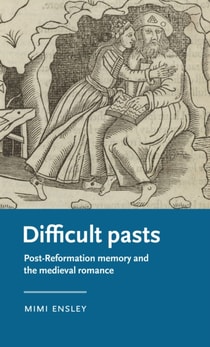
An examination of sixteenth-century quest narratives, focussing on their conscious use of a medieval tradition to hold a mirror up to contemporary culture.
An intellectual history of the late Roman Republicand the senators who fought both scholarly debates and a civil warIn The Roman Republic of Letters, Katharina Volk explores a fascinating chapter of intellectual history, focusing on the literary senators of the mid-first century BCE who came to blows over the future of Rome even as they debated philosophy, history, political theory, linguistics, science, and religion.
Antisemitismus ist ein vielschichtiges Phänomen, das sich in der Vergangenheit stets an neue gesellschaftliche Verhältnisse anpassen konnte, ohne seinen Wesenskern als (Pseudo-)Rebellions-Ideologie gegen die kapitalistische Moderne zu verlieren.
The first book in English to examine Leon Battista Alberti's major literary works in Latin and Italian, which are often overshadowed by his achievements in architectureLeon Battista Alberti (14041472) was one of the most prolific and original writers of the Italian Renaissancea fact often eclipsed by his more celebrated achievements as an art theorist and architect, and by Jacob Burckhardt's mythologizing of Alberti as a Renaissance or Universal Man.
This carefully crafted ebook: "e;Shakespeare's Christmas Gift to Queen Bess"e; is formatted for your eReader with a functional and detailed table of contents.
This meticulously edited "e;THOMAS MORE Premium Edition "e; is formatted for your eReader with a functional and detailed table of contents:Utopia (1516) The History of King Richard the Third (c.
Medieval romances were widely condemned by early modern thinkers: the genre of questing knights and marvellous adventure was decried as bloody, bawdy and superstitious.
A uniquely personal account of the life and enduring legacy of the Renaissance libraryWith the advent of print in the fifteenth century, Europe's cultural elite assembled personal libraries as refuges from persecutions and pandemics.