British Fictions of the Sixties focuses on the major socio-political changes that marked the sixties in relationship to the development of literature over the decade.
The 1990s violence in the Former Yugoslavia, the worst in Europe since World War II, triggered the conversion of multi-ethnic, multi-religious, and cosmopolitan areas of idiosyncratic and independent socialism into regions of xenophobic nationalism, wars, and, afterwards, Western-style democracy and capitalism.
Modernist troublemaker in the 1890s, Nobel Prize winner in 1920, and indefensible Nazi sympathiser in the 1930s and 40s, Knut Hamsun continues to provoke condemnation, apologia and critical confusion.
Roth and Trauma: The Problem of History in the Later Works (1995-2010) moves beyond a critical reception of Philip Roth's recent fiction that has focused primarily on an interest in post WWII America.
Look Back in Anger is one of the few works of drama that are indisputably central to British culture in general, and its name is one of the most well-known in postwar cultural history.
Defying critical suggestions that the pastoral elegy is obsolete, Iain Twiddy reveals the popularity of the form in the work of major contemporary poets Seamus Heaney, Ted Hughes and Paul Muldoon, Michael Longley, Douglas Dunn and Peter Reading.
An examination of developments in contemporary narrative, placing them in the context of wider social, cultural and technological trends, using a case-study approach.
At first glance, Samuel Beckett's writing-where scenes of violence and cruelty often provide the occasion for an unremittingly bleak comedy-would seem to offer the reader few examples of ethical conduct.
This study approaches the fiction of the 1930s through critical debates about genre, language and history, setting these in their original context, and discussing the generic forms most favoured by novelists at the time.
Reader's Guides provide a comprehensive starting point for any advanced student, giving an overview of the context, criticism and influence of key works.
Margaret Atwood's popular dystopian novel A Handmaid's Tale, engages the reader with a broad range of issues relating to power, gender and religious politics.
From its growth in Europe in the nineteenth century, detective fiction has developed into one of the most popular genres of literature and popular culture more widely.
Introduces the work of James Joyce, the literary, historical and political contexts in which he wrote and his critical reception up to the present day.
From its growth in Europe in the nineteenth century, detective fiction has developed into one of the most popular genres of literature and popular culture more widely.
Long before John Barth announced in his famous 1967 essay that late 20th-century fiction was 'The Literature of Exhaustion,' authors have been retelling and recycling stories.
Ted Hughes is widely regarded as a major figure in twentieth-century poetry, but the impact of Hughes's class background on his work has received little attention.
This innovative monograph focuses on a contemporary form of computer-based literature called 'literary hypertext', a digital, interactive, communicative form of new media writing.
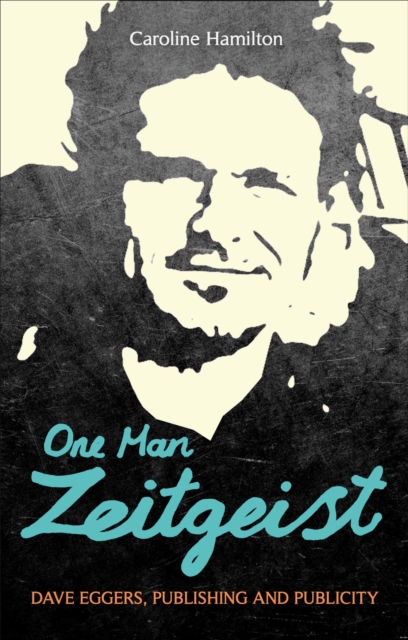
One Man Zeitgeist: Dave Eggers, Publishing and Publicity undertakes the first extensive analysis of the works of Dave Eggers, an author who has grown from a small-time media upstart into one of the most influential author-publishers of the twenty-first century.
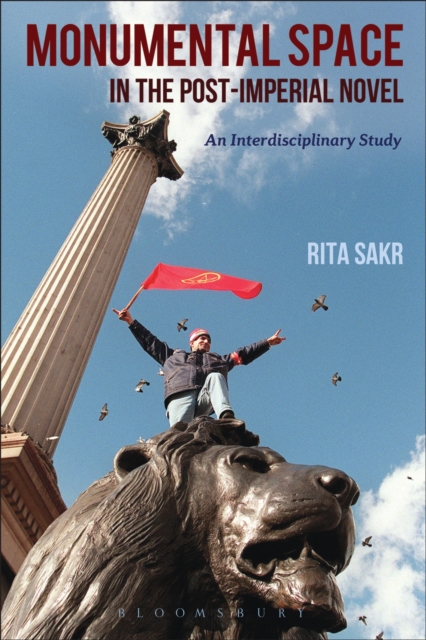
There has been a proliferation in recent scholarship of studies of monuments and their histories and of theoretical positions that shed light on aspects of their meanings.
Closer emerged as one of the most successful plays of the 1990s, and one with a continuing afterlife through the academy award nominated film adaptation in 2004.
Asked in 2006 about the philosophical nature of his fiction, the late American writer David Foster Wallace replied, "e;If some people read my fiction and see it as fundamentally about philosophical ideas, what it probably means is that these are pieces where the characters are not as alive and interesting as I meant them to be.
The first female Chair of the Royal Society of Literature and translated into thirteen languages, Maggie Gee is writing the Victorian condition-of-England novel for 21st-century Britain.
This collection of critical essays on the American novelist Bret Easton Ellis examines the novels of his mature period: American Psycho (1991), Glamorama (1999), and Lunar Park (2005).
Literature and Culture Handbooks are an innovative series of guides to major periods, topics and authors in British and American literature and culture.
A comprehensive reference guide to the published writings of Graham Greene, this book surveys not only Greene's literary work - including his fiction, poetry and drama - but also his other published writings.