The essays in this volume read the Shakespeare films of the 1990s as key instruments with which western culture confronts the anxieties attendant upon the transition from one century to another.
Taking a wide-ranging intertextual approach, Richard Hillman sets Early Modern English play-texts against political and cultural discourses concerning France, as these informed contemporary English consciousness.
Written in hypertext and read from a computer, hypertext novels exist as a collection of textual fragments, which must be pieced together by the reader.
Following the spirit of Benjamin's Arcades Project, this book acts as a kaleidoscope of change in the 21st century, tracing its different reflections in the international contemporary while seeking to understand individual/collective reactions to change through a series of creative methodologies.
Examining some of the most iconic texts in English theatre history, including Titus Andronicus and The Changeling, this book, now in paperback with a new Preface, reveals the pernicious erasure of rape and violence against women in the early modern era and the politics and ethics of rehearsing these negotiations on the 20th and 21st century stages.
Starting with a re-examination of the role of the colonial/racial Other in mainstream Gothic (colonial) fiction, this book goes on to engage with the problem of narrating the 'subaltern' in the post-colonial context.
The first study of the depictions of the Ancient World on the Victorian and Edwardian stage, this book analyzes plays set in and dramatising the histories of Greece, Rome, Egypt, Babylon and the Holy Land.
This book analyses the representation of the past and the practice of historiography in the fiction and critical writings of Virginia Woolf, and draws parallels between Woolf's historiographical imagination and the thought of Walter Benjamin, the German philosopher of history and key theorist of modernity.
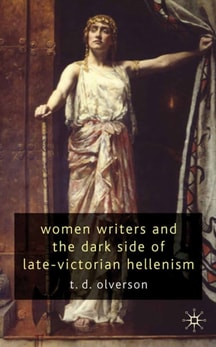
Examining the appropriation of transgressive, violent female figures from ancient Greek literature and myth by late Victorian writers, Olverson reveals the extent to which ancient antagonists like the murderous Medea and the sinister Circe were employed as a means to protest against and comment upon contemporary social and political institutions.
A detailed study of an increasingly popular genre, this book offers readings of a group of significant and representative works, drawing on a range of interpretative strategies to examine the ways in which the contemporary historical novel engages with questions of nation and identity to illuminate Britain's post-imperial condition.
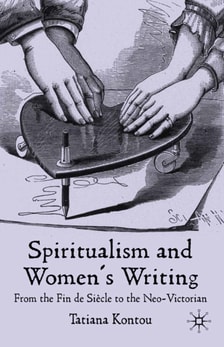
Using a wide range of unexplored archival material, this book examines the 'spectral' influence of Victorian spiritualism and Psychical Research on women's writing, analyzing the ways in which modern writers have both subverted and mimicked nineteenth century sources in their evocation of the seance.
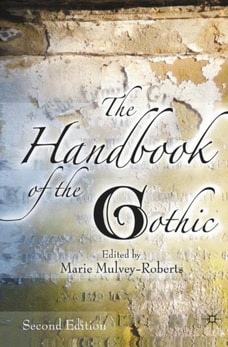
This revised new edition of The Handbook of the Gothic contains over one hundred entries on Gothic writers, themes, terms, concepts, contexts and locations, featuring new entries on writers including Stephen King and Wilkie Collins, new genres and a new Preface which situates the handbook within current studies of the Gothic.
This book is an assessment of narrative technique in contemporary British fiction, focusing on the experimental use of the demotic voice (regional or national dialects).
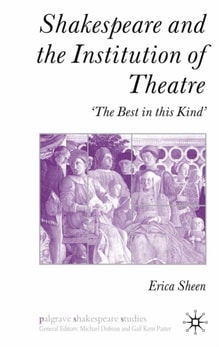
This innovative book offers an interdisciplinary analysis of Shakespearean theatre, presented in a series of imaginative readings of plays from every period of the playwright's career, from Two Gentlemen of Verona and The Taming of the Shrew to King Lear and The Tempest , mapping a new approach to ideas of the theatre as an institution.
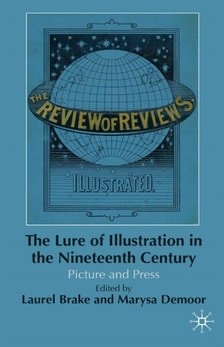
This volume tackles the subject of illustration, technically, metaphorically and historically in nineteenth-century periodicals, displaying the ubiquity of the visual in the press: the articles cover material illustration, graphics, and design and metaphorical use of images in the letterpress, offering specific examples and theoretical approaches.
In this bold intervention into the understanding of the diasporic experience within cultural studies, McCarthy challenges a critical position emergent over the last thirty years (what he calls the 'new marginalism').
Privacy is not often thought of as a marker of modernity but a look at British women's writing of the early twentieth century suggests that it should be so.
Building on recent work on Victorian print culture and the turn toward material historical research in modernist studies, this collection extends the frontiers of scholarship on the 'Atlantic scene' of publishing, exploring new ways of grappling with the rapidly changing universe of print at the turn of the twentieth century.
This book addresses works of the European Renaissance as they relate both to the world of their origins and to a modern culture that turns to the early moderns for methodological provocation and renewal.
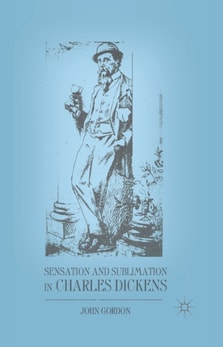
This book explores three crucial stages in Dickens' on-going voyage of discovery into what has been called the 'hidden springs' of his fiction; arguing that in three of Dickens best known novels, we witness Dickens responding to some identifiable force represented as coming from underneath the ground plan of the book in question.
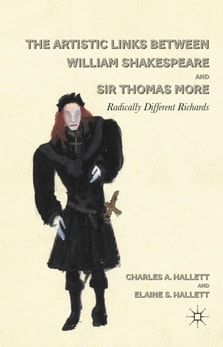
The Halletts' investigation differs from anything that has been written about the relationship between Thomas More and William Shakespeare in that it approaches the subject from a dramaturgical point of view.
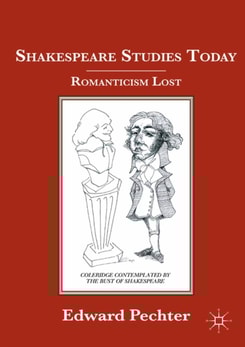
The Romantics invented Shakespeare studies, and in losing contact with our origins, we have not been able to develop an adequate alternative foundation on which to build our work.
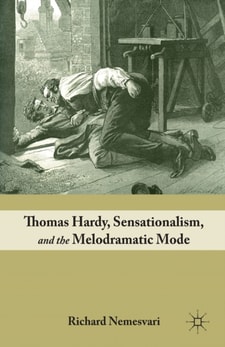
The first full-length study of sensationalist and melodramatic elements in Hardy's novels uses six of his texts to demonstrate the ways in which Hardy uses the melodramatic mode to advance his critique of established Victorian cultural beliefs through the employment of non-realistic plot devices and sensational 'excess.
Looking at literary discourse, including poetry, fiction and non-fiction, diaries, and drama, this collection offers remarkable and fascinating examples of women writers who integrated scientific material in their literary narratives.
In the first major study of the twentieth-century American protest novel, Drake examines a group of authors who self-consciously exploited the revolutionary potential of the novel, transforming literary conventions concerning art and politics, readers and characters.
This book is concerned with language, genre, drama, and literary and historical narrative and examines the comedy of Shakespeare in the context of comedies from Italy, Spain, and France in the sixteenth and seventeenth centuries.
This book describes the emergence of ecological understanding among the English Romantic poets, arguing that this new holistic paradigm offered a conceptual and ideological basis for American environmentalism.
The Riddles of Harry Potter draws readers into the deeper meanings of these phenomenally successful books, arguing that they launch and pursue interpretive quests in an ongoing effort to understand patterns and their attendant meanings, implications, and consequences.
Using Shakespeare's Hamlet as a test subject and cognitive linguistic theory of conceptual blending as a tool, Cook unravels the 'mirror held up to nature' at the center of Shakespeare's play and provides a methodology for applying cognitive science to the study of drama.
The death of Queen Elizabeth I in 1603 was greeted by an outpouring of official proclamations, gossip-filled letters, tense diary entries, diplomatic dispatches, and somber sermons.
This book argues that representations of popular culture in the eighteenth-century novel served as repositories of traditional social values and played a role in Britain's transition to an imperial state.
A sweeping intellectual history of the relationship between literary translation, authoritarian politics, linguistic ideologies, juristic philology, religion, and poetry in late nineteenth-century Colombia.
This book examines the ways in which usury was perceived and portrayed as it rose to popularity in Renaissance England, taking into account the works of key literary figures of this period, including Milton and Shakespeare.
This edition presents Jonathan Swift's most important Irish writings in both prose and verse, together with an introduction, head notes and annotations that shed new light on the full context and significance of each piece.
This study analyzes Sir Philip Sidney's reputation from his own day to the present by discussing his reception in the work of authors as diverse in time and type as Sir Fulke Greville, Christopher Hill, Charles Lamb, Edmund Waller, and Thomas Warton the elder.