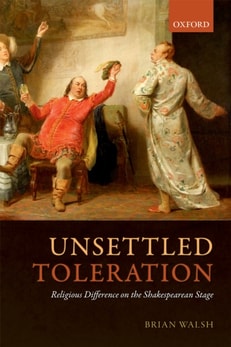
Unsettled Toleration: Religious Difference on the Shakespearean Stage historicizes and scrutinizes the unstable concept of toleration as it emerges in drama performed on the Elizabethan and Jacobean stages.
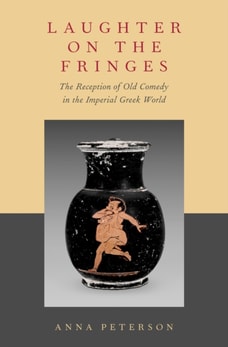
Aristophanes is the only surviving representative of Greek Old Comedy, an exuberant form of festival drama which flourished in Athens during the fifth century BC.
Aristophanes is the only surviving representative of Greek Old Comedy, an exuberant form of festival drama which flourished in Athens during the fifth century BC.
Hamlet's Moment identifies a turning point in the history of English drama and early modern political culture: the moment when the business of politics became a matter of dramatic representation.
The Oxford Companion to Shakespeare is the most comprehensive reference work available on Shakespeare's life, times, works, and his 400-year global legacy.
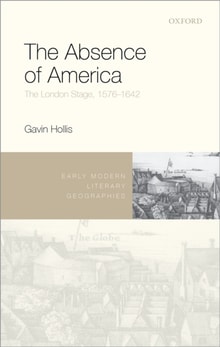
The Absence of America: the London Stage 1576a1642 examines why early modern drama's response to English settlement in the New World was muted, even though the so-called golden age of Shakespeare coincided with the so-called golden age of exploration: no play is set in the Americas; few plays treat colonization as central to the plot; a handful features Native American characters (most of whom are Europeans in disguise).
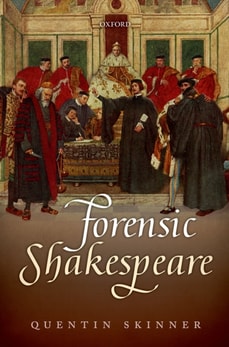
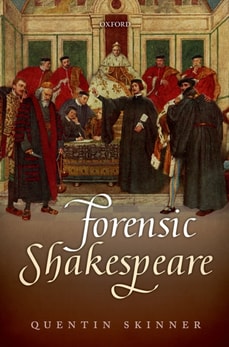
Forensic Shakespeare illustrates Shakespeare's creative processes by revealing the intellectual materials out of which some of his most famous works were composed.
Forensic Shakespeare illustrates Shakespeare's creative processes by revealing the intellectual materials out of which some of his most famous works were composed.
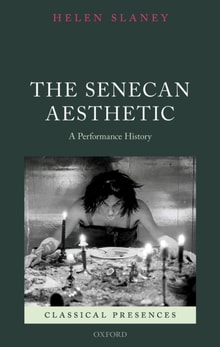
Alongside the works of the better-known classical Greek dramatists, the tragedies of Lucius Annaeus Seneca have exerted a profound influence over the dramaturgical development of European theatre.
This volume sets out a novel approach to theatre historiography, presenting the history of performances of Greek tragedies in Germany since 1800 as the history of the evolving cultural identity of the educated middle class throughout that period.
The Masters of the Revels and Elizabeth I's Court Theatre places the Revels Office and Elizabeth I's court theatre in a pre-modern, patronage and gift-exchange driven-world of centralized power in which hospitality, liberality, and conspicuous display were fundamental aspects of social life.
No Hamlets is the first critical account of the role of Shakespeare in the intellectual tradition of the political right in Germany from the founding of the Empire in 1871 to the 'Bonn Republic' of the Cold War era.
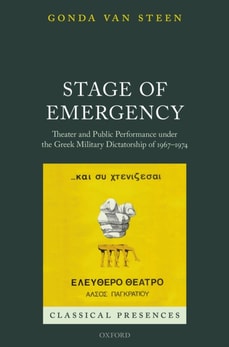
This volume offers a critique of cultural and intellectual life in Greece during the dictatorship of 1967-1974, discussing how Greek playwrights, directors, and actors reconceived the role of culture in a state of crisis and engaged with questions of theater's relationship to politics and community.
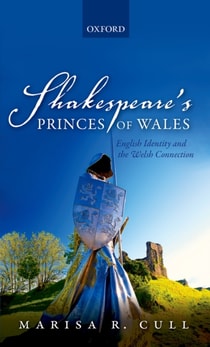
Shakespeare's Princes of Wales spotlights the surprising abundance of princes of Wales--English and Welsh alike--appearing onstage in the late Tudor and early Stuart period.
Not for nothing is William Shakespeare considered possibly the most famous writer in history; his works have had a lasting effect on culture, vocabularies, and art.
Not for nothing is William Shakespeare considered possibly the most famous writer in history; his works have had a lasting effect on culture, vocabularies, and art.
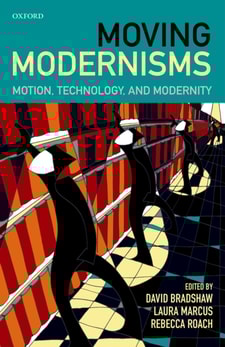
The essays in Moving Modernisms: Motion, Technology, and Modernity, written by renowned international scholars, open up the many dimensions and arenas of modernist movement and movements: spatial, geographical and political: affective and physiological; temporal and epochal; technological, locomotive and metropolitan; aesthetic and representational.
This volume explores the development of literary culture in sixteenth-century England as a whole and seeks to explain the relationship between the Reformation and the literary renaissance of the Elizabethan period.
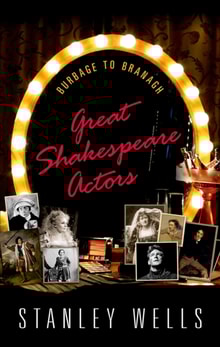
Great Shakespeare Actors offers a series of essays on great Shakespeare actors from his time to ours, starting by asking whether Shakespeare himself was the first--the answer is No--and continuing with essays on the men and women who have given great stage performances in his plays from Elizabethan times to our own.
Great Shakespeare Actors offers a series of essays on great Shakespeare actors from his time to ours, starting by asking whether Shakespeare himself was the first--the answer is No--and continuing with essays on the men and women who have given great stage performances in his plays from Elizabethan times to our own.
On 19 December 1601, John Croke, then Speaker of the House of Commons, addressed his colleagues: "e;If a question should be asked, What is the first and chief thing in a Commonwealth to be regarded?
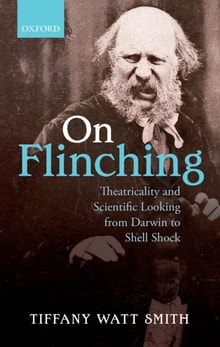
While the end of the nineteenth century is often associated with the rise of objectivity and its ideal of a restrained observer, scientific experiments continued to create emotional, even theatrical, relationships between scientist and his subject.
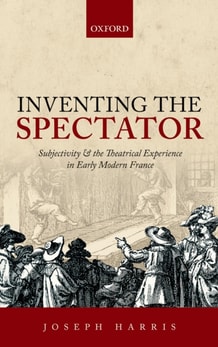
During the seventeenth and eighteenth centuries, France became famous -- notorious even -- across Europe for its ambitious attempts to codify and theorise a system of universally valid dramatic 'rules'.
Shakespeare's texts have a long and close relationship with many different types of dance, from dance forms referenced in the plays to adaptations across many genres today.
English comedy from the fifteenth to the early seventeenth century abounds in song lyrics, but most of the original tunes were thought to have been lost--until now.
English comedy from the fifteenth to the early seventeenth century abounds in song lyrics, but most of the original tunes were thought to have been lost--until now.