This book introduces a new perspective on Claudio Monteverdi's Orfeo (1607), a work widely regarded as the 'first great opera', by exploring the influence of the Mantuan Accademia deglia Invaghiti, the group which hosted the opera's performance, and to which the libretto author, Alessandro Striggio the Younger, belonged.
This book introduces a new perspective on Claudio Monteverdi's Orfeo (1607), a work widely regarded as the 'first great opera', by exploring the influence of the Mantuan Accademia deglia Invaghiti, the group which hosted the opera's performance, and to which the libretto author, Alessandro Striggio the Younger, belonged.
This book provides a bridge between Shakespeare studies and classical social theory, opening up readings of Shakespeare to a new audience outside of literary studies and the humanities.
This book provides a bridge between Shakespeare studies and classical social theory, opening up readings of Shakespeare to a new audience outside of literary studies and the humanities.
Global Literatures and Cultures of Modernity: Critical Perspectives from India brings together essays written by academicians and scholars from India to scrutinize how global modernities have been shaped since World War II, from the Indian perspective.
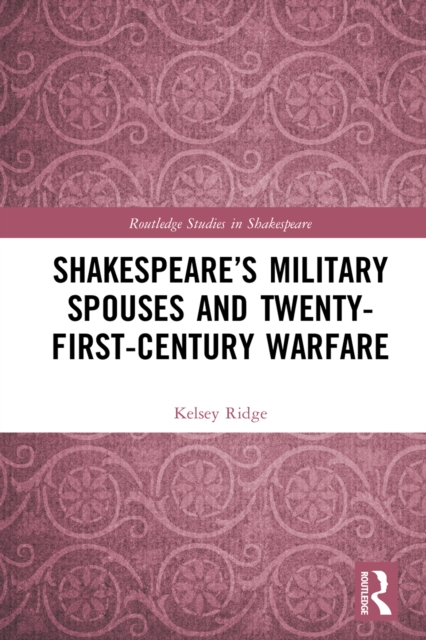
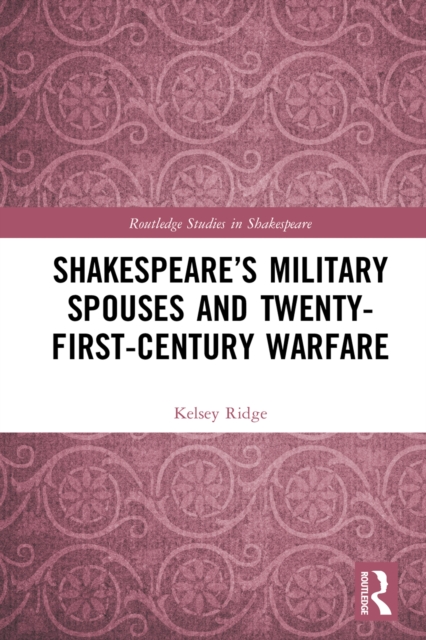
This volume presents a fresh look at the military spouses in Shakespeare's Othello, 1 Henry IV, Julius Caesar, Troilus and Cressida, Macbeth, and Coriolanus, vital to understanding the plays themselves.
This volume presents a fresh look at the military spouses in Shakespeare's Othello, 1 Henry IV, Julius Caesar, Troilus and Cressida, Macbeth, and Coriolanus, vital to understanding the plays themselves.
This book argues that Shakespeare and various cultures of celebrity have enjoyed a ceaselessly adaptive, symbiotic relationship since the final decade of the sixteenth century, through which each entity has contributed to the vitality and adaptability of the other.
This book argues that Shakespeare and various cultures of celebrity have enjoyed a ceaselessly adaptive, symbiotic relationship since the final decade of the sixteenth century, through which each entity has contributed to the vitality and adaptability of the other.
Regarded by Augusto Boal as the international icon of his vision, Jana Sanskriti are the leading practitioners of Theatre of the Oppressed and Forum Theatre in India and the East.
Regarded by Augusto Boal as the international icon of his vision, Jana Sanskriti are the leading practitioners of Theatre of the Oppressed and Forum Theatre in India and the East.
Shakespeare and Civil Unrest in Britain and the United States extends the growing body of scholarship on Shakespeare's appropriation by examining how the plays have been invoked during periods of extreme social, political, and racial turmoil.
Shakespeare and Civil Unrest in Britain and the United States extends the growing body of scholarship on Shakespeare's appropriation by examining how the plays have been invoked during periods of extreme social, political, and racial turmoil.
Shakespearean Drama, Disability, and the Filmic Stare synthesizes Laura Mulvey's male gaze and Rosemarie Garland-Thomson's stare into a new critical lens, the filmic stare, in order to understand and analyze the visual construction of disability in adaptations of Shakespearean drama.
Shakespearean Drama, Disability, and the Filmic Stare synthesizes Laura Mulvey's male gaze and Rosemarie Garland-Thomson's stare into a new critical lens, the filmic stare, in order to understand and analyze the visual construction of disability in adaptations of Shakespearean drama.
Winner of the AEDEAN "e;Enrique Garcia Diez"e; Literature Research Award 2023Winner of the European Society for the Study of English Book Award 2024Shakespeare's Sublime Ethos: Matter, Stage, Form breaks new ground in providing a sustained, demystifying treatment of its subject and looking for answers to basic questions regarding the creation, experience, aesthetics and philosophy of Shakespearean sublimity.
Winner of the AEDEAN "e;Enrique Garcia Diez"e; Literature Research Award 2023Winner of the European Society for the Study of English Book Award 2024Shakespeare's Sublime Pathos: Person, Audience, Language breaks new ground in providing a sustained, demystifying treatment of its subject and looking for answers to basic questions regarding the creation, experience, aesthetics and philosophy of Shakespearean sublimity.
Winner of the AEDEAN "e;Enrique Garcia Diez"e; Literature Research Award 2023Winner of the European Society for the Study of English Book Award 2024Shakespeare's Sublime Ethos: Matter, Stage, Form breaks new ground in providing a sustained, demystifying treatment of its subject and looking for answers to basic questions regarding the creation, experience, aesthetics and philosophy of Shakespearean sublimity.
Winner of the AEDEAN "e;Enrique Garcia Diez"e; Literature Research Award 2023Winner of the European Society for the Study of English Book Award 2024Shakespeare's Sublime Pathos: Person, Audience, Language breaks new ground in providing a sustained, demystifying treatment of its subject and looking for answers to basic questions regarding the creation, experience, aesthetics and philosophy of Shakespearean sublimity.
First published in 1992, Theater and World is a detailed exploration of Shakespeare's representation of history and how it affects the relation between theatre and world.
First published in 1992, Theater and World is a detailed exploration of Shakespeare's representation of history and how it affects the relation between theatre and world.
This book, first published in 1950, is a balanced examination of Chekhov's life and work, a critical analysis of his stories and plays set against the background of his life the Russia of the day.
This book, first published in 1950, is a balanced examination of Chekhov's life and work, a critical analysis of his stories and plays set against the background of his life the Russia of the day.
Originally published in 1951, this volume covers the transition period between the years of Renaissance influence and the dawn of 19th Century Romanticism.
Originally published in 1951, this volume covers the transition period between the years of Renaissance influence and the dawn of 19th Century Romanticism.
This book provides a comprehensive history of the genesis, existence, and demise of Imperial Russia's largest penal colony, made famous by Chekhov in a book written following his visit there in 1890.
This book provides a comprehensive history of the genesis, existence, and demise of Imperial Russia's largest penal colony, made famous by Chekhov in a book written following his visit there in 1890.
This book, first published in 1999, addresses Beckett's visual and musical sensibilities, and examines his visionary use of such diverse modes of creative expression as stage, radio, television and film, when his medium was the written word.
The essays in this book, first published in 1975, suggest how best to approach Beckett, how to read him, how to get closer to the concrete experience offered by this most concrete of writers.
This book, first published in 1993, is the first full-length analysis of Samuel Beckett's later drama in the context of contemporary critical and performance theory.
This book, first published in 1999, addresses Beckett's visual and musical sensibilities, and examines his visionary use of such diverse modes of creative expression as stage, radio, television and film, when his medium was the written word.
The essays in this book, first published in 1975, suggest how best to approach Beckett, how to read him, how to get closer to the concrete experience offered by this most concrete of writers.
This book, first published in 1993, is the first full-length analysis of Samuel Beckett's later drama in the context of contemporary critical and performance theory.