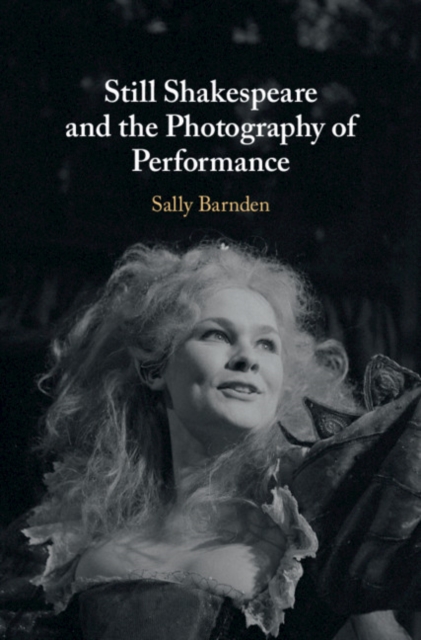
This book examines the modern performance history of one of Shakespeare's best-loved and most enduring comedies, and one that has given opportunities for generations of theatre-makers and theatre-goers to explore the pleasures of pastoral, gender masquerade and sexual ambiguity.
Free Will: Art and power on Shakespeare's stage is a study of theatre and sovereignty that situates Shakespeare's plays in the contraflow between two absolutisms of early modern England: the aesthetic and the political.
This volume proposes new insights into the uses of classical mythology by Shakespeare and his contemporaries, focusing on interweaving processes in early modern appropriations of myth.
Samuel Beckett and trauma is the first book that specifically addresses the question of trauma in Beckett, taking into account the recent rise of trauma studies in literature.
This book explores how South Africa is negotiating its past in and through various modes of performance in contemporary theatre, public events and memorial spaces.
In exploring links between the early modern English theatre and France, Richard Hillman focuses on Shakespeare's deployment of genres whose dominant Italian models and affinities might seem to leave little scope for French ones.
Samuel Beckett and trauma is the first book that specifically addresses the question of trauma in Beckett, taking into account the recent rise of trauma studies in literature.
New Russian Drama began its rise at the end of the twentieth century, following a decline in dramatic writing in Russia that stemmed back to the 1980s.
This collection of newly commissioned essays explores the extraordinary versatility of Renaissance tragedy and shows how it enables exploration of issues ranging from gender to race to religious conflict, as well as providing us with some of the earliest dramatic representations of the lives of ordinary Englishmen and women.
A lively and engaging guide to vital habits of mind that can help you think more deeply, write more effectively, and learn more joyfullyHow to Think like Shakespeare is a brilliantly fun exploration of the craft of thoughtone that demonstrates what we've lost in education today, and how we might begin to recover it.
The thirteen chapters in this collection open up new horizons for the study of biblical drama by putting special emphasis on multitemporality, the intersections of biblical narrative and performance, and the strategies employed by playwrights to rework and adapt the biblical source material in Catholic, Protestant and Jewish culture.
In a new edition of this now-classic work, Robert Brustein argues that the roots of the modern theatre may be found in the soil of rebellion cultivated by eight outstanding playwrights: Ibsen, Strindberg, Chekhov, Shaw, Brecht, Pirandello, O'Neill, and Genet.
Ravishment of Reason examines the heroic dramas written for the restored English theatres in the later seventeenth century, reading them as complex and sophisticated responses to a crisis of public life in the wake of the mid-century regicide and revolution.
Turning to the potent idea of political theology to recover the strange mix of political and religious thinking during the Renaissance, this bracing study reveals in the works of Shakespeare and his sources the figure of the citizen-saint, who represents at once divine messenger and civil servant, both norm and exception.
This New Casebook offers a wide-ranging selection of contemporary critical readings of Shakespeare's three 'problem plays': All's Well that Ends Well, Measure for Measure and Trolius and Cressida.
Over the last quarter-century, feminist criticism of Shakespeare has greatly expanded and enriched the range of interpretations of the Shakespearean texts, their original historical location, and subsequent reinterpretation.
The art and craft of playwriting as explored in candid conversations with some of the most important contemporary dramatists Edward Albee, Lanford Wilson, Lynn Nottage, A.
This engaging study explores how the works of Shakespeare, Milton, Swift, and others were taken up by caricaturists as a means of helping the eighteenth-century British public make sense of political issues, outrages, and personalities.
First published to critical acclaim in 1989, this book is now recognised as one of the most original and influential critical studies of Shakespeare to have appeared in recent times.
A captivating portrait of Lorraine Hansberry's life, art, and political activism--one of O Magazine's best books of April 2021"e;Hits the mark as a fresh and timely portrait of an influential playwright.
This book opens up Twelfth Night as a play to see and hear, provides useful contextual and source material, and considers the critical and theatrical reception over four centuries.
Consulting an extensive archive of early modern literature, Joy of the Worm asserts that voluntary death in literature is not always a matter of tragedy.
Shakespeare's comedy Love's Labour's Lost has perplexed scholars and theatergoers for over 400 years due to its linguistic complexity, obscure topical allusions and decidedly non-comedic ending.
As one of the world's leading voice coaches, Patsy Rodenburg describes practical ways to approach language, using Shakespeare, Romantic poetry, modern prose and a range of other texts to help each of us discover our own unique need for words.
A concise guide to global performances of Shakespeare, this volume combines methodologies of dramaturgy, film and performance studies, critical race and gender studies and anthropological thick description.