Great Shakespeareans offers a systematic account of those figures who have had the greatest influence on the interpretation, understanding and cultural reception of Shakespeare, both nationally and internationally.
Literature and Culture Handbooks are an innovative series of guides to major periods, topics and authors in British and American literature and culture.
The search to find engaging and inspiring ways to introduce children and young adults to Shakespeare has resulted in a rich variety of approaches to producing and adapting Shakespeare's plays and the stories and characters at their heart.
Tom Stoppard is widely regarded as one of the leading contemporary British playwrights, a writer who has earned an intriguing mix of both critical and commercial success.
In the 30 years since the publication of Stephen Greenblatt's Renaissance Self-Fashioning overthrew traditional modes of Shakespeare criticism, New Historicism and Cultural Materialism have rapidly become the dominant modes for studying and writing about the Bard.
This innovative volume testifies to the current revived interest in Shakespeare's language and style and opens up new and captivating vistas of investigation.
Witnessness posits a universal ethics based neither on rational mental structures nor on moral principles, but on the extra-rational powers of the imagination.
Shakespeare and Moral Agency presents a collection of new essays by literary scholars and philosophers considering character and action in Shakespeare's plays as heuristic models for the exploration of some salient problems in the field of moral inquiry.
By connecting Shakespeare's language to the stunning artwork that depicted the end of the world, this study provides not only provides a new reading of Shakespeare but illustrates how apocalyptic art continues to influence popular culture today.
Combining the latest scientific and philosophical understanding of humankind's place in the world with interpretative methods derived from other politically inflected literary criticism, ecocriticism is providing new insights into literary works both ancient and modern.
Featuring contributions by established and upcoming scholars, Shakespeare and the Translation of Identity in Early Modern England explores the ways in which Shakespearean texts engage in the social and cultural politics of sixteenth- and early seventeenth-century translation practices.
John Ford's tragedy 'Tis Pity She's A Whore was first performed between 1629 and 1633 and since then its themes of incest, love versus duty and forbidden passion have made it a widely studied and performed, if controversial, play.
Great Shakespeareans offers a systematic account of those figures who have had the greatest influence on the interpretation, understanding and cultural reception of Shakespeare, both nationally and internationally.
The search to find engaging and inspiring ways to introduce children and young adults to Shakespeare has resulted in a rich variety of approaches to producing and adapting Shakespeare's plays and the stories and characters at their heart.
Look Back in Anger is one of the few works of drama that are indisputably central to British culture in general, and its name is one of the most well-known in postwar cultural history.
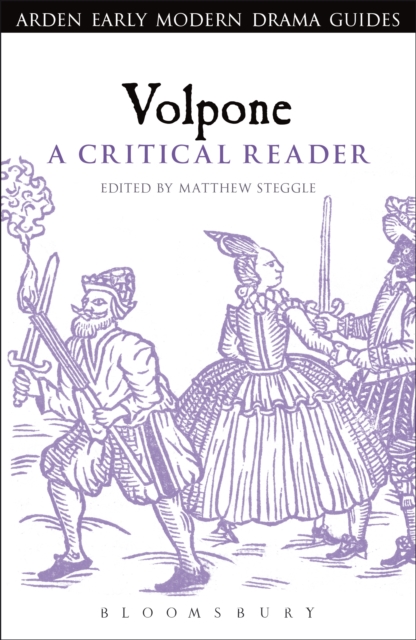
A comprehensive introduction to Ben Jonson's Volpone, introducing its critical history, performance history, current critical landscape and new directions in research on the play.
An introduction to Shakespeare's I Henry IV - introducing its critical and performance history, current critical landscape and new directions in research on the play.
Closer emerged as one of the most successful plays of the 1990s, and one with a continuing afterlife through the academy award nominated film adaptation in 2004.
Great Shakespeareans offers a systematic account of those figures who have had the greatest influence on the interpretation, understanding and cultural reception of Shakespeare, both nationally and internationally.
Adaptations of canonical texts have played an important role throughout the history of children's literature and have been seen as an active and vital contributing force in establishing a common ground for intercultural communication across generations and borders.
This innovative volume testifies to the current revived interest in Shakespeare's language and style and opens up new and captivating vistas of investigation.
Recent work in Shakespeare studies has brought to the forefront a variety of ways in which the collaborative nature of Shakespearean drama can be investigated: collaborative performance (Shakespeare and his fellow actors); collaborative writing (Shakespeare and his co-authors); collaborative textual production (Shakespeare and his transcribers and printers).