Food and the Literary Imagination explores ways in which the food chain and anxieties about its corruption and disruption are represented in poetry, theatre and the novel.
In a fresh reading of Gulliver's Travels and A Portrait of the Artist as a Young Man, Atkins draws parallels between the protagonists: both Lemuel Gulliver and Stephen Dedalus flee from the burdens of life, seeking a transcendent existence.
This book analyzes the iconographic traditions of Jeremiah and of melancholy to show how Donne, Herbert, and Milton each fashions himself after the icons presented in Rembrandt's Jeremiah Lamenting the Destruction of Jerusalem , Sluter's sculpture of Jeremiah in the Well of Moses, and Michelangelo's fresco of Jeremiah in the Sistine Chapel.
Tracing material and metaphoric waste through the Western canon, ranging from Beowulf to Samuel Beckett, Susan Signe Morrison disrupts traditional perceptions of waste to better understand how we theorize, manage, and are implicated in what is discarded and seen as garbage.
Taking as its starting point Delmore Schwartz's self-appointment as both a 'poet of the Hudson River' and 'laureate of the Atlantic,' this book comprehensively reassesses the poetic achievement of a critically neglected writer.
This book provides compelling new readings of William Blake's poetry and art, including the first sustained account of his visionary paintings of Pitt and Nelson.
Examining chameleonic identities as seen in theatrical performances and literary texts during the Romantic period, this study explores cultural attitudes toward imposture and how it reveals important and much-debated issues about this time period.
Shakespearean Echoes assembles a global cast of established and emerging scholars to explore new connections between Shakespeare and contemporary culture, reflecting the complexities and conflicts of Shakespeare's current international afterlife.
Treating the work of Sappho, Goethe, Blake, Holderlin, Verlaine, George, Morike, and Yeats in detail, Bennett makes the provocative argument that the nature of lyric poetry in the West has an element of defectiveness.
The lyric poems of Horace and Housman are two enigmatic bodies of work that have much in common, and a close reading of each poet's writings can illuminate the other's.
Examining a range of Coleridge's writings, this book uses recent scientific research to understand how we have evolved to make mental representations of the counterfactual, how such transformative essays in Imagination have enabled humans to survive, to prosper and to express themselves in the sciences, the arts and particularly in poetry.
This book takes the work of three contemporary poets John Burnside, John Kinsella and Alice Oswald to reveal how an environmental poetics of place is of significant relevance for the Anthropocene: a geological marker asking us to think radically of the human as one part of the more-than-human world.
Analyzing Romantic conservative critiques of modernity found in literature, philosophy, natural history, and agricultural periodicals, this book finds a common theme in the 'intergenerational imagination.
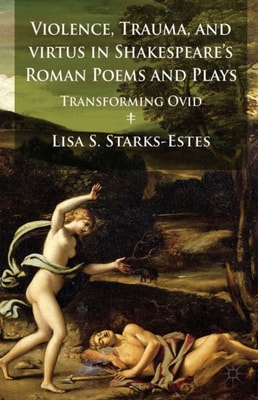
Employing psychoanalysis, trauma theory, and materialist perspectives, this book examines Shakespeare's appropriations of Ovid's poetry in his Roman poems and plays.
The first scholarly study of the rich body of poetry that emerged from the post-war American suburbs, Gill evaluates the work of forty poets, including Anne Sexton, Langston Hughes, and John Updike.
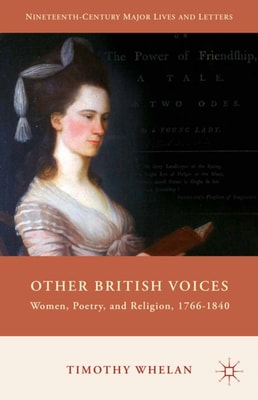
This volume discusses the lives and writings of five nonconformist women who comprised the heart of a vibrant literary circle in England between 1760 and 1840.
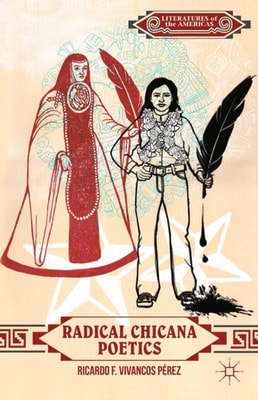
Offering a transdisciplinary analysis of works by Gloria Anzaldua, Cherrie Moraga, Ana Castillo, Emma Perez, Alicia Gaspar de Alba, and Sandra Cisneros, this book explores how radical Chicanas deal with tensions that arise from their focus on the body, desire, and writing.
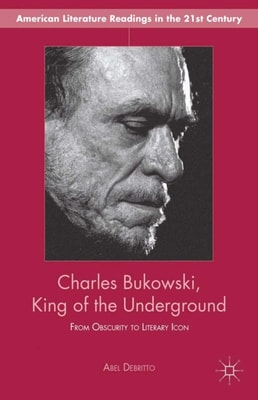
This critical study of the literary magazines, underground newspapers, and small press publications that had an impact on Charles Bukowski's early career, draws on archives, privately held unpublished Bukowski work, and interviews to shed new light on the ways in which Bukowski became an icon in the alternative literary scene in the 1960s.
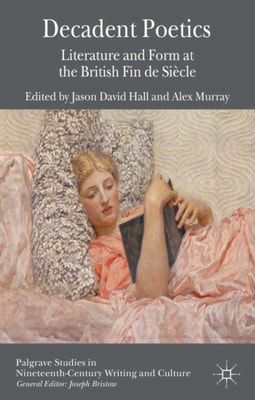
Decadent Poetics explores the complex and vexed topic of decadent literature's formal characteristics and interrogates previously held assumptions around the nature of decadent form.
Staged Transgression in Shakespeare's England is a groundbreaking collection of seventeen essays, drawing together leading and emerging scholars to discuss and challenge critical assumptions about the transgressive nature of the early modern English stage.
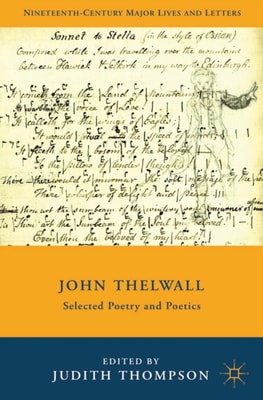
Drawing on newly-discovered manuscripts, this collection is the first modern edition of poetry by John Thelwall, the famed radical Romantic and champion of the working class.
The first collection focused on the writing of provocative author and performance artist Sapphire, including her groundbreaking novel PUSH that has since become the Academy-award-winning film Precious.
Drawing on the later writings of Martin Heidegger, the book traces the correspondence between the philosopher's concept of technology and Shakespeare's poetics of human and natural productivity in the Sonnets.
This volume of essays seeks to establish a dialogue between poetry and philosophy where each could be said to read the other and announces important new paths for a reinvigorated study of lyric poetry in the decades to come.
Long before Wordsworth etherealized him as 'the marvellous Boy / The sleepless Soul that perished in its pride', Thomas Chatterton was touted as the 'second Shakespeare' by eighteenth-century Shakespeareans, ranked among the leading British poets by prominent literary critics, and likened to the fashionable modern prose stylists Macpherson, Sterne, and Smollett.
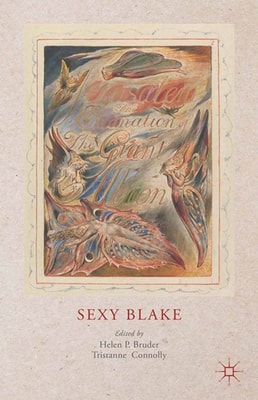
This book lays bare numerous sexy Blakes, arguing for both chastity and pornography, violence and domination as well as desire and redemption, and also journeying in the realms of conceptual sex and conceptual art.
The Persian Empire in English Renaissance Writing, 1549-1622 studies the conception of Persia in the literary, political and pedagogic writings of Renaissance England and Britain.