Impossible Desire and the Limits of Knowledge in Renaissance Poetry examines the limits of embodiment, knowledge, and representation at a disregarded nexus: the erotic carpe diem poem in early modern England.
Impossible Desire and the Limits of Knowledge in Renaissance Poetry examines the limits of embodiment, knowledge, and representation at a disregarded nexus: the erotic carpe diem poem in early modern England.
Fulke Greville's reputation has always been overshadowed by that of his more famous friend, Philip Sidney, a legacy due in part to Greville's complex moulding of his authorial persona as Achates to Sidney's Aeneas, and in part to the formidable complexity of his poetry and prose.
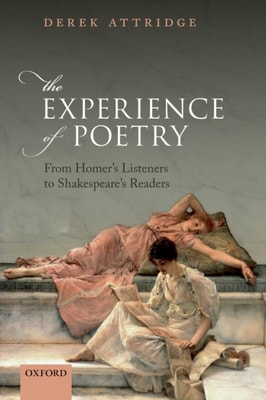
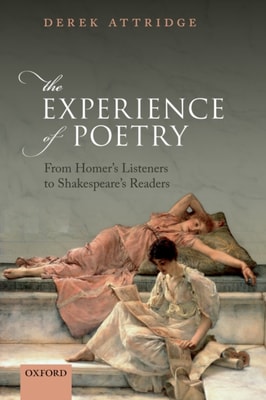
Was the experience of poetry--or a cultural practice we now call poetry--continuously available across the two-and-a-half millennia from the composition of the Homeric epics to the publication of Ben Jonson's Works and the death of Shakespeare in 1616?
Was the experience of poetry--or a cultural practice we now call poetry--continuously available across the two-and-a-half millennia from the composition of the Homeric epics to the publication of Ben Jonson's Works and the death of Shakespeare in 1616?
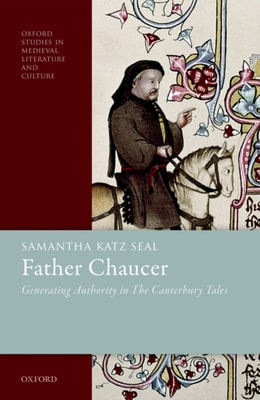
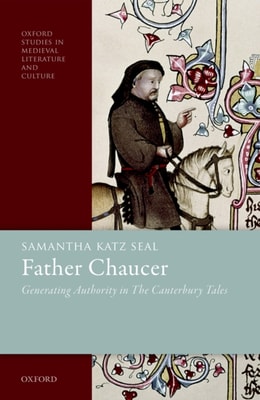
The monograph series Oxford Studies in Medieval Literature and Culture showcases the plurilingual and multicultural quality of medieval literature and actively seeks to promote research that not only focuses on the array of subjects medievalists now pursue in literature, theology, and philosophy, in social, political, jurisprudential, and intellectual history, the history of art, and the history of science but also that combines these subjects productively.
The monograph series Oxford Studies in Medieval Literature and Culture showcases the plurilingual and multicultural quality of medieval literature and actively seeks to promote research that not only focuses on the array of subjects medievalists now pursue in literature, theology, and philosophy, in social, political, jurisprudential, and intellectual history, the history of art, and the history of science but also that combines these subjects productively.
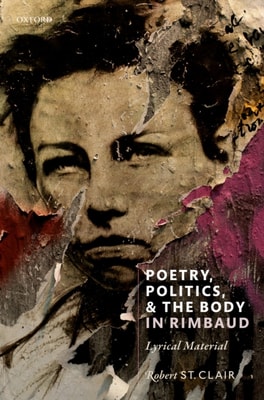
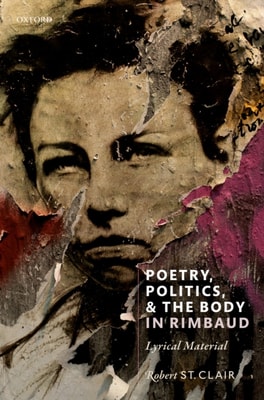
Bodies abound in Rimbaud's poetry in a way that is nearly unprecedented in the nineteenth-century poetic canon: lazy, creative, rule-breaking bodies, queer bodies, marginalized and impoverished bodies, revolting and revolutionary, historical bodies.
Bodies abound in Rimbaud's poetry in a way that is nearly unprecedented in the nineteenth-century poetic canon: lazy, creative, rule-breaking bodies, queer bodies, marginalized and impoverished bodies, revolting and revolutionary, historical bodies.
Tombs of the Ancient Poets explores the ways in which the tombs of the ancient poets - real or imagined - act as crucial sites for the reception of Greek and Latin poetry.
Tombs of the Ancient Poets explores the ways in which the tombs of the ancient poets - real or imagined - act as crucial sites for the reception of Greek and Latin poetry.
Sacrifice and Modern War Literature is the first book to explore how writers from the early nineteenth century to the present have addressed the intimacy of sacrifice and war.
God and the Gothic: Romance and Reality in the English Literary Tradition provides a complete reimagining of the Gothic literary canon to examine its engagement with theological ideas, tracing its origins to the apocalyptic critique of the Reformation female martyrs, and to the Dissolution of the monasteries, now seen as usurping authorities.
God and the Gothic: Romance and Reality in the English Literary Tradition provides a complete reimagining of the Gothic literary canon to examine its engagement with theological ideas, tracing its origins to the apocalyptic critique of the Reformation female martyrs, and to the Dissolution of the monasteries, now seen as usurping authorities.
In this second edition of William Wordsworth: A Life, Stephen Gill draws on knowledge of the poet's creative practices and his reputation and influence in his life-time and beyond.
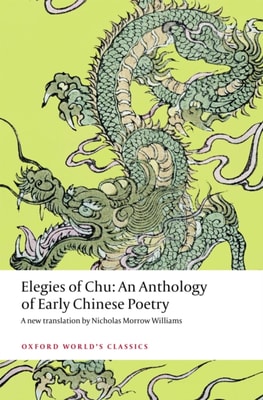
Elegies of Chu (in Chinese, Chuci), one of the two surviving collections of ancient Chinese poetry, is a key source for the whole tradition of Chinese poetry.
Elegies of Chu (in Chinese, Chuci), one of the two surviving collections of ancient Chinese poetry, is a key source for the whole tradition of Chinese poetry.
This volume in the 21st Century Oxford Authors series offers students and readers a comprehensive selection of the work of the poet Elizabeth Barrett Browning (1806-1861).
In 1966, John Ashbery wrote: 'The English language is constantly trying to stave off invasion by the American language; it lives in a state of alert which is reflected to some degree in English poetry.
In 1966, John Ashbery wrote: 'The English language is constantly trying to stave off invasion by the American language; it lives in a state of alert which is reflected to some degree in English poetry.