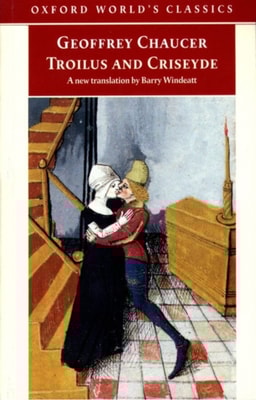
`Now listen with good will, as I go straight to my subject matter, in which you may hear the double sorrows of Troilus in his love for Criseyde, and how she forsook him before she died' Like Romeo and Juliet, or Tristan and Iseult, the names of Troilus and Criseyde will always be united: a pair of lovers whose names are inseparable from passion and tragedy.
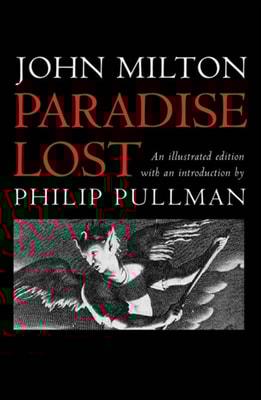
Milton's Paradise Lost, the most eloquent, most intellectually daring, most learned, and most sublime poem in the English language, is a poem about angels.
Published to mark the bicentenary of Alfred Tennyson's birth, these essays offer an important revaluation of his achievement and its lasting importance.
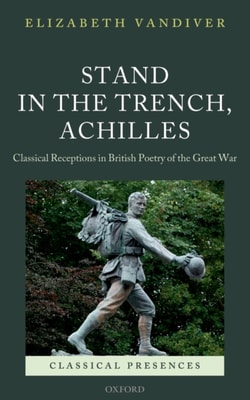
Elizabeth Vandiver examines the ways in which British poets of the First World War used classical literature, culture, and history as a source of images, ideas, and even phrases for their own poetry.
'The finest translation in and for our time' (Kevin Crossley-Holland) Sir Gawain and The Green Knight, with its intricate plot of enchantment and betrayal is probably the most skilfully told story in the whole of the English Arthurian cycle.
More than any other English monarch before or since, Queen Elizabeth I used her annual progresses to shape her royal persona and to bolster her popularity and authority.
This book is about the things which could unite, rather than divide, poets during the English Civil Wars: friendship, patronage relations, literary admiration, and anti-clericalism.
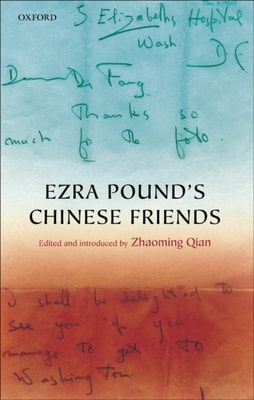
No literary figure of the past century - in America or perhaps in any other Western country - is comparable to Ezra Pound in the scope and depth of his exchange with China.
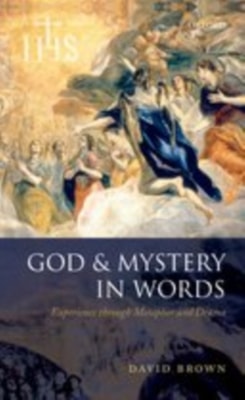
In God and Mystery in Words David Brown uses the way in which poetry and drama have in the past opened people to the possibility of religious experience as a launch pad for advocating less wooden approaches to Christian worship today.
First published in 1572, The Lusiads is one of the greatest epic poems of the Renaissance, immortalizing Portugal's voyages of discovery with an unrivalled freshness of observation.
Robert Burns and Pastoral is a full-scale reassessment of the writings of Robert Burns (1759-1796), arguably the most original poet writing in the British Isles between Pope and Blake, and the creator of the first modern vernacular style in British poetry.
'Rimbaud, the poet of revolt, and the greatest' Albert Camus Rimbaud is the enfant terrible of French literature, the precocious genius whose extraordinary poetry is revolutionary in its visionary, hallucinatory content and its often liberated forms.
'The finest translation in and for our time' (Kevin Crossley-Holland) Sir Gawain and The Green Knight, with its intricate plot of enchantment and betrayal is probably the most skilfully told story in the whole of the English Arthurian cycle.
Eminent Coleridgean scholar John Beer presents a series of biographical investigations exploring Coleridge's life, stage by stage, and reconsidering the intellectual quality of his thinking and poetry through an emphasis on the notion of 'play'.
The night can sweat with terror as beforeWe pieced our thoughts into philosophy,And planned to bring the world under a rule,Who are but weasels fighting in a hole.
This is a collection of studies on ancient (especially Latin) poetry and historiography, concentrating especially on the impact of rhetoric on both genres, and on the importance of considering the literature to illuminate the historical Roman context and the historical context to illuminate the literature.
This book is a study of writing processes of six modernist authors: Hopkins, Yeats, Conrad, Forster, Joyce, and Woolf, from the 'golden age of manuscripts'.
Milton's Paradise Lost, the most eloquent, most intellectually daring, most learned, and most sublime poem in the English language, is a poem about angels.
Elizabeth Vandiver examines the ways in which British poets of the First World War used classical literature, culture, and history as a source of images, ideas, and even phrases for their own poetry.