THE OXFORD HISTORY OF LITERARY TRANSLATION IN ENGLISHGeneral Editors: Peter France and Stuart GillespieThis groundbreaking five-volume history runs from the Middle Ages to the year 2000.
No literary figure of the past century - in America or perhaps in any other Western country - is comparable to Ezra Pound in the scope and depth of his exchange with China.
In God and Mystery in Words David Brown uses the way in which poetry and drama have in the past opened people to the possibility of religious experience as a launch pad for advocating less wooden approaches to Christian worship today.
There has never been a book about Blake's last period, from his meeting with John Linnell in 1818 to his death in 1827, although it includes some of his greatest works.
Bacchylides: Politics, Performance, Poetic Tradition combines close literary analysis of Bacchylides' poetry with detailed discussion of the central role poetry played in a variety of differing political contexts throughout Greece in the early fifth century BC.
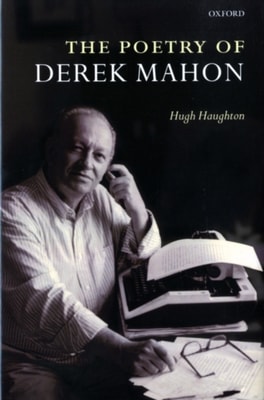
Derek Mahon is one of the leading poets of his time, both in Ireland and beyond, famously offering a perspective that is displaced from as much as grounded in his native country.
In 1906, having been assigned Izaak Walton's Life of Donne to read for his English class, a Harvard freshman heard a lecture on the long disparaged 'metaphysical' poets.
Despite its widely acknowledged importance in and beyond the thought of the Romantic period, the distinctive concept of the symbol articulated by such writers as Goethe and F.
Passion's Triumph over Reason presents a comprehensive survey of ideas of emotion, appetite, and self-control in English literature and moral thought of the sixteenth and seventeenth centuries.
This book suggests that the Old English epic Beowulf was composed in the winter of 826-7 as a requiem for King Beornwulf of Mercia on behalf of Wiglaf, the ealdorman who succeeded him.
This volume presents a wide range of pieces from a world-class Latinist which displays both his diverse interests as a scholar and his consistent concern with Augustan texts, their language and literary texture.
Translation - Theory and Practice: A Historical Reader responds to the need for a collection of primary texts on translation, in the English tradition, from the earliest times to the present day.
This book investigates how subjectivity is encoded in the texts of a wide variety of medieval narratives and lyrics - not how they express the subjectivity of individuals, but how subjectivity, escaping the bounds of individuality, is incorporated in the linguistic fabric of their texts.
While previous studies have concentrated largely upon political concerns, The Augustan Art of Poetry is an exploration of the influence of the Roman Augustan aesthetic on English neo-classical poets of the seventeenth and eighteenth centuries.
Writing After Sidney examines the literary response to Sir Philip Sidney (1554-86), author of the Arcadia, Astrophil and Stella, and The Defence of Poesy, and the most immediately influential writer of the Elizabethan period.
The first of eight volumes of Hopkins's Collected Works to be published, Oxford Essays and Notes presents a remarkable cache of previously unpublished papers, including forty-five essays which Hopkins produced during his undergraduate career at Oxford (1863-1867), only seven of which were reproduced in the 1959 edition of Journals and Papers.
Latin Epics of the New Testament is about the growth of Christianity, and in particular the challenge of engaging with the Roman intellectual elite and its highly sophisticated Graeco-Roman tradition.
In this detailed study of the representations of Pasiphae, Ariadne, and Phaedra in Latin poetry, Rebecca Armstrong investigates both the literary history of the myths (the Greek roots, the interactions between Roman versions) and their cultural resonance.
Strange Likeness provides the first full account of how Old English (or Anglo-Saxon) was rediscovered by twentieth-century poets, and the uses to which they put that discovery in their own writing.
This book consists of individual studies of Pindar's eleven odes for Aiginetan victors, preceded by a brief survey of the history of the island and the nature of its aristocracy.
The Art of Love celebrates the bi-millennium of Ovid's cycle of sophisticated and subversive didactic poems on love, traditionally assumed to have been brought to completion around AD 2.
This radical new look at the literary and political climate of England during the reign of Queen Anne examines the work of the greatest poet of the age, Alexander Pope.
The Oxford Studies in Postcolonial Literatures series (general editor: Elleke Boehmer) offers stimulating and accessible introductions to definitive topics and key genres and regions within the rapidly diversifying field of postcolonial literary studies in English.
In this incisive and highly readable study, Rachel Buxton offers a much-needed assessment of Frost's significance for Northern Irish poetry of the past half-century.
This book is a successor to the commentaries by Nisbet and Hubbard on Odes I and II, but it takes critical note of the abundant recent writing on Horace.