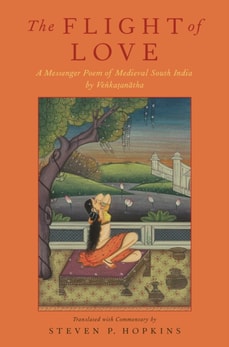
After a sleepless night spent longing for his absent wife Sita, Rama, god-prince and future king, surveyed his army camps on a clear autumn morning and spied a white goose playing in a pond of lotus flowers.
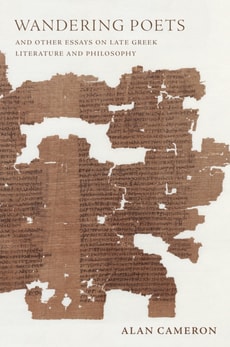
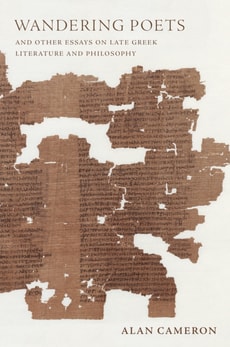
This book presents a substantially revised version of some of the most important and innovative articles published by Alan Cameron in the field of late antique Greek poetry and philosophy.
Ornamental Aesthetics offers a theory of ornamentation as a manner of marking out objects for notice, attention, praise, and a means of exploring qualities of mental engagement other than interpretation and representation.
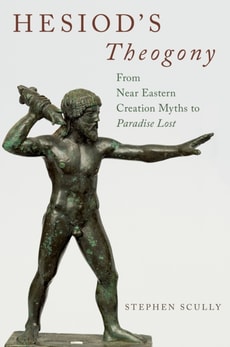
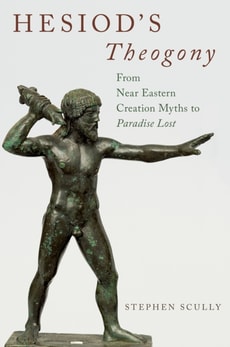
Stephen Scully both offers a reading of Hesiod's Theogony and traces the reception and shadows of this authoritative Greek creation story in Greek and Roman texts up to Milton's own creation myth, which sought to "e;soar above th' Aonian Mount [i.
In The Art of Poetry, Shira Wolosky provides a dazzling introduction to an art whose emphasis on verbal music, wordplay, and dodging the merely literal makes it at once the most beguiling and most challenging of literary forms.
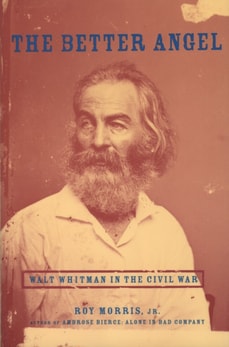
In December of 1862, having read his brother's name in a casualty list, Walt Whitman rushed from Brooklyn to the war front, where he found his brother wounded but recovering.
Today, thousands of years after her birth, in lands remote from her native island of Lesbos and in languages that did not exist when she wrote her poetry in Aeolic Greek, Sappho remains an important name among lovers of poetry and poets alike,.
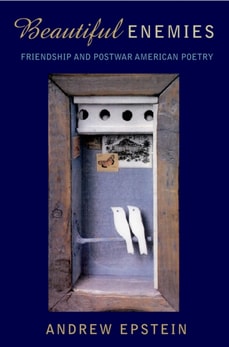
Although it has long been commonplace to imagine the archetypal American poet singing a solitary "e;Song of Myself,"e; much of the most enduring American poetry has actually been preoccupied with the drama of friendship.
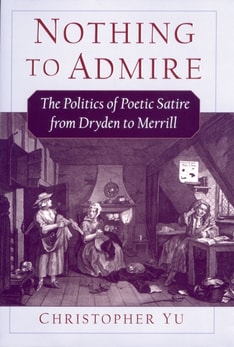
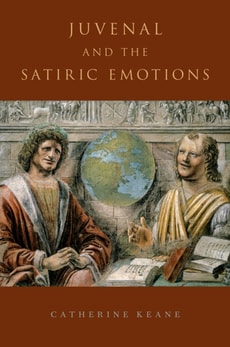
Nothing to Admire argues for the persistence of a central tradition of poetic satire in English that extends from Restoration England to present-day America.
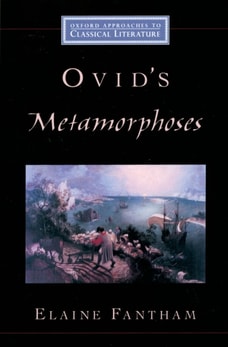
Oxford Approaches to Classical Literature (Series Editors: Kathleen Coleman and Richard Rutherford) introduces individual works of Greek and Latin literature to readers who are approaching them for the first time.
Although readers of prose fiction sometimes find descriptive passages superfluous or boring, description itself is often the most important aspect of a poem.
Advice to young singers often follows the standard line of the great French singer Claire Croiza: "e;Study the poem away from the music, so that you know what the words really mean.
In the wake of the death of his friend Arthur Henry Hallam, the subject of In Memoriam, Alfred Tennyson wrote a range of intricately connected poems, many of which feature pivotal scenes of rapture, or being carried away.
For centuries, poets have looked into the mirror of classical myth to show us the many ways our emotional lives are still reflected in the ancient stories of heroism, hubris, transformation, and loss that myths so eloquently tell.
For nearly three years, Walt Whitman immersed himself in the devastation of the Civil War, tending to thousands of wounded soldiers and recording his experiences with an immediacy and compassion unequaled in wartime literature anywhere in the world.
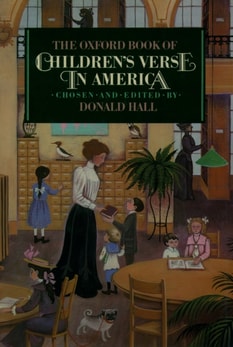
Compiled by the award-winning poet and author of children's books, Donald Hall, this delightful anthology follows in the tradition of Iona and Peter Opie's classic Oxford Book of Children's Verse.
Kabir was a great iconoclastic-mystic poet of fifteenth-century North India; his poems were composed orally, written down by others in manuscripts and books, and transmitted through song.
This book presents a substantially revised version of some of the most important and innovative articles published by Alan Cameron in the field of late antique Greek poetry and philosophy.
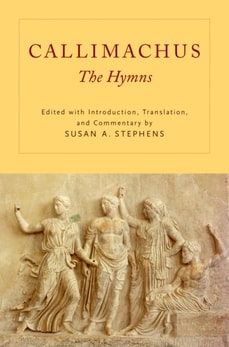
Callimachus was arguably the most important poet of the Hellenistic age, for two reasons: his engagement with previous theorists of poetry and his wide-ranging poetic experimentation.
Stephen Scully both offers a reading of Hesiod's Theogony and traces the reception and shadows of this authoritative Greek creation story in Greek and Roman texts up to Milton's own creation myth, which sought to "e;soar above th' Aonian Mount [i.
On October 1, 1920, the city of Santiago, Chile, came to a halt as tens of thousands stopped work and their daily activities to join the funeral procession of Jose Domingo Gomez Rojas, a 24 year old university student and acclaimed poet.
On October 1, 1920, the city of Santiago, Chile, came to a halt as tens of thousands stopped work and their daily activities to join the funeral procession of Jose Domingo Gomez Rojas, a 24 year old university student and acclaimed poet.
Modernism's Other Work challenges deeply held critical beliefs about the meaning-in particular the political meaning-of modernism's commitment to the work of art as an object detached from the world.
While scholarship on Lucretius has looked to connect De rerum natura to its larger cultural and historical context, it has never turned to speech act theory in this quest.
'Superb, beautifully written, touching and occasionally very funny' Andrew RobertsDavid Gilmour's superb biography of Rudyard Kipling is the first to show how the life and work of the great writer mirrored the trajectory of the British Empire, from its zenith to its final decades.
At the start of the twentieth century, Rainer Maria Rilke wrote a series of letters to a young officer cadet, advising him on writing, love, sex, suffering and the nature of advice itself; these profound and lyrical letters have since become hugely influential for writers and artists of all kinds.
In early June 1943, James Eric Swift, a pilot with 83 Squadron of the Royal Air Force, boarded his Lancaster bomber for a night raid on M nster and disappeared.
Aurora Leigh (1856), Elizabeth Barrett Browning's epic novel in blank verse, tells the story of the making of a woman poet, exploring 'the woman question', art and its relation to politics and social oppression.
Franceso Petrarch (1304-1374), creator of the sonnet form, remained for more than three hundred years the most influential poet in Europe, his works more widely read than even those of Dante.