Heralding a new period of creativity, In the Wake of the Poetic explores the aesthetics and politics of Palestinian cultural expression in the last two decades.
Victorian England: a Jesuit priest writes of wrestling with God at night, limbs entangled; an Anglican sister begs Jesus, her divine lover, to end her aching anticipation of their union; a clergyman exhorts nuns to study the example of medieval women who suffered on the rack in order to become "e;brides"e; of Christ.
This monograph offers a radical reconceptualization of the relationship between the poetics and practice of Robert Burns and reevaluates the nature of his role in the history of Scots.
Baudelaire's work entered China in the twentieth century amidst political and social upheavals accompanied by a "e;literary revolution"e; that called for classical models and modes of expression to be replaced by vernacular language and contemporary content.
Eighteenth-Century Poetry and the Rise of the Novel Reconsidered beginswith the brute fact that poetry jostledup alongside novels in the bookstallsof eighteenth-century England.
The Poetry and Poetics of Michael Heller: A Nomad Memory is the first comprehensive treatment of a singularly important American poet of the twentieth and twenty-first centuries.
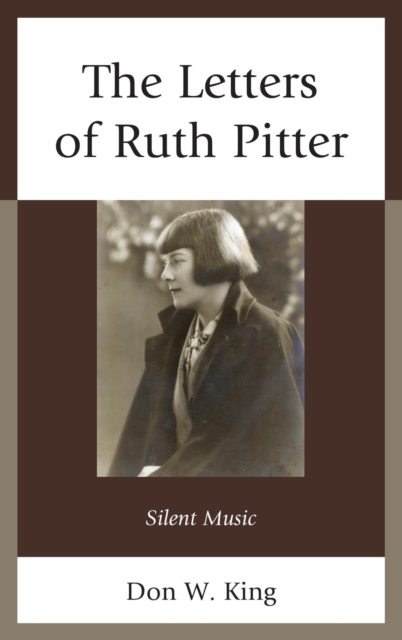
Although Ruth Pitter (1897-1992) is not well known, her credentials as a poet are extensive, and in England from the mid-1930s to the mid-1970s she maintained a modest yet loyal readership.
Spenser in the Moment collects specially commissioned essays critical of established readings, each of which in surveying the state of the art attempts radically to unsettle our conception of the poetry of Edmund Spenser (1552-1599).
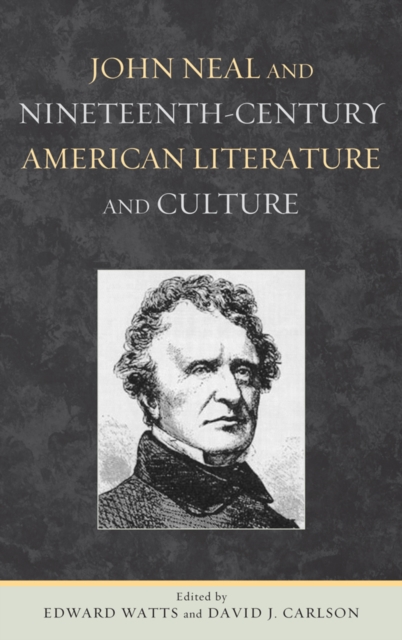
John Neal and Nineteenth-Century American Literature and Culture critically reassesses the significance of American novelist, editor, critic, and activist John Neal to the transatlantic literary culture of the nineteenth century.
In Formal Revolution in the Work of Baudelaire and Flaubert, Kathryn Oliver Mills argues that despite the enduring celebrity of Baudelaire and Flaubert, their significance to modern art has been miscast and misunderstood.
Pinter's World: Pinter and Company is not a full-scale biography but a series of illuminating chapters about Pinter's life, character, and thought, employing new information found in his "e;Appointment Diaries,"e; recent biographical sources such as Simon Gray's memoirs, and Henry Woolf's reminiscences in addition to personal discussions with several in Pinter's world.
Gender, Interpretation, and Political Rule in Sidney's Arcadia studies cultural ideologies regarding gender and monarchy in early modern England by examining transformations of a single text, Sir Philip Sidney's Arcadia, in their historical contexts.
From the post-War writings of Sartre and Blanchot to the post-structuralism of Jacques Derrida and Julia Kristeva, French philosophers have consistently debated the poetry of Stephane Mallarme, almost as a rite of passage.
This book represents the first scholarly gathering together of the long-neglected poetry of the School Inspector, educationalist and philosopher Edmond Holmes (1850 - 1936).
This unique collection of lectures honors the pioneering work in Byron studies of Leslie Alexis Marchand, who has had an enduring influence on the appreciation and study of Lord Byron for sixty years.
From 1923, when he emigrated from Bucharest, to his deportation to Auschwitz-Birkenau in 1944, Benjamin Fondane made a unique and independent-minded contribution to the literary and intellectual life of Paris.
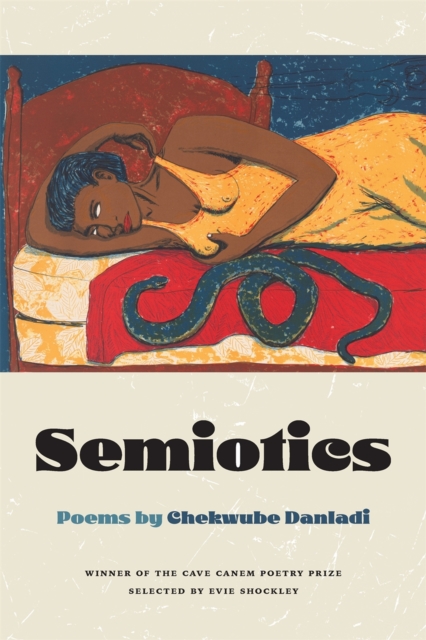
The poems in Chekwube Danladi's debut collection ardently expose unnamed spaces of agency, proclaiming power and beauty through an unaccustomed yearning.
The early modern Ottoman poet Mihri Hatun (1460-1515) succeeded in drawing an admiring audience and considerable renown during a time when few women were accepted into the male-dominated intellectual circles.
The process of probing beneath and even shaving or sanding away the language undergirding literary works that, word by word, line by line and page by page, sustains a narrative's arc, contributes to the perspective of writer as architect.
Reviewing the previous scholarship for seventeen of the most important poems in Alcools, this book provides a detailed analysis of each work and includes a state-of-the-art survey of current Apollinaire criticism.
The Romance of the Lyric in Nineteenth-Century Women's Poetry: Experiments in Form offers a new account of the nature of the lyric as nineteenth-century women poets developed the form.
In this powerful and authoritative study Jody Allen Randolph providesthe fullest account yet of the work of a major figure in twentieth-century Irish literature as well as in contemporary women's writing.
Implication, Readers' Resources, and Thomas Gray's Pindaric Odes presents an account of "e;the Poets' Secret,"e; the quite belated, historically recent, discovery by scholars and critics of something many poets have recognized and employed for ages: the sense expressed by allusively parallel parts within a text-thus expressed intratextually rather than only intertextually.
Andrew Marvell's Liminal Lyrics: The Space Between is an interdisciplinary study of the major lyric poems of seventeenth-century British metaphysical poet Andrew Marvell.
While over the past four hundred years numerous opinions have been voiced as to Shakespeare's identity, these eleven essays widen the scope of the investigation by regarding Shakespeare, his world, and his works in their interaction with one another.
Longfellow's Imaginative Engagement is a first-of-its-kind study of Henry Wadsworth Longfellow's late-career poems and biography from 1861 until 1882, covering the poet's posthumous publications and the handling of his literary estate.
Reconsidering Longfellow is the first collection of scholarly essays in several decades devoted entirely to the work and afterlife of the most popular and widely read writer in American literature.
When we read poetry, we tend to believe that we are getting a glimpse of the interior of the poet's mind-pictures from the poet's imagination relayed through the representative power of language.