This book tackles the age-old interpretative problem of 'pleasure' in Keat's poetry by placing him in the context of the liberal, leisured and luxurious culture of Hunt's circle.
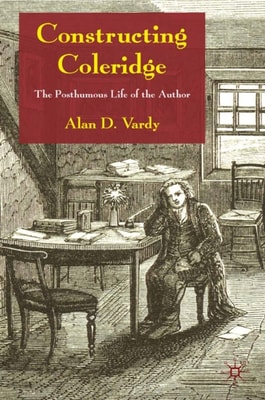
Constructing Coleridge examines Coleridge's penchant for re-invention and carefully demonstrates how the Coleridge family editors followed his lead in constructing his posthumous reputation.
The categories of authenticity and sincerity, treated sceptically since the early twentieth century, remain indispensable for the study of Romantic literature and culture.
Long confounded with a monolithic British entity or misrepresented as 'Lakers' and 'Cockneys', the diverse regional forms of 'English Romanticism' are ripe for reassessment.
Specially selected from The New Palgrave Dictionary of Economics 2nd edition, each article within this compendium covers the fundamental themes within the discipline and is written by a leading practitioner in the field.
Explores dramatic, narrative and polemical versions of the 'taming of the shrew' story, from the Middle Ages to the Restoration, in light of recent historical work on the position of early modern women in society.
Philip Larkin, one of England's greatest and most popular twentieth-century poets, is nonetheless widely regarded as a misanthropic, provincial recluse.
While artistically ambitious poets of the era are often characterized as preferring a lasting future fame to contemporary popularity, this book reveals that a sophisticated, strategic and fascinated engagement with new modes of fame was central to the experiments with literary form of poets such as Byron, Keats, Shelley and Barrett Browning.
Through an examination of his later personal notebooks, this study explores the reciprocal effects that Samuel Taylor Coleridge's scientific explorations, philosophical convictions, theological beliefs, and states of health exerted upon his perceptions of human Body/Soul relations, both in life and after death.
A comprehensive guide to the poems, prose, biography, ideas and contexts of Byron, entries range from detailed coverage of the major poems to items on Byron's songs, conversation, interest in boxing, swimming and vampires, and sexual liaisons; also the 'Byronic Hero', Byron in fiction and drama, and his pervasive influence on subsequent literature.
This balanced and innovative collection explores the relationship of Shakespeare's plays to the changing face of early modern religion, considering the connections between Shakespeare's theatre and the religious past, the religious identities of the present and the deep cultural changes that would shape the future of religion in the modern world.
This innovative book offers an interdisciplinary analysis of Shakespearean theatre, presented in a series of imaginative readings of plays from every period of the playwright's career, from Two Gentlemen of Verona and The Taming of the Shrew to King Lear and The Tempest , mapping a new approach to ideas of the theatre as an institution.
In recent years, the 'Popular Shakespeare' phenomenon has become ever more pervasive: in fringe productions, mainstream theatre, or the mass media, Shakespeare is increasingly constructed as an authentic part of popular culture.
This book addresses works of the European Renaissance as they relate both to the world of their origins and to a modern culture that turns to the early moderns for methodological provocation and renewal.
This exciting new study examines Coleridge's understanding of the Pantheism Controversy - the crisis of reason in German philosophy - revealing the context informing Coleridge's understanding of German thinkers.
This book offers new analyzes of canonical texts, contextualizations of Romantic forms in relation to war, nationalism and empire, reassessments of neglected and marginalized writers and explorations of the relationship between form and reader.
This collection presents twelve outstanding new essays on Byron by leading critics from the USA, Canada and the UK including Steven Bruhm, Peter Cochran, Paul Curtis, Caroline Franklin, Peter Kitson, Ghislaine McDayter, Tim Morton, David Punter and Pamela Kao, Michael Simpson, Philip Shaw, Nanora Sweet and Susan Wolfson.
A collection of essays on one of the twentieth century's most popular yet critically neglected authors, this book explores the full range of Thomas's work.
This book explores the ways in which Blake reacted to the subcultures of his day, as well as how he has inspired popular, modernist and postmodernist figures until the present day.
In its analysis of Anglo-Jewish women writing the Holocaust, this book highlights the necessity of their inclusion in the evolving canon of modern British literature, by showing how these writers complicate theories of trauma and memory by using fantasy and the Gothic as a response to silence.
An important part of the national imaginary, Yeat's work has helped to invent the nation of Ireland, while critiquing the modern state that emerged from it's revolutionary period.
The Halletts' investigation differs from anything that has been written about the relationship between Thomas More and William Shakespeare in that it approaches the subject from a dramaturgical point of view.
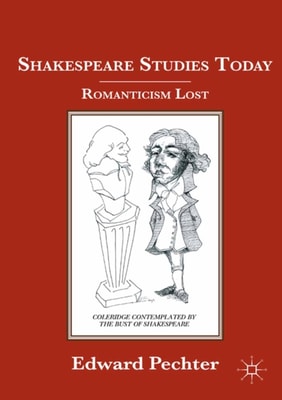
The Romantics invented Shakespeare studies, and in losing contact with our origins, we have not been able to develop an adequate alternative foundation on which to build our work.
The most influential East-West artistic, cultural, and literary exchange that has taken place in modern and postmodern times was the reading and writing of haiku.
Through politics, religion and his relationship with Wordsworth, the book builds to a new interpretation of the poems where Coleridge's daemonic imagination produces its myths: The Ancient Mariner, Kubla Khan and Christabel .
Using Hamlet and a number of other popular and influential seventeenth-century tragedies as case-studies, this book shows how aesthetic experience can help organize the biological functions of our brains into adaptive social networks.
This book is concerned with language, genre, drama, and literary and historical narrative and examines the comedy of Shakespeare in the context of comedies from Italy, Spain, and France in the sixteenth and seventeenth centuries.
Nichols chronicles the Enlightenment view of 'Nature' as static and separate from humans as it moved towards the Romantic 'nature' characterized by dynamic links among all living things.