This volume presents the first translation in English of the complete poetry of Giacomo da Lentini, the first major lyric poet of the Italian vernacular.
This volume presents the first translation in English of the complete poetry of Giacomo da Lentini, the first major lyric poet of the Italian vernacular.
Whether the rapt trances of Romanticism or the corpse-like figures that confounded Victorian science and religion, nineteenth-century depictions of bodies in suspended animation are read as manifestations of broader concerns about the unknowable in Anne C.
Whether the rapt trances of Romanticism or the corpse-like figures that confounded Victorian science and religion, nineteenth-century depictions of bodies in suspended animation are read as manifestations of broader concerns about the unknowable in Anne C.
Ukrainian epic, or dumy, were first recorded from blind mendicant minstrels in the nineteenth century, yet they reflect events dating back to as early as the 1300s.
Ukrainian epic, or dumy, were first recorded from blind mendicant minstrels in the nineteenth century, yet they reflect events dating back to as early as the 1300s.
Heroic poetry was central to the construction of Anglo-Saxon values, beliefs, and community identity and its subject matter is often analyzed as a window into Anglo-Saxon life.
The Saints in Old Norse and Early Modern Icelandic Poetry is a complimentary volume to The Legends of the Saints in Old Norse-Icelandic Prose (UTP 2013).
Fracture of Metals is part of a multivolume treatise that brings together the fundamentals for critical evaluation of the different theories and experimental findings on brittle fracture.
Wendell Berry teaches us to love our places--to pay careful attention to where we are, to look beyond and within, and to live in ways that are not captive to the mastery of cultural, social, or economic assumptions about our life in these places.
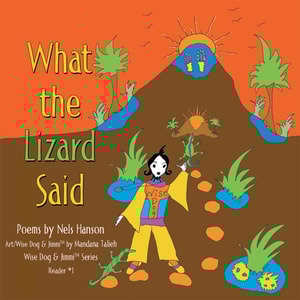
What the Lizard Said is the first in a series of illustrated poetry books that chronicle the adventures of Wise Dog and his younger friend, Jimmi, two dogs on a quest to learn important lessons about the world we live in.
';Funny and smart' (The New Yorker) criticism of why we turn to artspecifically to poetry and popular musicand how it serves as an essential tool to understanding life.
'Fascinating' The Times'Blakeian in its singularity' New Statesman'A wonderful adventure' Irish Times'Rich, complex and original' Tom Holland'A crisp, ambitious and thoroughly contemporary introduction' Times Literary SupplementPoet, artist, visionary and author of the unofficial English national anthem 'Jerusalem', William Blake is an archetypal misunderstood genius.
'If a thing loves, it is infinite' William BlakeA short, impassioned argument for why the visionary artist William Blake is important in the twenty-first centuryThe visionary poet and painter William Blake is a constant presence throughout contemporary culture - from videogames to novels, from sporting events to political rallies and from horror films to designer fashion.
In Book II of the "e;Aeneid"e;, Aeneas relates to Dido his own account of Troy's destruction and his escape, including the episode of the Wooden Horse.
'In a world in which we tend to look to what's new, to cutting-edge science and to medical breakthroughs for hope in better health, there's something marvellous in the realisation that one of the most beautiful and longest-lasting cures has been here all along - on the internet, on our bookshelves, under our noses.
'Broad in scope, generous in spirit and wittily accompanied by Risbridger's commentary'Sarah Perry, author of The Essex SerpentSet Me On Fire is an anthology for a new moment in poetry: a collection of fresh, vibrant voices from poets all over the globe, both living and dead.
The first biography of this great and tragic poet that takes advantage of a wealth of new material, this is an unusually balanced, comprehensive and definitive life of Sylvia Plath.