Set in the 1950s, The Broken Word is an extraordinary poetic sequence that animates and illuminates a dark, terrifying period in British colonial history.
Maya Angelou's poetry - lyrical and dramatic, exuberant and playful - speaks of love, longings, partings; of Saturday night partying and the smells and sounds of Southern cities; of freedom and shattered dreams.
A beautiful and inspiring collection of poetry by Maya Angelou, author of I KNOW WHY THE CAGED BIRD SINGS and 'a brilliant writer, a fierce friend and a truly phenomenal woman' (BARACK OBAMA).
A Concise Companion to MILTON A Concise Companion to Milton provides readers with essential guides to appreciating the works of John Milton, and to understanding the great influence they have had on literature.
A COMPANION TO & EIGHTEENTH-CENTURY POETRY A COMPANION TO & EIGHTEENTH-CENTURY POETRYEdited by Christine Gerrard This wide-ranging Companion reflects the dramatic transformation that has taken place in the study of eighteenth-century poetry over the past two decades.
Comprising more than 30 substantial essays written by leading scholars, this companion constitutes an exceptionally broad-ranging and in-depth guide to one of America s greatest poets.
This concise companion provides a succinct introduction to Chaucer's major works, the contexts in which he wrote, and to medieval thought more generally.
Written by a leading critic, this invigorating introduction to modernist American poetry conveys the excitement that can be generated by a careful reading of modernist poems.
This Companion brings together specially commissioned essays by distinguished international scholars that reflect both the diversity of Victorian poetry and the variety of critical approaches that illuminate it.
This Concise Companion gives readers a rich sense of how the poetry produced in the United States during the twentieth century is connected to the country s intellectual life more broadly.
Revolutionary thinking at the end of the Eighteenth century prompted major English writers to probe the riddle of human consciousness and the ways in which it might differ from 'Being' in a divine or universal sense.
This book situates John Clare's long, prolific but often badly neglected literary life within the wider cultural histories of the Regency and earlier Victorian periods.
This book calls attention to the pervasive but largely unacknowledged poetics of the 'Fancy' evident in poetry written during the British Romantic period.
In this collection literary scholars, theorists and historians deploy new economic techniques to illuminate English Renaissance literature in fresh ways.
At the end of the eighteenth century, scientists for the first time demonstrated what medieval and renaissance alchemists had long suspected; ice is not lifeless but vital, a crystalline revelation of vigorous powers.
This book marries a theoretical analysis of the issues underlying the role of the dramaturg with a thorough sense of the material conditions of theatrical production, from script editing and rehearsal room interactions to the preparation of programme notes and audience lectures.
This collection focuses on a woman's point of view in love poetry, and juxtaposes poems by women and poems about women to raise questions about how femininity is constructed.
In God and Elizabeth Bishop Cheryl Walker takes the bold step of looking at the work of Elizabeth Bishop as though it might have something fresh to say about religion and poetry.
Erotic Coleridge charts Coleridge's prolific creation of love poems from early flirtatious verse to poems about marital incompatibility, the blank faces of young women fearing for their reputations, the obliterating seductions of young women, the exaltation of falling in love, the spoken and sung voices of women, the pain of jealousy, and late meditations on how to live with the waning of love.
One way and another, nearly all of Shakespeare's countrymen and women (including the playwright himself) spent at least parts of their lives as servants of someone else.
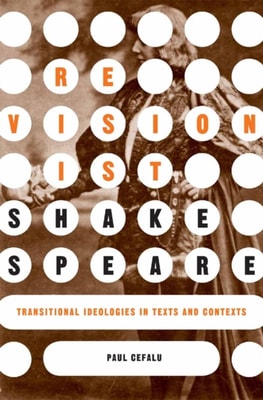
Revisionist Shakespeare appropriates revisionist history in order to both criticize traditional transitional interpretations of Shakespearean drama and to offer a new methodology for understanding representations of social conflict in Shakespeare's play and in Early Modern English culture.
Columbus, Shakespeare, and the Interpretation of the New World explores a range of images and texts that shed light on the complexity of the European reception and interpretation of the New World.
Lady Caroline Lamb , among Lord Byron's many lovers, stands out - vilified, portrayed as a self-destructive nymphomaniac - her true story has never been told.
The advent of relatively cheap editions in the mid-sixteenth century produced an explosion of verse, much of which represented the first person speaker as a version of the author.
In this sequel to his Romantic Consciousness, John Beer discusses further questionings of human consciousness; both the degree to which Dickens's conscious dramatizing differs from the subconscious workings of his psyche and the exploration of subliminal consciousness by nineteenth-century psychical researchers.
In Thomas Hardy: Texts and Contexts distinguished critics from Canada, Japan, the USA and the UK, offer fresh and challenging readings of Hardy's works.
Spatial Representations and the Jacobean Stage offers a timely alternative to theatre criticism's neglect of the intensely spatial character of theatrical performance.
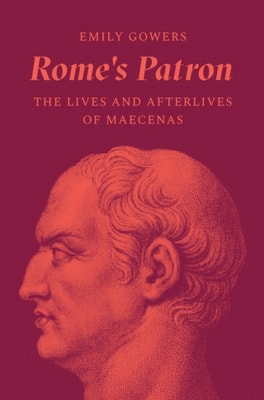
The story of Maecenas and his role in the evolution and continuing legacy of ancient Roman poetry and cultureAn unelected statesman with exceptional powers, a patron of the arts and a luxury-loving friend of the emperor Augustus: Maecenas was one of the most prominent and distinctive personalities of ancient Rome.
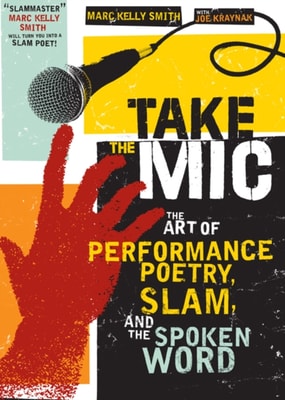
Get on Stage and Perfect Your PerformanceHave you ever enjoyed a slam or two and thought, "e;I could do this,"e; but felt apprehensive staring at that empty mic-or worse, you climbed up on stage and struggled?
Ließ Brechts zum Diktum gewordenes Versfragment «Gespräch über Bäume» die Naturlyrik zum fragwürdigen Genre werden, so rief es gleichwohl bald Widerspruch hervor, nicht nur in Paul Celans lyrischer Replik «Ein Blatt, baumlos» und den ebenfalls auf Brecht antwortenden Gedichten Erich Frieds und Günter Eichs, sondern auch in der engagierten ökokritischen Dichtung seit den 1970er Jahren.
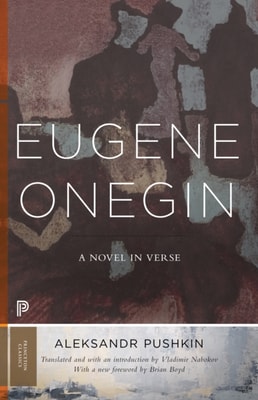
When Vladimir Nabokov's translation of Pushkin's masterpiece Eugene Onegin was first published in 1964, it ignited a storm of controversy that famously resulted in the demise of Nabokov's friendship with critic Edmund Wilson.
From one of today's most distinguished critics, a beautifully written exploration of one of the twentieth century's most important literary criticsAre literary critics writers?
Presented in one volume for the very first time, and updated with new archival discoveries, Early Auden, Later Auden reintroduces Edward Mendelson's acclaimed, two-part biography of W.
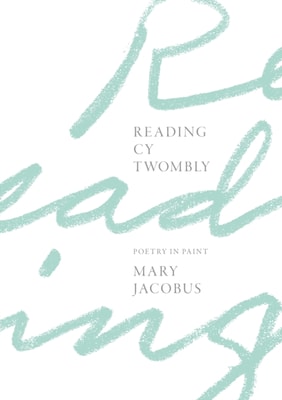
The first book on the central importance of literary sources in the paintings of Cy TwomblyMany of Cy Twombly's paintings and drawings include handwritten words and phrases-naming or quoting poets ranging from Sappho, Homer, and Virgil to Mallarme, Rilke, and Cavafy.