In Radiant Emptiness, Yaroslav Komarovski offers an annotated translation of three seminal works on the nature and relationship of the Yogacara and Madhyamaka schools of Buddhist thought, by Serdok Penchen Shakya Chokden (1428-1507).
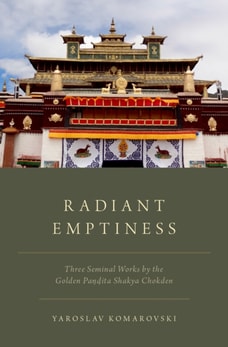
In Radiant Emptiness, Yaroslav Komarovski offers an annotated translation of three seminal works on the nature and relationship of the Yogacara and Madhyamaka schools of Buddhist thought, by Serdok Penchen Shakya Chokden (1428-1507).
In the quarter century following the enactment of the Americans with Disabilities Act, art museums, along with other public institutions, were tasked with making their facilities and collections more accessible to people with disabilities.
In the quarter century following the enactment of the Americans with Disabilities Act, art museums, along with other public institutions, were tasked with making their facilities and collections more accessible to people with disabilities.
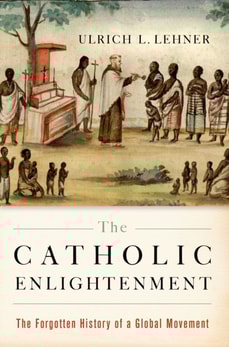
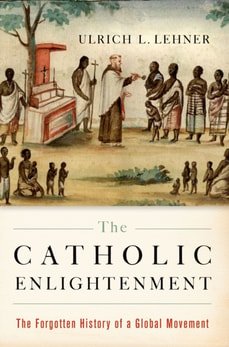
We have long been taught that the Enlightenment was an attempt to free the world from the clutches of Christian civilization and make it safe for philosophy.
In Probability Designs, Karin Kukkonen proposes a new perspective on the complex role of predictions and probabilities in the dynamics of literary narrative.
In Probability Designs, Karin Kukkonen proposes a new perspective on the complex role of predictions and probabilities in the dynamics of literary narrative.
The works collected in this volume have profoundly shaped the history of criticism in the Western world: they created much of the terminology still in use today and formulated enduring questions about the nature and function of literature.
One of the most powerful, perceptive and influential works of criticism in Western literary history In his near-contemporary account of classical Greek tragedy, Aristotle examines the dramatic elements of plot, character, language and spectacle that combine to produce pity and fear in the audience, and asks why we derive pleasure from this apparently painful process.
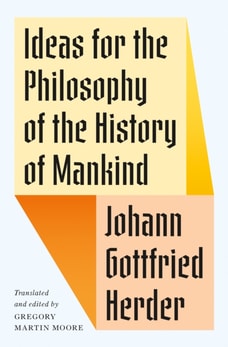
One of the most important works of the Enlightenmentin the first new, unabridged English translation in more than two centuriesPublished in four volumes between 1784 and 1791, Herder's Ideas for the Philosophy of the History of Mankind is one of the most important works of the Enlightenmenta bold, original, and encyclopedic synthesis of, and contribution to, the era's philosophical debates over nature, history, culture, and the very meaning of human experience.
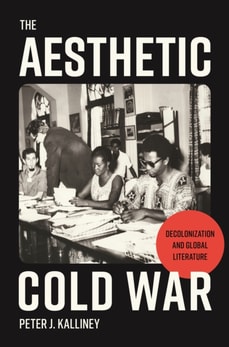
How decolonization and the cold war influenced literature from Africa, Asia, and the CaribbeanHow did superpower competition and the cold war affect writers in the decolonizing world?
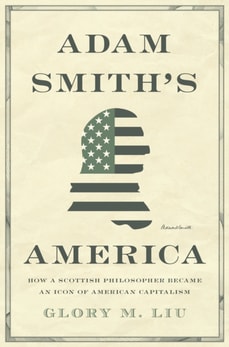
The unlikely story of how Americans canonized Adam Smith as the patron saint of free marketsOriginally published in 1776, Adam Smith's The Wealth of Nations was lauded by America's founders as a landmark work of Enlightenment thinking about national wealth, statecraft, and moral virtue.
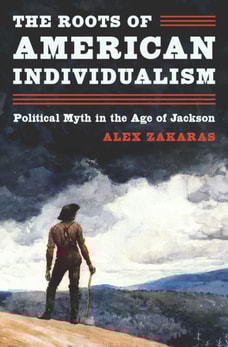
A panoramic history of American individualism from its nineteenth-century origins to today's bitterly divided politicsIndividualism is a defining feature of American public life.
This carefully crafted ebook: "e;A Portrait of the Artist as a Young Man - The Original Book Edition of 1916"e; is formatted for your eReader with a functional and detailed table of contents.
Site Reading offers a new method of literary and cultural interpretation and a new theory of narrative setting by examining five sites-supermarkets, dumps, roads, ruins, and asylums-that have been crucial to American literature and visual art since the mid-twentieth century.
A radically new way of thinking about form and context in literature, politics, and beyondForms offers a powerful new answer to one of the most pressing problems facing literary, critical, and cultural studies today-how to connect form to political, social, and historical context.
The first comprehensive look at how Victorian fiction and British psychoanalysis shaped each otherNovel Relations engages twentieth-century post-Freudian British psychoanalysis in an unprecedented way: as literary theory.
An intellectual history of the late Roman Republicand the senators who fought both scholarly debates and a civil warIn The Roman Republic of Letters, Katharina Volk explores a fascinating chapter of intellectual history, focusing on the literary senators of the mid-first century BCE who came to blows over the future of Rome even as they debated philosophy, history, political theory, linguistics, science, and religion.
I used to have this line I saved and brought out for grant applications and writers festivals - that having been Jane Eyre, Anna Karenina and Esther Greenwood all my life, my writing was an opportunity for the reader to have to be me.
Introduction to Afrofuturism delivers a fresh and contemporary introduction to Afrofuturism, discussing key themes, understandings, and interdisciplinary topics across multiple genres in Black literature, film, and music.
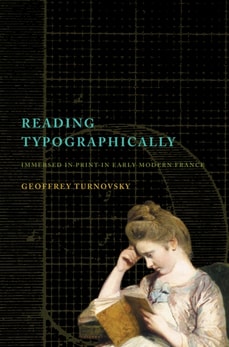
Anxieties about the fate of reading in the digital age reveal how deeply our views of the moral and intellectual benefits of reading are tied to print.
Comprised of contributions from leading international scholars, The Routledge Handbook of Arabic Poetry incorporates political, cultural, and theoretical paradigms that help place poetic projects in their socio-political contexts as well as illuminate connections across the continuum of the Arabic tradition.
A uniquely personal account of the life and enduring legacy of the Renaissance libraryWith the advent of print in the fifteenth century, Europe's cultural elite assembled personal libraries as refuges from persecutions and pandemics.
Die Epistolarkultur um 1900 ist bislang kaum erforscht worden - obwohl Autoren wie Hugo von Hofmannsthal und Rainer Maria Rilke immens viele Briefe verfasst haben, deren Poetizität an Prosagedichte heranreicht.
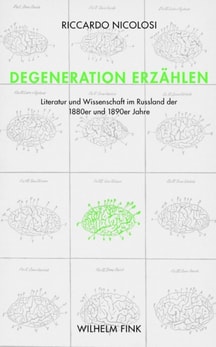
Riccardo Nicolosis Studie fördert ein neues, überraschendes Bild des russischen fin de siècle in seinen vielfältigen Beziehungen zum gesamteuropäischen Degenerationsdiskurs zutage.
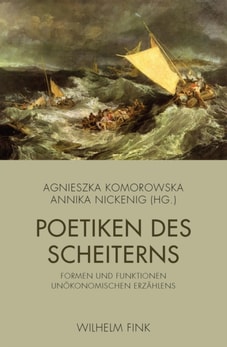
Stellt das Scheitern in Form von Bankrott und Börsencrash häufig den dramatischen Endpunkt einer ökonomischen Unternehmung dar, so gilt für die Literatur nachgerade das Gegenteil.