History of Nigeria (1969) was first published in 1929 and completely revised by its author, and gives the history of Nigeria from before its first encounters with the British, through colonial rule, and up to independence in 1960.
Ecocriticism explores the ways in which we imagine and portray the relationship between humans and the environment across many areas of cultural production, including Romantic poetry, wildlife documentaries, climate models, the Hollywood blockbuster The Day After Tomorrow, and novels by Margaret Atwood, Kim Scott, Barbara Kingsolver and Octavia Butler.
Ecocriticism explores the ways in which we imagine and portray the relationship between humans and the environment across many areas of cultural production, including Romantic poetry, wildlife documentaries, climate models, the Hollywood blockbuster The Day After Tomorrow, and novels by Margaret Atwood, Kim Scott, Barbara Kingsolver and Octavia Butler.
The novelist and philosopher Iris Murdoch and the painter Harry Weinberger engaged in over twenty years of close friendship and intellectual discourse, centred on sustained discussion of the practice, teaching and morality of art.
Seamus Heaney's Mythmaking examines Seamus Heaney's poetic engagement with myth from his earliest work to the posthumous publication of Aeneid Book VI.
Originally published in English in 1991 and now reissued with a new Preface by Jack Zipes, this book presents and examines the work of two little-known writers, Oskar Panizza and Mynona (Salomo Friedlaender).
Originally published in English in 1991 and now reissued with a new Preface by Jack Zipes, this book presents and examines the work of two little-known writers, Oskar Panizza and Mynona (Salomo Friedlaender).
Seamus Heaney's Mythmaking examines Seamus Heaney's poetic engagement with myth from his earliest work to the posthumous publication of Aeneid Book VI.
Working within a global frame, The Routledge Companion to Postcolonial and Decolonial Literature considers postcolonial and decolonial literary works across multiple genres, languages, and both regional and transnational networks.
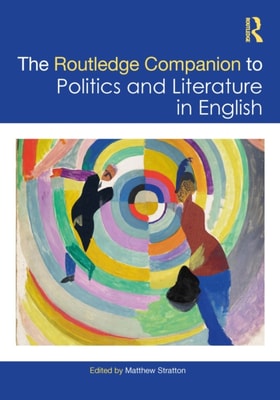
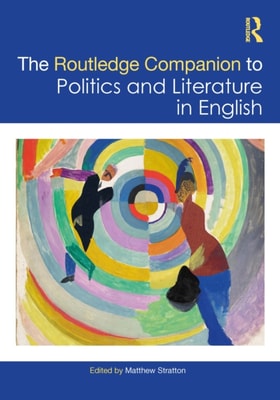
The Routledge Companion to Politics and Literature in English provides an interdisciplinary overview of the vibrant connections between literature, politics, and the political.
An Introduction to the Blue Humanities is the first textbook to explore the many ways humans engage with water, utilizing literary, cultural, historical, and theoretical connections and ecologies to introduce students to the history and theory of water-centric thinking.
The Routledge Companion to Politics and Literature in English provides an interdisciplinary overview of the vibrant connections between literature, politics, and the political.
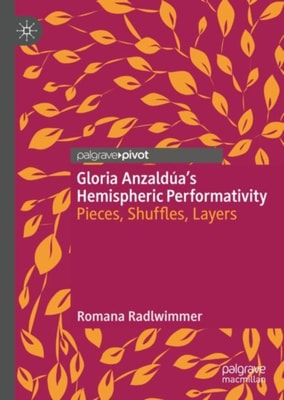
This Palgrave Pivot offers new insights into leading Chicana writer Gloria Anzaldua, investigating the dynamic composition of her texts, and situating her work in a larger hemispheric tendency of performativity emerging at the turn of the millennium.
Syntactic Argumentation and the Structure of English (SASE) presents the major theoretical developments in generative syntax and the empirical arguments motivating them.
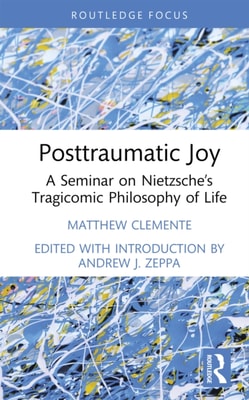
Posttraumatic Joy presents the major themes and ideas of Nietzsche's corpus from a continental and psychoanalytic perspective with a particular bent toward how they might illuminate ways of coping with and living beyond trauma and suffering.
Posttraumatic Joy presents the major themes and ideas of Nietzsche's corpus from a continental and psychoanalytic perspective with a particular bent toward how they might illuminate ways of coping with and living beyond trauma and suffering.
This book discusses an archival turn in the work of contemporary Caribbean writers and visual artists across linguistic locations and whose work engages critically with various historical narratives and colonial and postcolonial records.
An argument that humanists have the toolsand the responsibilityto mobilize political power to tackle climate changeAs climate catastrophes intensify, why do literary and cultural studies scholars so often remain committed to the separation of aesthetic study from the nitty-gritty of political change?
Largely forgotten over the years, the seminal work of French poet, novelist and camp survivor Jean Cayrol has experienced a revival in the French-speaking world since his death in 2005.
Media expansion into the digital realm and the continuing segregation of users into niches has led to a proliferation of cultural products targeted to and consumed by women.
This unique collection of essays, accompanied by videos, at last brings a dazzling view of the literary, social, and performative aspects of American Sign Language to a wide audience.
The "e;ancient quarrel"e; between philosophy and literature seems to have been resolved once and for all with the recognition that philosophy and the arts may be allies instead of enemies.
The landmark 2008 presidential and vice presidential campaigns of Hillary Clinton and Sarah Palin brought the role of women in American leadership into sharper focus than ever before.