A new selection of foundational works from the influential philosopher who developed the theory of mimetic desireWhy do humans have such a remarkable capacity for conflict?
This Palgrave Pivot offers new insights into leading Chicana writer Gloria Anzaldua, investigating the dynamic composition of her texts, and situating her work in a larger hemispheric tendency of performativity emerging at the turn of the millennium.
This book explores the growth and operations of the Japanese restaurant in Australia since the early 2000s from perspectives of both restaurant workers and consumers.
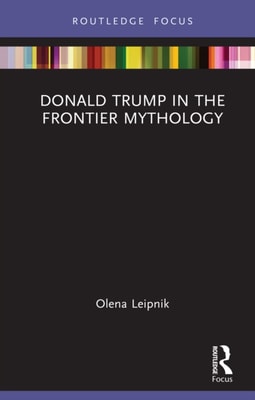
This book explores the presidential image of Donald Trump as it is constructed by the media within American national mythology, precisely the frontier myth.
Lecturas a través del espejo es un libro que recupera la mirada de Victoria Mora sobre la obra de algunos autores que considera insoslayables para cualquiera que ame la literatura.
This book explores the growth and operations of the Japanese restaurant in Australia since the early 2000s from perspectives of both restaurant workers and consumers.
This book discusses an archival turn in the work of contemporary Caribbean writers and visual artists across linguistic locations and whose work engages critically with various historical narratives and colonial and postcolonial records.
This book explores the presidential image of Donald Trump as it is constructed by the media within American national mythology, precisely the frontier myth.
This book examines the translations carried out by Italian novelist Beppe Fenoglio, one of the most important Italian writers of the twentieth century.
Decolonial Animal Ethics in Linda Hogan's Poetry and Prose is a plea for an urgent redefinition of human-animal relations on the basis of a nonanthropocentric animal ethic embraced by premodern Indigenous communities but depreciated by coloniality.
Decolonial Animal Ethics in Linda Hogan's Poetry and Prose is a plea for an urgent redefinition of human-animal relations on the basis of a nonanthropocentric animal ethic embraced by premodern Indigenous communities but depreciated by coloniality.
This volume offers spatial theories of the emergent based on a careful close reading of the complete works of nineteenth-century writer and mathematician Lewis Carroll-from his nonsense fiction, to his work on logic and geometry, including his two short pamphlets on architecture.
This volume offers spatial theories of the emergent based on a careful close reading of the complete works of nineteenth-century writer and mathematician Lewis Carroll-from his nonsense fiction, to his work on logic and geometry, including his two short pamphlets on architecture.
Literary Theory and Criminology demonstrates the significance of contemporary literary theory to the discipline of criminology, particularly to those criminologists who are primarily concerned with questions of power, inequality, and harm.
The Routledge Global Haiku Reader provides a historical overview and comprehensive examination of haiku across the world in numerous languages, poetic movements, and cultural contexts.
From the perspective of critical cultural sociology, this book delves into the intertwining relations of cultural transformation and social evolution, illuminating contemporary Chinese culture's landscape and underlying logic since the 1980s.
This book questions Italian "e;white innocence"e; and examines the specificity of Italian racial discourse through the analysis of different kinds of texts and representations.
This book examines the translations carried out by Italian novelist Beppe Fenoglio, one of the most important Italian writers of the twentieth century.
From the perspective of critical cultural sociology, this book delves into the intertwining relations of cultural transformation and social evolution, illuminating contemporary Chinese culture's landscape and underlying logic since the 1980s.
Medieval Literature: Criticism and Debates combines classic critical essays alongside new voices and approaches, highlighting vibrant debates on medieval literature that will continue to shape critical conversations for the coming decades.
The Routledge Global Haiku Reader provides a historical overview and comprehensive examination of haiku across the world in numerous languages, poetic movements, and cultural contexts.
Literary Theory and Criminology demonstrates the significance of contemporary literary theory to the discipline of criminology, particularly to those criminologists who are primarily concerned with questions of power, inequality, and harm.
Medieval Literature: Criticism and Debates combines classic critical essays alongside new voices and approaches, highlighting vibrant debates on medieval literature that will continue to shape critical conversations for the coming decades.
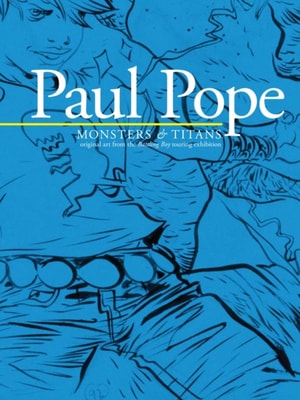
PAUL POPE 's new graphic novel Battling Boy debuted at #1 on the New York Times bestseller list, and the original art is now the focus of a series of traveling art exhibits in the United States and Europe.
PAUL POPE 's new graphic novel Battling Boy debuted at #1 on the New York Times bestseller list, and the original art is now the focus of a series of traveling art exhibits in the United States and Europe.