This book examines the conceptual, existential, and logical conditions under which the philosophical novel can be treated as a literary genre on a par with generally recognized literary genres, such as mystery, romantic, adventure, religious, or historical novel.
This Pivot traces the rise of the so-called "e;vegetarian"e; vampire in popular culture and contemporary vampire fiction, while also exploring how the shift in the diet of (some) vampires, from human to animal or synthetic blood, responds to a growing ecological awareness that is rapidly reshaping our understanding of relations with others species.
This book redefines modern Indian literature from a cosmopolitan comparative perspective inclusive of literature in English from India and the diaspora, in native languages, and works by non-Indians.
This book sets out to investigate how contemporary African diasporic women writers respond to the imbalances, pressures and crises of twenty-first-century globalization by querying the boundaries between two separate conceptual domains: love and space.
This book considers metaphor as a communicative phenomenon in the poetry of Emily Dickinson, Elizabeth Bishop and Seamus Heaney, in light of the relevance theory account of communication first developed by Dan Sperber and Deirdre Wilson in the 1980s.
This handbook offers a collection of scholarly essays that analyze questions of reproductive justice throughout its cultural representation in global literature and film.
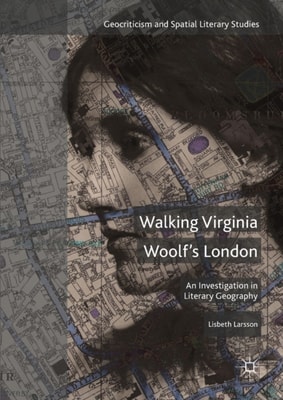
This innovative volume employs theoretical tools from the field of literary geography to explore Virginia Woolf's writing and the ways in which she constructs her human subjects.
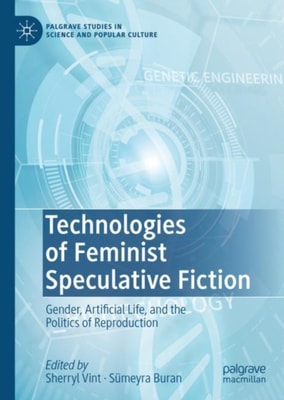
Technologies of Feminist Speculative Fiction: Gender, Artificial Life, and the Politics of Reproduction explores how much technology has reshaped feminist conversations in the decades since Donna Haraway's influential "e;Cyborg Manifesto"e; was published.
This book brings together for the first time nine groundbreaking historical novels by women from the United States, Canada and Latin America, united by their focus on female adventurers.
The essays collected within this volume ask how literary practices are shaped by the experience of being at sea-and also how they forge that experience.
This book demonstrates, in contrast to statistics that show declining consumption of physical formats, that there has not been a mass shift towards purely digital media.
This book offers the first comprehensive discussion of Lacan's Kant with Sade, an essay widely recognised as one of his most important and difficult texts.
Restoring the Human Context to Literary and Performance Studies argues that much of contemporary literary theory is still predicated, at least implicitly, on outdated linguistic and psychological models such as post-structuralism, psychoanalysis, and behaviorism, which significantly contradict current dominant scientific views.
This book examines South Africa's post-apartheid culture through the lens of affect theory in order to argue that the socio-political project of the "e;new"e; South Africa, best exemplified in their Truth and Reconciliation Commission Hearings, was fundamentally an affective, emotional project.
Translocality in Contemporary City Novels responds to the fact that twenty-first-century Anglophone novels are increasingly characterised by translocality-the layering and blending of two or more distant settings.
In a world awash in awesome, sensual technological experiences, wonder has diverse powers, including awakening us to unexpected ecological intimacies and entanglements.
This book examines the relationship between words and images in various life-writing works produced by nineteenth to twenty-first century American and British women.
This edited collection aims at highlighting the various uses of water in sixteenth, seventeenth, and eighteenth-century England, while exploring the tensions between those who praised the curative virtues of waters and those who rejected them for their supposedly harmful effects.
At a time when the Humanities are under threat, this book offers a defense of poetry within the context of growing interest in mindfulness in business, health care, and education.
This book explores the humanities as an insightful platform for understanding and responding to the military prison at Guantanamo Bay, other manifestations of "e;Guantanamo,"e; and the contested place of freedom in American Empire.
Questioning Ayn Rand: Subjectivity, Political Economy, and the Arts offers a sustained academic critique of Ayn Rand's works and her wider Objectivist philosophy.
This volume explores 'unknown time' as a cultural phenomenon, approaching past futures, unknown presents, and future pasts through a broad range of different disciplines, media, and contexts.
Limits and Languages in Contemporary Irish Women's Poetry examines the transactions between the two main languages of Irish literature, English and Irish, and their formative role in contemporary poetry by Irish women.
Agatha Christie and the Guilty Pleasure of Poison examines Christie's female poisoners in the context of Christie's own experience in pharmacy and of detective fiction.
This book explores the body's physical limits and the ways in which the confines of the body are delineated, transgressed, or controlled in literary and philosophical texts.
This book rethinks the concept of community taking Jean-Luc Nancy's influential essay "e;La communaute desoeuvree"e; as its starting point, tracing subsequent scholarship on community and adding new insights on avant-garde aesthetics and politics.
Science Fiction in Translation: Perspectives on the Global Theory and Practice of Translation focuses on the process of translation and its implications.
Trauma and Motherhood in Contemporary Literature and Culture repositions motherhood studies through the lens of trauma theory by exploring new challenges surrounding conception, pregnancy, and postpartum experiences.
One of the leading figures in Latin American folk music and art during her lifetime, Violeta Parra was a vital force in the artistic, musical, visual, cultural, and social cultural production of the Chilean 1960s.
This book presents a critique of neoliberalism within UK Higher Education, taking its cue from approaches more usually associated with literary studies.