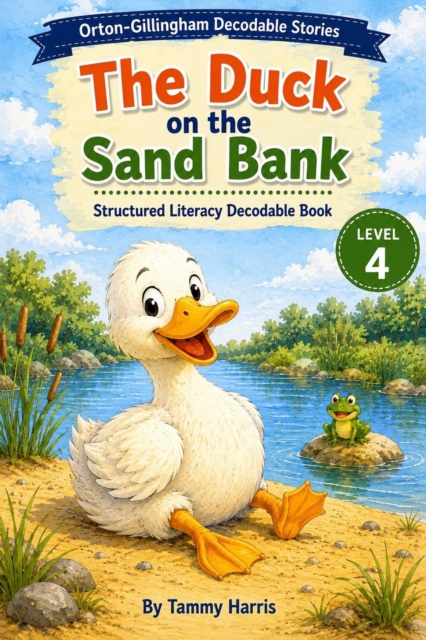
The Duck on the Sand Bank is a Level 4 structured literacy decodable reader designed for children learning to apply foundational phonics skills through controlled text.
Thomas Chatterton's fabrications-or "e;forgeries"e;-of historical poems ostensibly written from the thirteenth through the fifteenth centuries have attracted a great deal of attention and discussion of their authenticity since the eighteenth century.
Paradoxia Epidemica is a broad-ranging critical study of Renaissance thought, showing how the greatest writers of the period from Erasmus and Rabelais to Donne, Milton, and Shakespeare made conscious use of paradox not only as a figure of speech but as a mode of thought, a way of perceiving the universe, God, nature, and man himself.
Thomas Rimer's book seeks to explain the background, structural principles, and development of pre-modem and modern Japanese fiction in a way that is comprehensive, methodical, and accessible to the general reader.
This major interpretation of the life and art of Robert Lowell exposes the full relationship between the poetry and the personal and national experience to which it is so remarkably connected.
As an especially beautiful and pure example of the archaic epic styles that were once current among the hunting and fishing peoples of northern Asia, the Ainu epic folklore is of immense literary value.
This collection of essays has been compiled in the hope of making scholars in the rest of the world more familiar with Japanese studies in English literature.
Maxima Dalee is a deeply personal and emotionally charged collection of poetry that journeys through heartbreak, longing, loss, mental illness, resilience, and the enduring search for hope.
Encouraged by the response of the avid novel-reading public in early nineteenth-century England, minor novelists produced a staggering number of volumes that shaped styles, formed attitudes, and gave to the novel a new status and respectability.
The Philological Quarterly's annual bibliographies of modern studies in English neoclassical literature, published originally from 1961 to 1970, are reproduced in two volumes.
Professor Alpers argues that Spenser's purpose in The Faerie Queene was not to create a fictional world or to imitate action, but to create and manipulate the reader's response.
Michelle Zerba engages current debates about the relationship between literature and theory by analyzing responses of theorists in the Western tradition to tragic conflict.
The Advent Lyrics, a group of Old English religious antiphons (formerly called Christ I) dating from about the 9th century, are presented in this edition as an independent group of poems disengaged, for the first time, from Cynewulf's Christ.
"e;Well translated by Lacy Lockert, who provided an excellent critical introduction, this is a valuable selection of the plays of the great French Neo-Classicist.
Translators Leonard Nathan and James Larson present seventy-five poems from Gunnar Ekelof's middle phase (1938-1959), a period that saw the production of his richest and most enduring poetry.
One of the most racy, entertaining, and valuable contemporary accounts of Byron, Medwin's Conversations created a furor among Byron's many friends and enemies, especially those who appear in it.
Bringing together a collection of this distinguished medievalist's most important and controversial work, heretofore scattered and frequently inaccessible, this book constitutes both an appropriate introduction for students new to medieval studies and a convenient compendium for scholars established in the field.
Eugene Goodheart's remarkably compact and penetrating analysis examines the skeptic disposition that has informed advanced literary discourse over the past generation.
Contending that a search for "e;realism"e; distorts the writing of Crebillon, Marivaux, Laclos, and Stendahl, Peter Brooks considers their novels with reference to the manner in which the characters explore their worth and pursue their own systems of relationships.
Treating John Milton's Paradise Lost as a Christian vision of reality and Bunyan's Pilgrim's Progress as an allegory of the Christian life, Roland Mushat Frye brings together two seventeenth-century works in this highly original literary study.
Although midday is commonly associated with indolence or the languishing of both nature and humanity in stifling heat, Nicolas Perella shows that this connection-however real-is secondary to an archetypal encounter with noontide as a moment of existential crisis of spiritual as well as erotic dimensions.
Frederick Garber studies in a wide range of English, French, German, and American literary texts instances of the struggle for the self's autonomy during the period preceding modernism.
Few Greek tragedies confront the critic with more varied difficulties than the Suppliants, and perhaps no other tragedy has been the subject of such diverse interpretation.
Focusing particularly on literary texts, but including biographical and intellectual background, this study examines numinous feeling as it is recorded by a number of seventeenth and eighteenth-century writers: Browne, Drydcn, Pascal; Pope and Swift; Hume and Johnson; eight other poets, including Watts, Smart, Cowper, and Blake; and four novelists, including Richardson, Radcliffe, and Monk"e; Lewis.
Wai-lim Yip's study of Ezra Pound's translation of the difficult Cathay poems also includes a discussion of the problems of translation from Chinese in general, and the effort by Pound in these poems in particular.
Here is the first major study of domestic service in France from the late seventeenth century to the early nineteenth century, describing its transformation from a male-oriented occupation, aristocratic in style and often geared to public display, to one that was female, middle-class, and centered on the household.
James Olney demonstrates that autobiography, because it provides the most direct narrative enactments of the ways, motives, and beliefs of a culture, is an excellent way to approach African literature.
Thoreau turned toward Indians in his writing as well as in his life, and this book traces the long and arduous process by which his ideas about Indians evolved from savagist stereotypes to attitudes of greater originality.
Barton Friedman demonstrates the ways in which English men of letters in the nineteenth century attempted to grasp the dynamics of history and to fashion order, however fragile, out of its apparent chaos.