A author collects the best of the poems that we organize eight of the Arab poets and imams of rhetoric; Among them is "Al -Bashri", "Al -Mutaibi", and "Abu Al -Ala'a Al -Ma'ari".
The Akkad presents his second poetic office, which he produced in his youth, and he was distinguished by his renewal style of Arabic poetry and deviating from traditional classic stagnation.
The Shiite literary heritage includes abundantly abundant treasures in which the lament of science and literature - honestly and tab - has been emptied with all their great efforts that have been available from the vision of generations, which preserved us - to this day - many important important effects, and the heels of the times are in the merits of poets in all of Egypt to Mr.
The book of similes is entered from the poems of the people of Andalusia in the circle of the interest of specialists in the field of Arabic language in particular and researchers in related topics in general; Where the book of similes enters from the poems of the people of Andalusia within the scope of language science and the documentation of other specializations such as poetry, linguistic rules, literature, rhetoric, and Arabic literature.
"Mahmoud Sami Al -Baroudi" is an Egyptian poet born in 1838 AD from a family related to the affairs of government and grew up as an ambition to hold important positions after he joined the military corps, and he educated himself by seeing the Arab heritage, especially the literary, so he read the collections of poets and memorized their poetry while he was in the past His age, and he was admired by the glorified poets such as Abi Tammam, Al -Bahtari, Al -Sharif Al -Radhi, Al -Mutanabbi and others, and he is the pioneer of the Baath and Revival School in modern Arabic poetry, and he is one of the leaders of the Arab revolution and took over the Ministry of War and then the Prime Minister to choose the revolutionaries for him, the title of "Lord of the sword And the pen.
The shrines of Badi Al -Zaman Al -Hamdhani, the first book of a thousand in the art of maqamat, but he did not find what the shrines of Hariri had to care for their explanation and a strange interpretation for reasons that he knows from the view of Badi Al -Zaman and his letters such as message No.
The book explaining the Diwan al -Mutanabbi attributed to Al -Akbari in the circle of the attention of researchers in the field of Arabic language in particular and researchers in the academic branches related to general in general where the book explaining the Diwan al -Mutanabbi attributed to Al -Akbari is located in the scope of Arabic language science and the documentation of other specializations such as language rhetoric and Arabic literature Poetry, prose and other linguistic topics that concern the learner in this field.
The book contains the choices of the favorite of the best poems from the masterpieces of poetry and its sincere for poets fried, along with the choices of Al -Asma'i from the eyes of old poetry.
"Diwan Ismail Sabri" is a poetic book written by the poet Ismail Sabry, which includes four collections of poems: "The Cono ifs", the first collection in the book, including two epic poems, Noni and Hamzah, after which the "Poet of the Universes" was called.
(Theoretical Maqamat), whose author was keen to be fifty, is similar to the places of Badi Al -Zaman and Al -Hariri, in one hundred and seventy -nine pages of the small size, which was copied by Abu Bakr Omar Bajaber in the city of Sirte in the year 1193 AH.
"On the Wind Rits," a poetic epic of its Lebanese poet Fawzi Al -Maalouf, containing fourteen poems, carrying the spirit of nostalgia to the homeland, and revealing the imagination of the poet, his dreams and aspirations, glorifying the status of poetry and poets, and makes the poem a bright planet guided by all the longing.
Esta publicación es una invitación al lector colombiano, así como a todos los hispanoamericanos, a leer en las páginas de este libro la convivencia de nuestras lenguas hermanas en su mejor forma: el canto, la poesía.
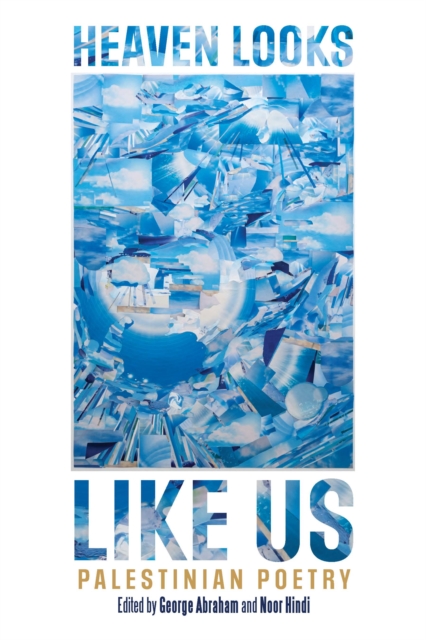
Poems in Revolution Recollected and New Struggle Poems deal with, among other issues, the North African uprisings in Tunisia, Egypt, Libya, and intersects into the Middle East conflicts in Syria, Bahrain, Saudi Arabia, Yemen, and the never ending conflict between Israel and Palestine.
The book explaining the Diwan al -Mutanabi in the circle of the attention of researchers in the field of Arabic language in particular and researchers in the academic branches related to general in general, as it falls within the scope of Arabic language science and the documentation of other specializations such as linguistic rhetoric, Arabic literature, poetry, prose and other linguistic topics that concern the learner in this field.
The spectrum of imagination is what the sleeper sees during his sleep, and here it is related to visiting the beloved spectrum during a dream, and it is an expression of the lover's preoccupation with his beloved, which prevented the circumstances between him and the meeting with it, so the lover remains busy with it always thinking about it, so he communicates with it during sleep This was one of the most important topics of Arab poetry from pre -Islamic poetry to the era of Sharif Al -Murtada (436 AH), the author of this book.
Systems in a thousand and three hundred houses, and usually classified and scholars are to ask them something in classification, authorship or systems, but Ibn Al -Murtali wanted to organize himself in order to facilitate the seeking to seek knowledge, and it has been hidden from many people that the Muwatta is not a system of eloquent, but we can prepare it Explanation.
A book by Abu Saeed Abdul -Malik bin Qurayb Al -Asma'i, famous for Al -Asma'i, which is a group in choosing Arabic poetry and in the format of preferences that includes selections of pre -Islamic, veteran and Islamic poetry.
Arab women's poetry is digested right, old and modern, so you can hardly see a poetic Diwan, or a group of jam, neglected that first, and went on their late effects.
Excerpts from the book of the collection of jewels in salt and anecdotes of the exclusive, which falls within the framework of the literature of humor, in which authorship and collection flourished during the Abbasid era, so that a book of heritage books in literature, history and news is almost free from the party, salt and anecdotes.
It is a book on pre -Islamic literature, in which the author explained the seven pendants, in addition to the poem of Al -Nabigha Al -Dhobyani and the poem of Al -Ashi, a moderate explanation without boring lengthening and no default with the correction of the narratives and mentioning the necessary martyrdom.
Literary life in Andalusia and Morocco was active in the eighth century, and the level of culture remained high in the Kingdom of Granada, and a number of researchers, writers, classifications and poets appeared in both countries, who gave this era a bright image of the forms of the predecessors, Kassan al -Din al -Khatib, Ibn Zumark, and Abu al -Hassan bin Al -Jayab .
"Elias Abu Shabaka" wrote his poetic collection "snakes of Paradise" at separate time times, which made it different experience and giving, as he tries to distance himself from the poetic schools that abounded at the time, gathered the supporters, also exchanged accusations with those who violated it, and violated the theories that they put in place.

The Muhammadoun book is one of the poets and their poems is important to the important references of researchers busy with the study of thinkers and scholars; Where the book of Muhammadoun is included in the poets and their poems within the scope of the books of personalities, flags, scholars and related branches such as translations, philosophy of history and social thought
A book in the proverbs in which the author mentioned a group of proverbs circulating among the Arabs and the events that led to the words of these proverbs.

He studied the life of the greats the best lessons that belong to its owner with the general benefits, especially if the life of the great is written in his pen.
The hurricanes of the age that stormed his poetry did not exceed his poetry, and his wisdom flowed in the poems of this bureau, and his collection also did not deviate from the Ghazli poems, and some of his poems came as a reading of the world's troubles after the Second World War.
Ibn al -Shajri continued to follow the march of poetry until his time, that is, the sixth century, but in a severe stumbling, so it was a nostalgia by choosing the poets of the fourth, fifth, and sixth centuries.
The book of the cheerful in the interpretation of the names of the poets of enthusiasm Ibn Jenni enters the circle of the attention of researchers in the field of Arabic language in particular and researchers in scientific branches are generally related in general, where the book of the cheerful is located in the interpretation of the names of the poets of enthusiasm Ibn Jenni in the scope of Arabic language science and the documentation of other specialties such as Linguistic rhetoric, Arabic literature, poetry, prose and other linguistic topics that concern the learner in this field.
The book "The enthusiasm of Al -Dhafa'a is one of the poems of the modern and the ancient" by Abu Muhammad Abdullah bin Muhammad al -Abdalkani al -Zuzni between its two books, the most wonderful arts of poetry art in various purposes of Arabic poetry.
The book "Two Drops of Prose and Poets", from the books of small size, but it carries with it deep meanings, where the author Ahmed Zaki Abu Shadi casts many lights on several topics, using his poetic and philosophical vision, where he wrote these lights using systems and prose, so it is considered The title of the book "Two Drops of Prose and Poetry", completely expressing what is between the book papers, in which there is a drop of a system in which poetry is used in the most beautiful images and words of romance, and talking about fruits, Nile, love and kirouan, and it has a drop in which he talks about the theater of life and what art, poetry and law Nature, the atrocities of war, the class of poets, etc.
Quartets; A kind of poetry is famous in Persian poetry, and Omar Al -Khayyam was known, which is Ghiath al -Din Abu al -Fotouh Omar bin Ibrahim al -Khayyam known as Omar al -Khayyam, a Persian poet, and a scientist in astronomy and mathematics.
The book "The Anthology of the Arab Poets" in which Ibn al -Shajri picked some of the eyes of the Arab poems, and explained it as a linguistic and literary explanation.
Al -Hiriri's places are literary shrines composed by Muhammad Hariri Al -Basri, and they are one of the most famous stations that belong to the art of Arabic writing that Badi Al -Zaman Al -Hamdhani, which is a kind of short stories celebrated by the acting movement, and the dialogue in it between two people, and its author is committed to the literary workmanship that depends on Al -Saja and Al -Badia.
"Elias Abu Network" in this book The writer describes the gods of his poetic temple and thus some of the names of the gods: "Ahmed Shawky", "Hafez Ibrahim", "Fawzi Maalouf", "Elias Fayyad", "Flex Fares", and Rashid Nakhleh, "Gibran Khalil Gibran", and the country "Lebanon", and in terms of poetry and sincere emotion, the poet did not invent a new religion, but he created a statement and a tight and eloquent organization, as he did not make the gods of worship, but rather performed his poetic spirit inspiring, some of what they deserved The flags are inspiring.
"The Diwan of Abd al -Rahman Shukri" by his author, the Egyptian poet and writer Abdel Rahman Shukri, is a vivid picture of the emotions of poetry, where his poems were in love, life and death, his Diwan began with the light of dawn, which included a harmonious poetic collection, then wrote: Pearls of ideas, and the songs of the Saba, Zahr Al -Rabi, The dangers, Diwan Al -Afnan, Dawan of Fall Flowers and Other Poles, each of them involved a collection of poems.
A collection of thoughts for the novelist and translator Muhammad Lutfi Jumaa, expressing the conditions of his life and details from diaries, dreams, memories and experiences in education and travel, and his texts revolve around his beloved Russian writer Augusta, whose presence appears clear in the writer's conscience.