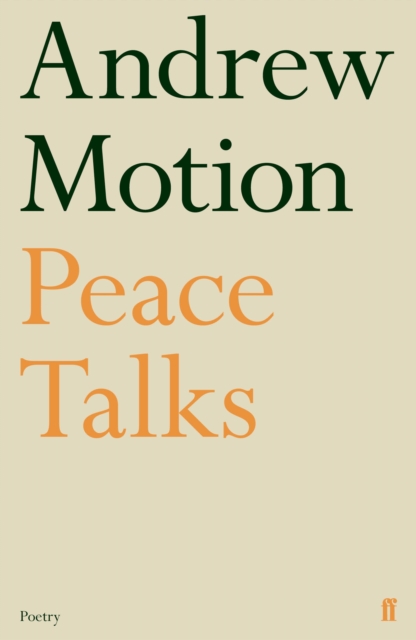
The second half of Andrew Motion's new collection returns to the sequence begun in Laurels and Donkeys, completing a body of work recognised by the Wilfred Owen Poetry Award in 2014.
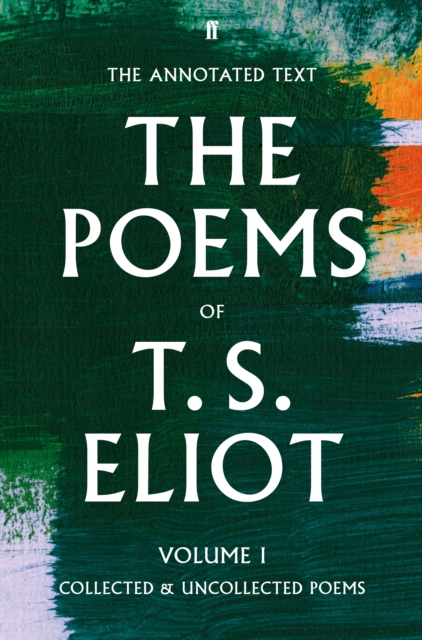
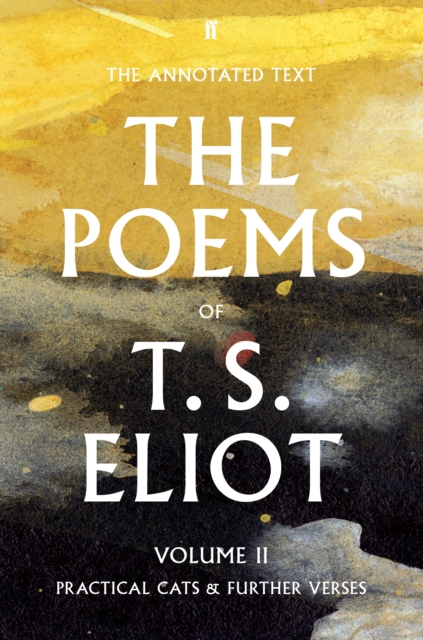
Here, for the first time, is a fully scrutinized text of Eliot's poems, carefully restoring accidental omissions and removing textual errors that have crept in over the full century in which Eliot has been so frequently printed and reprinted.
The poems in David Harsent's new collection, whether single poems, dramatic sequences, or poems that 'belong to one another', share a dark territory and a sometimes haunting, sometimes steely, lyrical tone.
Hugo Williams is rightly cherished for his inimitable fusion of autobiography and irony, and a technical glide that allows his writing to 'slip back to the past as effortlessly as a dreamer' (The Times).
In 2002 Vernon Scannell wrote the following: 'It has been my firm belief since I first began to attempt the art of poetry that the making of a poem should be, as Yeats asserted, a difficult business.
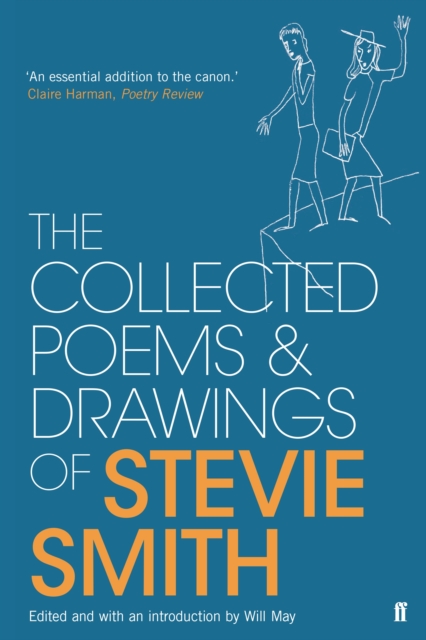
When Stevie Smith died in 1971 she was one of the twentieth-century's most popular poets; many of her poems have been widely anthologised, and 'Not Waving but Drowning' remains one of the nation's favourite poems to this day.
To a Fault, Nick Laird's debut collection, won the Rooney Prize for Irish Literature and the Jerwood Aldeburgh First Collection Prize; On Purpose, his follow up, won a Somerset Maugham award for travel writing.
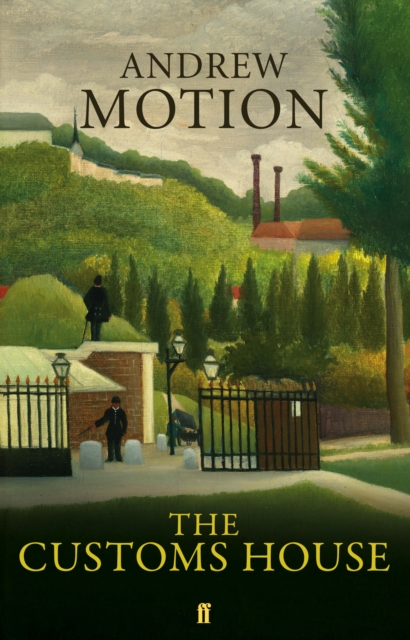
Andrew Motion's new book opens with a sequence of war poems (first published as the pamphlet Laurels and Donkeys, on Armistice Day 2010), drawing on soldiers' experiences of war from 1914 until today - beginning with a story about Siegfried Sassoon and moving via World War Two and Korea to the recent conflicts in Iraq and Afghanistan.
The Alliterative Morte Arthure - the title given to a four-thousand line poem written sometime around 1400 - was part of a medieval Arthurian revival which produced such masterpieces as Sir Gawain and the Green Knight and Sir Thomas Malory's prose Morte D'Arthur.
In gathering four decades of work, Hugo Williams's Collected Poems brings back into print a vast body of material long since unavailable - from his 1965 debut Symptoms of Loss to Self-Portrait with a Slide (1990) and including Writing Home (1985), described by Mick Imlah in the Independent on Sunday as 'a classic of creative autobiography'.
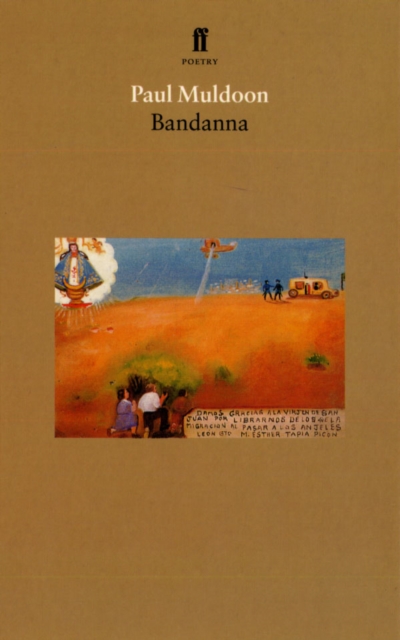
Following his highly-praised Shining Brow (1993), which was also written as an opera libretto for the American composer Daron Aric Hagen, Paul Muldoon's Bandanna takes us into very different territory.
Dear Room is a worthy successor to Billy's Rain (1999), whose preoccupations and occasions it continues and ramifies, charting the 'angles, signals, orders, murmurs, sighs' of love, separation and loss.
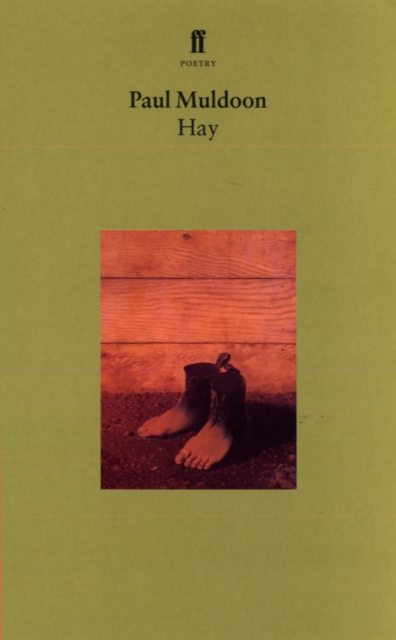
Paul Muldoon's collection Hay refines, and re-defines, a lyrical strain in which an ostensible lightness of touch still has the strength to bear the weightiest subject matter.
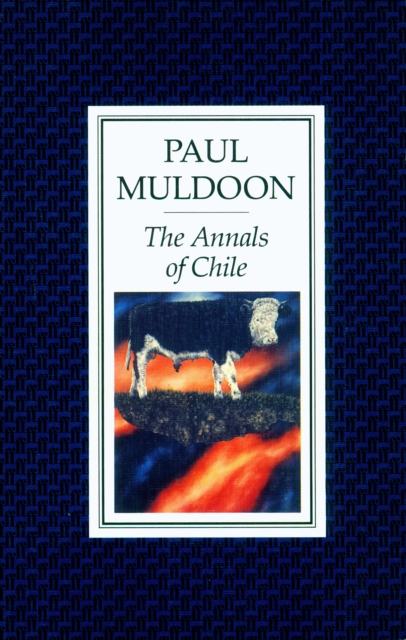
The Annals of Chile is Paul Muldoon's seventh collection of poems and contains, amongst other things, celebrations of the birth of his daughter, a plangent and frankly personal lament fo the artist Mary Farl Powers, and a long fantasy invoking the world of boys' adventure stories, over which the poet's mother presides as a benign influence.
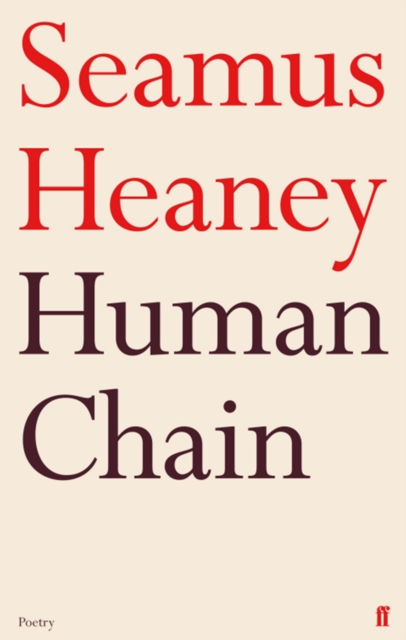
Seamus Heaney's new collection elicits continuities and solidarities, between husband and wife, child and parent, then and now, inside an intently remembered present - the stepping stones of the day, the weight and heft of what is passed from hand to hand, lifted and lowered.
Andrew Motion's new collection (his first since Public Property in 2002) offers a ground-breaking variety of lyrics, love poems and elegies, in which private domains of feeling infer other lives and a shared humanity - exploring how people cope with threats to and in the world around them, as soldiers, lovers, artists, writers and citizens.
When Philip Larkin's High Windows first appeared, Kingsley Amis spoke for a large and loyal readership when he wrote: 'Larkin's admirers need only be told that he is as good as ever here, if not slightly better.
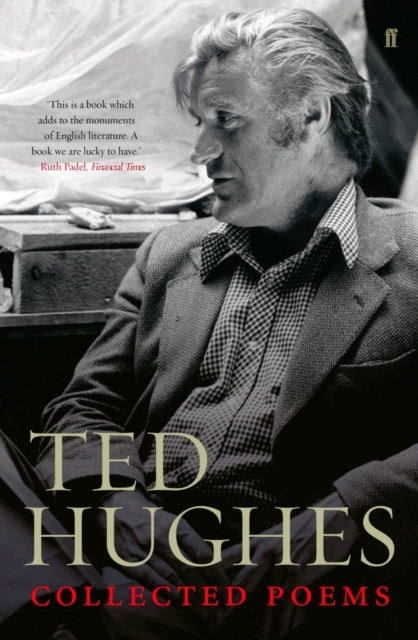
For the first time, the vast canon of the poetry of Ted Hughes - winner of the Whitbread and Forward Prizes and former Poet Laureate - together in a single e-book.
In the decades since his death in 1963, Louis MacNeice's reputation as a poet (and, indeed, amongst poets) has grown steadily, and there are now several generations of readers in Ireland, Britain, and beyond, for whom he is one of the essential poets of the twentieth century.
'Each year Eliot's presence reasserts itself at a deeper level, to an audience that is surprised to find itself more chastened, more astonished, more humble.
Seamus Heaney's new collection starts 'in an age of bare hands and cast iron' and ends 'as the automatic lock / clunks shut' in the eerie new conditions of a menaced twentieth-first century.
Composed towards the end of the first millennium, the Anglo-Saxon poem Beowulf is one of the great Northern epics and a classic of European literature.
From his home in a West Yorkshire village proverbially associated with cuckoos, Simon Armitage has been probing the night sky with the aid of a powerful Russian telescope.