This book, which covers the period from preliterate times to the beginning of the tenth century, is the first of five proposed volumes that will give an account of Japanese literature from its beginnings to the death of the modern novelist Mishima.
Kierkegaard claimed that the gods created man because they were bored, and Baudelaire predicted that the "e;delicate monster"e; of boredom would one day swallow up the whole world in an immense yawn.
In a period of active scientific innovation and technological change, Charles Augustin Coulomb (1736-1806) made major contributions to the development of physics in the areas of torsion and electricity and magnetism; as one of the great engineering theorists, he produced fundamental studies in strength of materials, soil mechanics, structural design, and friction.
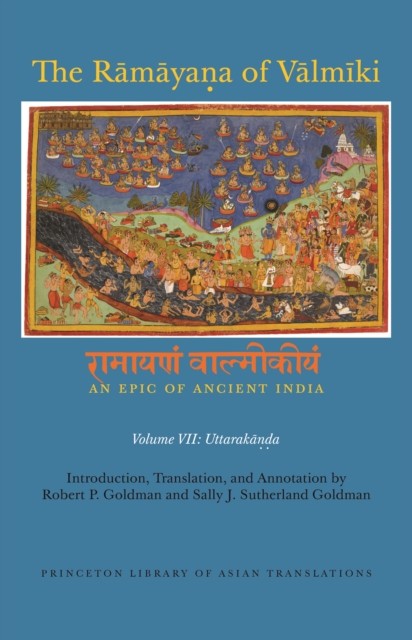
The concluding volume of a critical English edition of the monumental Indian epicThe seventh and final book of the monumental Ramayana of Valmiki, the Uttarakanda, brings the epic saga to a close with an account of the dramatic events of King Rama's millennia-long reign.
Seeing Flannery O'Connor in the company of poets, rather than realistic prose writers, this work shows how she uses recurring figures of speech to transform or re-create the external world.
This close reading of Seneca's most influential tragedy explores the question of how poetic language produces the impression of an individual self, a full personality with a conscious and unconscious emotional life.
In an engaging discussion that will appeal to all students of poetry, including veteran scholars, this book shows which poems most occupied the attention of these moderns, summarizes their attitudes toward historical romanticism, explores what use they made of aesthetic and ethical ideas from the critical prose of 1800-1825, and takes notice of when, where, and precisely how they adapted images and echoed phrases from romantic poetry for use in their own work.
Treating Sholokhov's art and life against the Soviet political background, the author considers the episodes in his life that influenced his writing and then shows how one-sided commitment to party ideology led to his creative deterioration.
Bringing together more than a thousand unpublished letters as well as all the widely scattered published ones, these four volumes represent the first attempt at a complete edition of the letters of Edward Fitzgerald (1809-1883).
This book sets the Novelas ejemplares in the mainstream of Christian Humanism and shows that their narrative forms manifest the breadth of the Christian Humanist vision as much as does the more overtly revolutionary Don Quixote.
The second of live volumes planned to give a systematic account of Japanese literature from its beginnings to the death of the modern novelist Mishima, this book establishes the character of the literature of the early Middle Ages, from the ninth to the mid-twelfth century.
Building on recent transformative theories of influence, John Foster explores the many ways Nietzsche's intellectual and artistic example helped shape an interconnected series of major literary projects from 1900 to the 1940s.
In this new edition of George Seferis's poems, the acclaimed translations by Edmund Keeley and Philip Sherrard are revised and presented in a compact, English-only volume.
These translations are a book length selection in English of the poetry of Robert Marteau, a distinguished contemporary French poet, novelist, and art critic.
Poems ranging from "e;La Jeune Parque"e; and "e;Le Cimetiere marin"e; to occasional and light verse written as letters to friends, dedications in books, and inscriptions on ladies' fans demonstrate the wide scope of Valery's lyric preoccupation.
Includes some of Valery's finest strokes of imagination, Broken Stories; some of his wittiest observations, Mixtures, Poems in the Rough; and even two of his great poems, Parables and The Angel-all written in the form of prose.
This comprehensive edition in English begins with a volume on the theme of Don Quixote, the greater part of which is devoted to The Life of Don Quixote and Sancho, followed by sixteen essays on diverse aspects of the Quixote motif.
This collection of Valery's occasional pieces-speeches, interviews, articles-shows him very much as the public figure, the first in demand when an "e;occasion"e; needed a prominent person.
The literary renaissance of Modern Greece is the subject of essays by ten critics and scholars on the theme, "e;Modern Greek Literature and it European Background.
This collection of essays by the eminent historian Joseph Strayer makes available in one volume his important shorter studies on the central theme of the political, constitutional, and institutional history of France and England in the twelfth and thirteenth centuries.
Grouped together in this book are several smaller volumes and plaquettes in which Valery had published selections of his shorter prose writings: aphorisms, moral reflections, poetic observations, flashes of wit or fancy, even jokes-a variety of remarks and impressions, many of them first recorded in his Notebooks.
Here in one volume is some of the most exciting poetry written during the last thirty years, culled from the pages of one of America's foremost literary magazines.
To probe the nature of Woodrow Wilson's intellectual development, this book focuses on the relationship between his religious thought and other areas of his life, from his years as a student and professor through those of his presidency of Princeton University.
Although some of the most distinguished German novels written since about 1770 are generally considered to be Bildungsromane, the term Bildungsroman is all too frequently used in English without an awareness of the tradition from which it arose.
Writing about poetry Diana O Hehir says, "e;I think of poetry as harnessed energy-as a marvelous way of taking the chaotic emotion, the turbulent perception, and recreating them as images that are specific, definite, directed.
Although Hofmannsthal never completed his only novel Andreas, its theme-the quest for self through memory-haunted the Viennese writer and recurs again and again in his poems, libretti, and essays.
Why, during the last two hundred years, when critical achievement in the field of tragedy has been outstanding, has there been little creative practice?
This is the first of two volumes which will make available in convenient form the annual bibliographies of 18th century scholarship published for the past 25 years in the Philological Quarterly.
A most thorough study of the Elizabethan Tragedy of Revenge, its origins, development, the ethical influence affecting it and the inter-relations of the plays.