A rapprochement between anthropological demography and human evolutionary ecology through recognition of common research topics incorporating cultural and biological motivation.
This simply written introduction to scientific research and experimentation takes youngsters into an exciting world where they'll not only learn to discover their own answers to specific problems but will be encouraged to develop sound scientific attitudes and techniques as well.
Written by an award-winning author of science books for children, this engrossing book enables youngsters (ages 7 to 13) to do 38 safe experiments at home or in the classroom with such common items as a teaspoon and saucer, paper towels, aspirin, baking powder, plastic straws, vinegar, and rubbing alcohol.
Here is a highly motivating book for grade-school students that will introduce them to many of the world's most popular (and historically significant) scientific experiments.
Your personal coach and game plan for creating a unique and award-winning science fair project Developing a science fair project from the ground up can be a daunting task--and today's science fairs are more competitive than ever before.
A hands-on and fun-filled resource for teaching science to middle and high school students New in the 5-Minute Fundamentals Series, The Science Teacher's Activity-A-Day, Grades 6-12, includes 180 easy, five-minute hook or sponge activities to capture learners' attention and introduce lessons.
A hands-on and fun-filled resource for teaching science to middle and high school students New in the 5-Minute Fundamentals Series, The Science Teacher's Activity-A-Day, Grades 6-12, includes 180 easy, five-minute hook or sponge activities to capture learners' attention and introduce lessons.
Kids and teachers can build their own science projects based on exhibits from San Francisco's premiere science museum This revised and updated edition offers instructions for building junior versions, or "e;snacks,"e; of the famed Exploratorium's exhibits.
Kids and teachers can build their own science projects based on exhibits from San Francisco's premiere science museum This revised and updated edition offers instructions for building junior versions, or "e;snacks,"e; of the famed Exploratorium's exhibits.
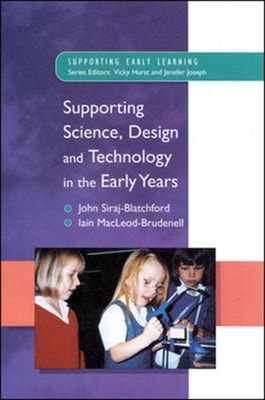
This innovative book aims to support schools in shifting teaching and learning in primary science by changing teacher perceptions of where science should be taught.
"e;The book has wide appeal in that the issues investigated - for example, the nature of science, practical work, the role of language, of technology and formative and summative assessment - are relevant and pertinent to science teachers' work in all school systems.
Science in secondary schools has tended to be viewed mainly as a 'practical subject', and language and literacy in science education have been neglected.
Despite the power of words to move minds, appreciating the written or spoken word is rarely thought to be the essence of teaching and learning science and much more effort goes into organizing practical work.
The Pupil as Scientist intends to give teachers and student teachers a better understanding of the thinking of young adolescent pupils in science lessons and to indicate the difficulties such pupils have in understanding the more abstract or formal ideas with which they are presented.
This book focuses on the talk of science classrooms and in particular on the ways in which the different kinds of interactions between teachers and students contribute to meaning making and learning.
This innovative book aims to support schools in shifting teaching and learning in primary science by changing teacher perceptions of where science should be taught.