In A Scientist Speaks Out - A Personal Perspective on Science, Society, and Change, Nobel Laureate (Chemistry, 1951) Glenn T Seaborg shares some of his thoughts and reflections on his broad interests, from the formulation of national science policy to the promise of youth.
In easy-to-follow conversational language, this book reveals the mysteries of physics and tells about the physicists who made it possible, from the discovery of the laws of gravity by Isaac Newton and the construction of the first electric battery by Alessandro Volta, to the present century's development of solid-state electronics, nuclear arms and nuclear reactors, lasers, etc.
"e;The common perception of Alzheimer's from people who haven't experienced it is that it's more like a 'quirk' which all elderly people experience at some point.
The aims of the International Conference on Physics Education in Cultural Contexts were to explore ways towards convergent and divergent physics learning beyond school boundaries, improve physics education through the use of traditional and modern cultural contexts, and exchange research and experience in physics education between different cultures.
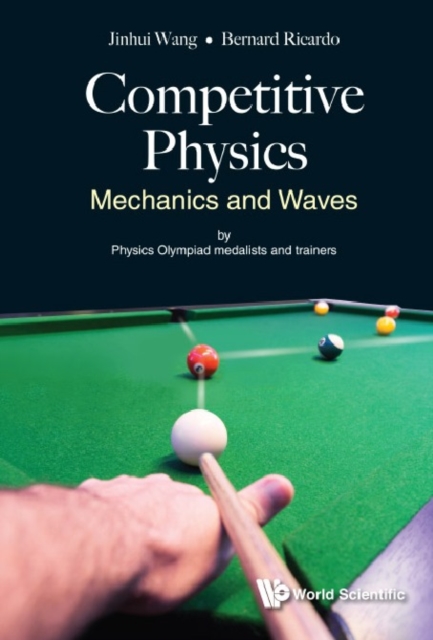
Written by a former Olympiad student, Wang Jinhui, and a Physics Olympiad national trainer, Bernard Ricardo, Competitive Physics delves into the art of solving challenging physics puzzles.
The World of Science series engages, educates and entertains children, imparting scientific facts, while nurturing the love of Science through dynamic, full-colour comics enriched by Augmented Reality.
Get to grips with how things work inside hundreds of machines with this extraordinary book for kids that explains the science behind technologies and inventions.
En las últimas tres décadas asistimos a cambios profundos en las experiencias infantiles que se expresan en los cuerpos, lenguajes e interacciones de los niños y niñas.
The Bloomsbury Curriculum Basics series provides non-specialist primary school teachers with subject knowledge and full teaching programmes in a variety of key primary curriculum subjects.
STEPS (Science Tasks Enhance Process Skills) to STEM (Science, Technology, Engineering, Mathematics) is an inquiry-based science curriculum supplement focused on developing upper elementary and middle students' process skills and problem-solving abilities characteristic of how scientists think and act.
This text contains 24 Project-Based Learning (PBL) lessons written by high school teachers (adaptable for middle school) that include lesson appropriate for all subjects.
This volume explores the challenges of teaching and learning Science, Technology, Engineering and Mathematics (STEM) subjects in local languages and local contexts in a range of countries around the world.
This book is aimed at chemistry teachers, teacher educators, chemistry education researchers, and all those who are interested in increasing the relevance of chemistry teaching and learning as well as students' perception of it.
Education for Sustainability is a key priority in today's schools, as our society seeks to find a balance between environmental, social, cultural, political and economic imperatives that affect our future.
The STEM Students on the Stage (SOS)(TM) model was developed by Harmony Public Schools with the goal of teaching rigorous content in an engaging, fun and effective way.
Scientific literacy is approached on the premise that language is key to understand the nature of both learning and participation, in scientists' practices as well as in liberal education for citizenship.
This volume presents distinctive, innovative models of teacher education from Australia, discusses their successful elements and considers possibilities for successful teacher education in the twenty-first century.
This book provides science teacher educators and science educational researchers with a current overview on the roles of beliefs in science education settings.
This book provides professional development leaders and teachers with a framework for integrating authentic real-world performance tasks into science, technology, engineering, and mathematics (STEM) classrooms.
To naturalists, there is no such thing as complete justification for any claim, and so requiring complete warrant for naturalist proposals is an unreasonable request.
Current research into student learning in science has shifted attention from the traditional cognitivist perspectives of conceptual change to socio-cultural and semiotic perspectives that characterize learning in terms of induction into disciplinary literacy practices.

This second edition of Project-Based Learning (PBL) presents an original approach to Science, Technology, Engineering and Mathematics (STEM) centric PBL.