In the current era of health care reform, the pressures to truly manage patient care and to build effective integrated delivery systems are generating intense interest in patient care information systems.
Performance Improvement through Information Management highlights performance improvement and business strategies throughout various health care settings, focusing on business drivers and management mechanisms, explaining when, how, and why information technology solutions are of value.
Defining a new development life-cycle methodology, together with a set of associated techniques and tools to develop highly critical systems using formal techniques, this book adopts a rigorous safety assessment approach explored via several layers (from requirements analysis to automatic source code generation).
This book explores current research and development in the area of digital healthcare using recent technologies such as data science and artificial intelligence.
This book presents a collection of invited contributions, each reflecting an area of biomedicine in which simulation techniques have been successfully applied.
This book on Infectious Disease Informatics (IDI) and biosurveillance is intended to provide an integrated view of the current state of the art, identify technical and policy challenges and opportunities, and promote cross-disciplinary research that takes advantage of novel methodology and what we have learned from innovative applications.
view, showing that multiple molecular pathways must be affected for cancer to develop, but with different specific proteins in each pathway mutated or differentially expressed in a given tumor (The Cancer Genome Atlas Research Network 2008; Parsons et al.
It is a tragic paradox of American health care: a system renowned for world-class doctors, the latest medical technologies, and miraculous treatments has shocking inadequacies when it comes to the health of the urban poor.
Computer-based infectious disease surveillance systems are capable of real-time or near real-time detection of serious illnesses and potential bioterrorism agent exposures and represent a major step forward in disease surveillance.
Propelled by the success of the sequencing of the human and many related genomes, molecular and cellular biology has delivered significant scientific breakthroughs.
Medical Imaging Informatics provides an overview of this growing discipline, which stems from an intersection of biomedical informatics, medical imaging, computer science and medicine.
Pervasive healthcare is the conceptual system of providing healthcare to anyone, at anytime, and anywhere by removing restraints of time and location while increasing both the coverage and the quality of healthcare.
Bioinformatics involves specialized application of computer technology to investigative and conceptual problems in biology and medicine; neuroinformatics (NI) is the practice of bioinformatics in the neurosciences.
Classical FORTRAN: Programming for Engineering and Scientific Applications, Second Edition teaches how to write programs in the Classical dialect of FORTRAN, the original and still most widely recognized language for numerical computing.
The saturation of design complexity and clock frequencies for single-core processors has resulted in the emergence of multicore architectures as an alternative design paradigm.
With the recent proliferation of service-oriented architectures (SOA), cloud computing technologies, and distributed-interconnected systems, distributed fusion is taking on a larger role in a variety of applications-from environmental monitoring and crisis management to intelligent buildings and defense.
While many financial engineering books are available, the statistical aspects behind the implementation of stochastic models used in the field are often overlooked or restricted to a few well-known cases.
The Second Edition of the bestselling Measurement, Instrumentation, and Sensors Handbook brings together all aspects of the design and implementation of measurement, instrumentation, and sensors.
Written for those familiar with the basics and active in the area of mobile and ubiquitous computing, this volume contains papers that aid in understanding key issues and problems being tackled in the field.
Using examples from mathematics, mechanical and electrical engineering, and control and signal processing, this book provides an introduction to MATLAB and Simulink and examines the advantages and limitations of both.
Energy-Aware Memory Management for Embedded Multimedia Systems: A Computer-Aided Design Approach presents recent computer-aided design (CAD) ideas that address memory management tasks, particularly the optimization of energy consumption in the memory subsystem.
Many of the challenges of the next century will have physical dimensions, such as tsunamis, hurricanes, and climate change as well as human dimensions such as economic crises, epidemics, and emergency responses.
The rapid evolution of technical capabilities in the systems engineering (SE) community requires constant clarification of how to answer the following questions: What is Systems Architecture?
In today's digital design environment, engineers must achieve quick turn-around time with ready accesses to circuit synthesis and simulation applications.
First published two decades ago, the first edition of Handbook of Control Room Design and Ergonomics: A Perspective for the Future became a benchmark for the field.
Reflecting changes in machining practice, Fundamentals of Machining and Machine Tools, Third Edition emphasizes the economics of machining processes and design for machining.
Resource Management Information Systems: Remote Sensing, GIS and Modelling, Second Edition provides you with the knowledge and skill necessary to design, build, implement, and operate spatial resource management information systems for the management of physical resources.
MATLAB The tremendously popular computation, numerical analysis, signal processing, data analysis, and graphical software package-allows virtually every scientist and engineer to make better and faster progress.
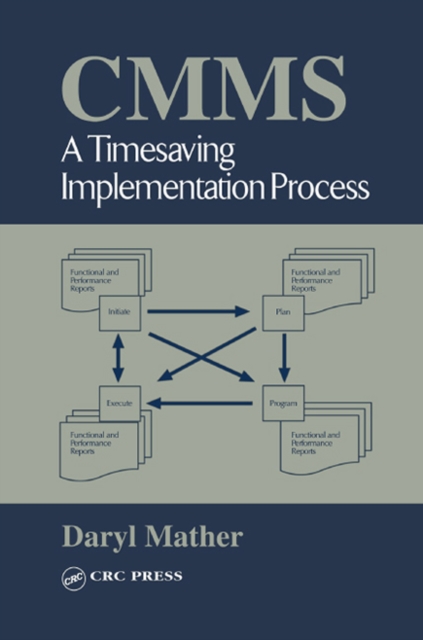
A prevalent system in large corporations for quite some time, Computerized Maintenance Management System (CMMS) is now penetrating moderate to small corporations on an international level.
In the past two decades, new modeling efforts have gradually incorporated more molecular and structural detail in response to environmental and technical interests.
In the quest to remove supply channel costs, streamline channel communications, and link customers to the value-added resources found along the supply chain continuum, Supply Chain Management (SCM) has emerged as a tactical operations tool.
Collaborative manufacturing is an interactive process with great potential, but without the direct input of the plant floor systems information, a significant piece of the management process is not available for consideration.