This unique text/reference advocates a novel forgetful approach to dealing with personal multimedia content in the long run, which is inspired by the effectiveness of human forgetting as a mechanism for helping us to stay focused on important things.
This unique text/reference reviews the key principles and techniques in conceptual modelling which are of relevance to specialists in the field of cultural heritage.
This book constitutes the thoroughly refereed proceedings of the 6th International Conference on Mathematics and Computation in Music, MCM 2017, held in Mexico City, Mexico, in June 2017.
This book constitutes the refereed proceedings of the 10th International Conference on Interactive Digital Storytelling, ICIDS 2017, held in Funchal, Madeira, Portugal, in November 2017.
This book shows how the unique characteristics of traditionally differentiated media continue to determine narrative despite the recent digital convergence of media technologies.
Interactive Media for Sustainability presents a conceptually rich, critical account of the design and use of interactive technologies to engage the public with sustainability.
The disciplinary triad of open-access, multimodality, and writing center studies presents a timely, critical lens for discussing academic publishing in a moment of crucibilic change, where rapid technological advancements force scholars and institutions to question what is produced and "e;counts"e; as academic writing.
This book frames the undeniably copious 21st-century performances of stupidity that occur within social media as echoes of rhetorical experiments conducted by humanist writers of the Renaissance.
This state of the art monograph presents a unique introduction to thinking about cuteness and its incorporation into modern, especially computer-based, products and services.
This book presents the user-facing aspects of digital media, from the web and computer games, to mobile technologies and social media, and demonstrates how these are continuously growing and developing.
This innovative collection explores uses of Shakespeare in a wide variety of 21st century contexts, including business manuals, non-literary scholarship, database aggregation, social media, gaming, and creative criticism.
This book constitutes the proceedings of two conferences: The 5th International Conference on ArtsIT, Interactivity and Game Creation (ArtsIT 2016) and the First International Conference on Design, Learning and Innovation (DLI 2016).
This book constitutes the refereed proceedings of the 6th International Conference on Evolutionary Computation in Combinatorial Optimization, EvoMUSART 2017, held in Amsterdam, The Netherlands, in April 2017, co-located with the Evo*2017 events EuroGP, EvoCOP and EvoApplications.
This volume will give readers insight into how genres are characterised by the patterns of frequency and distribution of linguistic features across a number of European languages.
This book covers computationally innovative methods and technologies including data collection and elicitation, data processing, data analysis, data visualizations, and data presentation.
This pioneering text/reference explores how innovative new modes of computation may provide exciting new directions for future developments in the music industry, guiding the reader through the latest research in this emerging, interdisciplinary field.
This book constitutes the refereed proceedings of the 9th International Conference on Interactive Digital Storytelling, ICIDS 2016, held in Los Angeles, CA, USA, in November 2016.
This project offers a critical overview of how online activities and platforms are becoming an important source for the production and promotion of women's films.
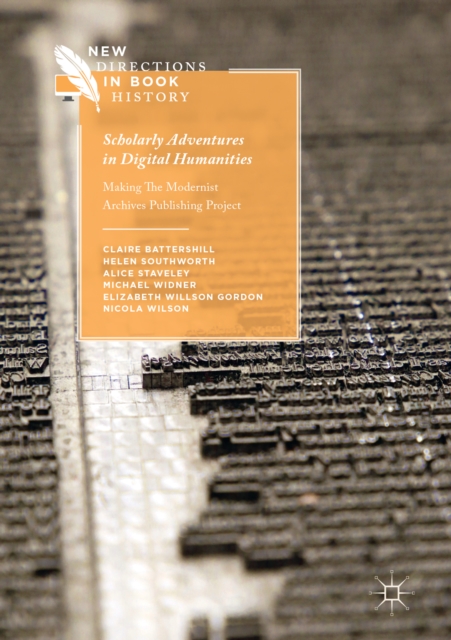
This book addresses the gap between print and digital scholarly approaches by combining both praxis and theory in a case study of a new international collaborative digital project, the Modernist Archives Publishing Project (MAPP).
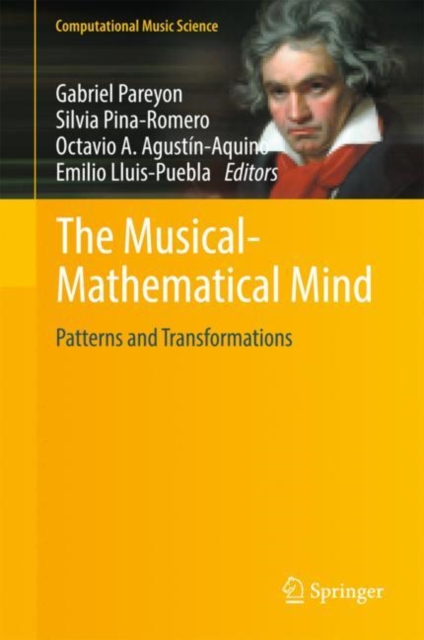
This book presents a deep spectrum of musical, mathematical, physical, and philosophical perspectives that have emerged in this field at the intersection of music and mathematics.
This book explains music's comprehensive ontology, its way of existence and processing, as specified in its compact characterization: music embodies meaningful communication and mediates physically between its emotional and mental layers.
This book constitutes the thoroughly refereed post-conference of the 11th International Symposium on Computer Music Modeling and Retrieval, CMMR 2015, held in Plymouth, UK, in June 2015.
This book constitutes the refereed proceedings of the 6th Language and Technology Conference: Challenges for Computer Science and Linguistics, LTC 2013, held in Poznan, Poland, in December 2013.
Computational creativity is an emerging field of research within AI that focuses on the capacity of machines to both generate and evaluate novel outputs that would, if produced by a human, be considered creative.