Web services and service oriented environments are key enablers for the migration of entertainment, business, sociability, science and health-care from the physical world to the virtual world.
For over a decade, William Lehr, Lorenzo Pupillo, and their colleagues in academia, industry, and policy have been on the electronic frontier, exploring the implications of the technologies that are revolutionizing communication and culture.
As computers proliferate and as the field of computer graphics matures, it has become increasingly important for computer scientists to understand how users perceive and interpret computer graphics.
Staffing Organizations: Contemporary Practice and Theory, the new third edition of a classic in the field, shows how organizations of all sizes can use effective staffing procedures as a source of sustained competitive advantage.
The primary focus of the Cross Cultural Decision Making field is specifically on the intersections between psychosocial theory provided from the social sciences and methods of computational modeling provided from computer science and mathematics.
While there are sporadic journal articles on socio-technical networks, there's long been a need for an integrated resource that addresses concrete socio-technical network (STN) design issues from algorithmic and engineering perspectives.
Delivering IT projects on time and within budget, while maintaining privacy, security, and accountability, remains one of the major public challenges of our time.
Beginning Hibernate, Third Edition is ideal if you’re experienced in Java with databases (the traditional, or "e;connected,"e; approach), but new to open-source, lightweight Hibernate, a leading object-relational mapping and database-oriented application development framework.
Digital Asset Management: Content Architectures, Project Management, and Creating Order out of Media Chaos is for those who are planning a digital asset management system or interested in becoming digital asset managers.
Beginning Java with WebSphere provides a step-by-step guide for creating and installing both client- and server-based Java applications using Rapid Application Development v8, WebSphere Application Server 8.
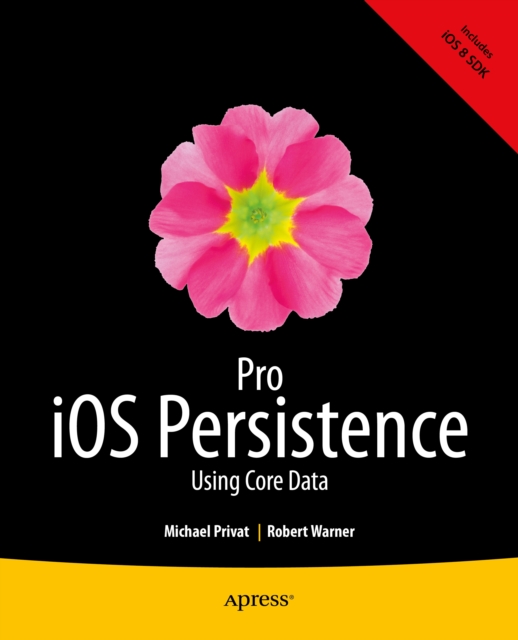
Pro iOS Persistence explains how to build apps in Objective-C and Swift that persist and use data most effectively including the popular Core Data framework.
Since its release, Spring Framework has transformed virtually every aspect of Java development including web applications, security, aspect-oriented programming, persistence, and messaging.
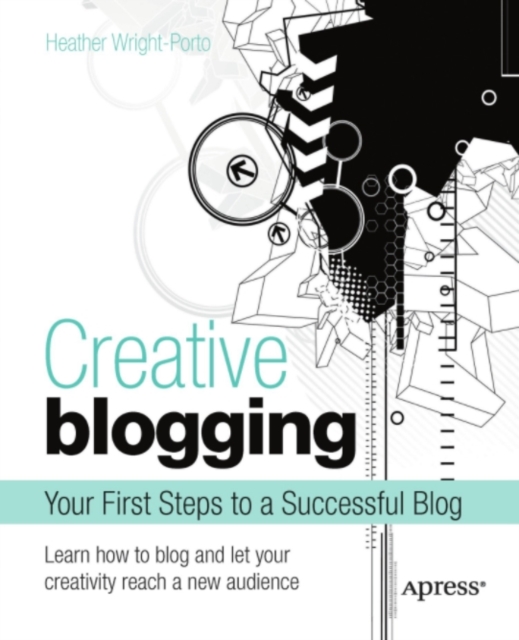
Creative Blogging shows you how to start blogging for the very first time to express your creativity, reach out and be heard-and even how to make money with your blog!
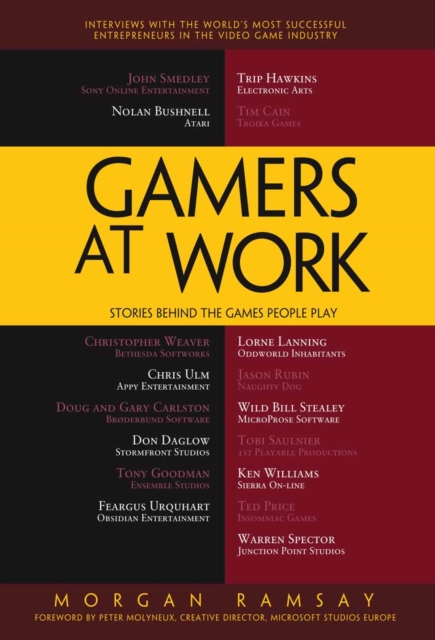
"e;Gamers at Work is a critical resource for new and experienced business leaders—for anyone who feels unprepared for the demanding and seemingly insurmountable trials ahead of them.
Microsoft SQL Server 2008 introduces new geography and geometry spatial datatypes that enable the storage of structured data describing the shape and position of objects in space.
Reviewing the theory of the general linear model (GLM) using a general framework, Univariate and Multivariate General Linear Models: Theory and Applications with SAS, Second Edition presents analyses of simple and complex models, both univariate and multivariate, that employ data sets from a variety of disciplines, such as the social and behavioral
In March 1979, a prototype of a 'Compact Disc (CD) digital audio system' was publicly presented and demonstrated to an audience of about 300 journalists at Philips in Eindhoven, The Netherlands.
Technology-enhanced learning is a timely topic, the importance of which is recognized by educational researchers, practitioners, software designers, and policy makers.
Building the E-Service Society is a state-of-the-art book which deals with innovative trends in communication systems, information processing, and security and trust in electronic commerce, electronic business, and electronic government.
Digital Communities in a Networked Society: e-Commerce, e-Business and e-Government deals with the accelerating evolution in the computerization of society.
Corporate information is skyrocketing in business values; for enterprise, what is best practice for developing and maintaining goals and standards to enhance information management and business operations?
Technologies for Business Information Systems The material collected in this book covers a broad range of applications of c- puter science methods and algorithms in business practice.
In the present digital revolution we often seem trapped in a Kafkaesque world of technological advances, some desired, some disliked or even feared, which we cannot influence but must accept.
This book contains the best papers of the First International Conference on E-business and Telecommunication Networks (ICETE 2004), held in Setubal (Portugal) and organized by INSTICC (Institute for Systems and Technologies of Information, Communication and Control ) in collaboration with the School of Business of the Polytechnic Institute of Setubal, who hosted the event.
Distributed networks such as the Internet have altered the fundamental way a record is created, captured, accessed and managed over time, and therefore who controls, has access to, and is responsible for its authenticity.
Everyday Innovators explores the active role of people, collectively and individually, in shaping the use of information and communication technologies.
When my Habilitation (the tenure research document for my professorship) was published for the first time by StudienVerlag in 2003, I did not expect that a scientific study such as this would reach such a large readership in the Germ- speaking world.
The emergence and widespread use personal computers and network technologies have seen the development of interest in the use of computers to support cooperative work.
This book includes 23 papers dealing with the impact of modern information and communication technologies that support a wide variety of communities: local communities, virtual communities, and communities of practice, such as knowledge communities and scientific communities.
Software is cut-and-dried - every button you press has a predictable effect - but qualitative analysis is open-ended and unfolds in unpredictable ways.