This book of peer-reviewed contributions presents the latest findings in classification, statistical learning, data analysis and related areas, including supervised and unsupervised classification, clustering, statistical analysis of mixed-type data, big data analysis, statistical modeling, graphical models and social networks.
This book presents an introduction to linear univariate and multivariate time series analysis, providing brief theoretical insights into each topic, and from the beginning illustrating the theory with software examples.
This textbook will familiarize students in economics and business, as well as practitioners, with the basic principles, techniques, and applications of applied statistics, statistical testing, and multivariate data analysis.
This book presents strategies for analyzing qualitative and mixed methods data with MAXQDA software, and provides guidance on implementing a variety of research methods and approaches, e.
This book provides a tutorial in the use of Altair Compose and Altair Activate, software packages that provide system modeling and simulation facilities.
This book presents an introduction to linear univariate and multivariate time series analysis, providing brief theoretical insights into each topic, and from the beginning illustrating the theory with software examples.
This book provides a tutorial in the use of Altair Compose and Altair Activate, software packages that provide system modeling and simulation facilities.
This book presents the theory of matrix algebra for statistical applications, explores various types of matrices encountered in statistics, and covers numerical linear algebra.
This book presents the theory of matrix algebra for statistical applications, explores various types of matrices encountered in statistics, and covers numerical linear algebra.
Learn how to leverage the scientific computing and data analysis capabilities of Python, its standard library, and popular open-source numerical Python packages like NumPy, SymPy, SciPy, matplotlib, and more.
A comprehensive guide to getting well-versed with the mathematical techniques for building modern deep learning architecturesKey FeaturesUnderstand linear algebra, calculus, gradient algorithms, and other concepts essential for training deep neural networksLearn the mathematical concepts needed to understand how deep learning models functionUse deep learning for solving problems related to vision, image, text, and sequence applicationsBook DescriptionMost programmers and data scientists struggle with mathematics, having either overlooked or forgotten core mathematical concepts.
In the five previous editions of Advanced Engineering Mathematics with MATLAB(R), the author presented a text firmly grounded in mathematics that engineers and scientists must understand and know how to use.
Get to grips with building robust XGBoost models using Python and scikit-learn for deploymentKey FeaturesGet up and running with machine learning and understand how to boost models with XGBoost in no timeBuild real-world machine learning pipelines and fine-tune hyperparameters to achieve optimal resultsDiscover tips and tricks and gain innovative insights from XGBoost Kaggle winnersBook DescriptionXGBoost is an industry-proven, open-source software library that provides a gradient boosting framework for scaling billions of data points quickly and efficiently.
Build and backtest your algorithmic trading strategies to gain a true advantage in the marketKey FeaturesGet quality insights from market data, stock analysis, and create your own data visualisationsLearn how to navigate the different features in Python's data analysis librariesStart systematically approaching quantitative research and strategy generation/backtesting in algorithmic tradingBook DescriptionCreating an effective system to automate your trading can help you achieve two of every trader's key goals; saving time and making money.
Key FeaturesDiscover how most programmers use the main Python libraries when performing statistics with PythonUse descriptive statistics and visualizations to answer business and scientific questionsSolve complicated calculus problems, such as arc length and solids of revolution using derivatives and integralsWhat you will learnGet to grips with the fundamental mathematical functions in PythonPerform calculations on tabular datasets using pandasUnderstand the differences between polynomials, rational functions, exponential functions, and trigonometric functionsUse algebra techniques for solving systems of equationsSolve real-world problems with probabilitySolve optimization problems with derivatives and integralsWho this book is forIf you are a Python programmer who wants to develop intelligent solutions that solve challenging business problems, then this book is for you.
Solve real-world statistical problems using the most popular R packages and techniquesKey FeaturesLearn how to apply statistical methods to your everyday research with handy recipesFoster your analytical skills and interpret research across industries and business verticalsPerform t-tests, chi-squared tests, and regression analysis using modern statistical techniquesBook DescriptionR is a popular programming language for developing statistical software.
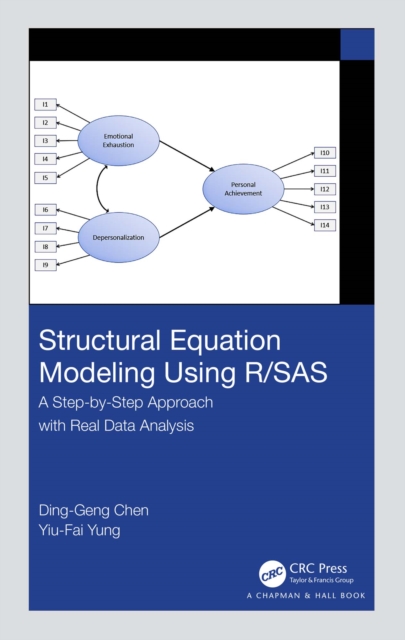
There has been considerable attention to making the methodologies of structural equation modeling available to researchers, practitioners, and students along with commonly used software.
Unleash the power and flexibility of the Bayesian frameworkKey FeaturesSimplify the Bayes process for solving complex statistical problems using Python;Tutorial guide that will take the you through the journey of Bayesian analysis with the help of sample problems and practice exercises;Learn how and when to use Bayesian analysis in your applications with this guide.
Over 50 practical and useful recipes to help you perform data analysis with R by unleashing every native RStudio featureKey Features[*] 54 useful and practical tasks to improve working systems[*] Includes optimizing performance and reliability or uptime, reporting, system management tools, interfacing to standard data ports, and so on[*] Offers 10-15 real-life, practical improvements for each user typeBook DescriptionThe requirement of handling complex datasets, performing unprecedented statistical analysis, and providing real-time visualizations to businesses has concerned statisticians and analysts across the globe.
Gain practical insights into predictive modelling by implementing Predictive Analytics algorithms on public datasets with PythonKey Features[*]A step-by-step guide to predictive modeling including lots of tips, tricks, and best practices[*]Get to grips with the basics of Predictive Analytics with Python[*]Learn how to use the popular predictive modeling algorithms such as Linear Regression, Decision Trees, Logistic Regression, and ClusteringBook DescriptionSocial Media and the Internet of Things have resulted in an avalanche of data.
Over 50 practical and useful recipes to help you perform data analysis with R by unleashing every native RStudio featureKey Features[*] 54 useful and practical tasks to improve working systems[*] Includes optimizing performance and reliability or uptime, reporting, system management tools, interfacing to standard data ports, and so on[*] Offers 10-15 real-life, practical improvements for each user typeBook DescriptionThe requirement of handling complex datasets, performing unprecedented statistical analysis, and providing real-time visualizations to businesses has concerned statisticians and analysts across the globe.
Over 100 hands-on recipes to effectively solve real-world data problems using the most popular R packages and techniquesKey Features[] Gain insight into how data scientists collect, process, analyze, and visualize data using some of the most popular R packages[] Understand how to apply useful data analysis techniques in R for real-world applications[] An easy-to-follow guide to make the life of data scientist easier with the problems faced while performing data analysisBook DescriptionThis cookbook offers a range of data analysis samples in simple and straightforward R code, providing step-by-step resources and time-saving methods to help you solve data problems efficiently.
Gain practical insights into predictive modelling by implementing Predictive Analytics algorithms on public datasets with PythonKey Features[*]A step-by-step guide to predictive modeling including lots of tips, tricks, and best practices[*]Get to grips with the basics of Predictive Analytics with Python[*]Learn how to use the popular predictive modeling algorithms such as Linear Regression, Decision Trees, Logistic Regression, and ClusteringBook DescriptionSocial Media and the Internet of Things have resulted in an avalanche of data.
Learn the art of building robust and powerful recommendation engines using RKey FeaturesBook DescriptionA recommendation system performs extensive data analysis in order to generate suggestions to its users about what might interest them.
Over two hundred novel and innovative computer algebra worksheets or "e;recipes"e; will enable readers in engineering, physics, and mathematics to easily and rapidly solve and explore most problems they encounter in their mathematical physics studies.
Learn the art of building robust and powerful recommendation engines using RKey FeaturesBook DescriptionA recommendation system performs extensive data analysis in order to generate suggestions to its users about what might interest them.
Key FeaturesBook DescriptionJulia is a well-constructed programming language with fast execution speed, eliminating the classic problem of performing analysis in one language and translating it for performance into a second.
Now in its second edition, this edited book presents recent progress and techniques in partial least squares path modeling (PLS-PM), and provides a comprehensive overview of the current state-of-the-art in PLS-PM research.
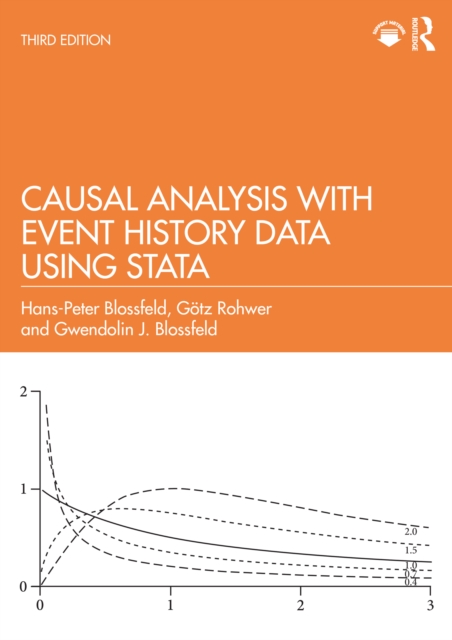
This third edition of Causal Analysis with Event History Data Using Stata provides an updated introduction to event history modeling along with many instructive Stata examples.
Master the concepts and techniques of statistical analysis using JMPPractical Data Analysis with JMP, Third Edition, highlights the powerful interactive and visual approach of JMP to introduce readers to statistical thinking and data analysis.