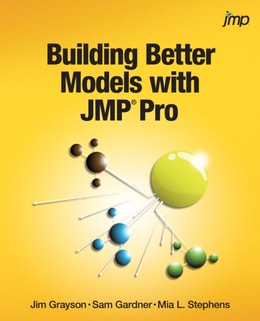
Building Better Models with JMP(R) Pro provides an example-based introduction to business analytics, with a proven process that guides you in the application of modeling tools and concepts.
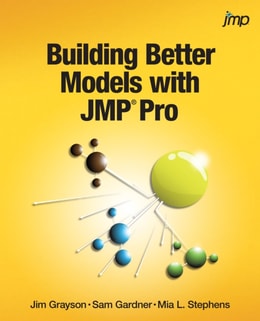
Building Better Models with JMP Pro provides an example-based introduction to business analytics, with a proven process that guides you in the application of modeling tools and concepts.
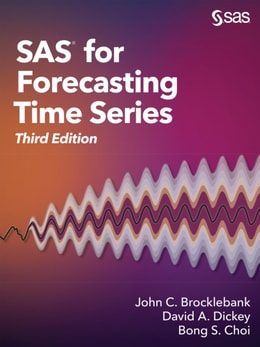
To use statistical methods and SAS applications to forecast the future values of data taken over time, you need only follow this thoroughly updated classic on the subject.
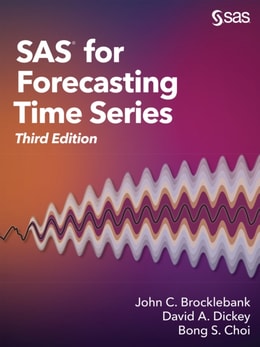
To use statistical methods and SAS applications to forecast the future values of data taken over time, you need only follow this thoroughly updated classic on the subject.
Strategies for Formulations Development: A Step-by-Step Guide Using JMP is based on the authors' significant practical experience partnering with scientists to develop strategies to accelerate the formulation (mixtures) development process.
Strategies for Formulations Development: A Step-by-Step Guide Using JMP is based on the authors' significant practical experience partnering with scientists to develop strategies to accelerate the formulation (mixtures) development process.
Solve business problems involving time-to-event and resulting probabilities by following the modeling tutorials in Business Survival Analysis Using SAS(R): An Introduction to Lifetime Probabilities, the first book to be published in the field of business survival analysis!
For SAS programmers or analysts who need to generalize their programs or improve programming efficiency, Art Carpenter thoroughly updates his highly successful second edition of Carpenter's Complete Guide to the SAS Macro Language with an extensive collection of new macro language techniques and examples.
For SAS programmers or analysts who need to generalize their programs or improve programming efficiency, Art Carpenter thoroughly updates his highly successful second edition of Carpenter's Complete Guide to the SAS Macro Language with an extensive collection of new macro language techniques and examples.
Applied Data Mining for Forecasting Using SAS, by Tim Rey, Arthur Kordon, and Chip Wells, introduces and describes approaches for mining large time series data sets.
Bridging the gap between statistics texts and SAS documentation, Elementary Statistics Using SAS is written for those who want to perform analyses to solve problems.
Written for anyone involved in the data preparation process for analytics, Gerhard Svolba's Data Preparation for Analytics Using SAS offers practical advice in the form of SAS coding tips and tricks, and provides the reader with a conceptual background on data structures and considerations from a business point of view.
SAS/IML software is a powerful tool for data analysts because it enables implementation of statistical algorithms that are not available in any SAS procedure.
Edward Vonesh's Generalized Linear and Nonlinear Models for Correlated Data: Theory and Applications Using SAS is devoted to the analysis of correlated response data using SAS, with special emphasis on applications that require the use of generalized linear models or generalized nonlinear models.
This comprehensive resource provides on-the-job training for statistical programmers who use SAS in the pharmaceutical industryThis one-stop resource offers a complete review of what entry- to intermediate-level statistical programmers need to know in order to help with the analysis and reporting of clinical trial data in the pharmaceutical industry.
PROC REPORT by Example: Techniques for Building Professional Reports Using SAS provides real-world examples using PROC REPORT to create a wide variety of professional reports.
Statisticians and researchers will find Categorical Data Analysis Using SAS, Third Edition, by Maura Stokes, Charles Davis, and Gary Koch, to be a useful discussion of categorical data analysis techniques as well as an invaluable aid in applying these methods with SAS.
Glenn Walker and Jack Shostak's Common Statistical Methods for Clinical Research with SAS Examples, Third Edition, is a thoroughly updated edition of the popular introductory statistics book for clinical researchers.
Carpenter's Guide to Innovative SAS Techniques offers advanced SAS programmers an all-in-one programming reference that includes advanced topics not easily found outside the depths of SAS documentation or more advanced training classes.
If you are a researcher or student with experience in multiple linear regression and want to learn about logistic regression, Paul Allison's Logistic Regression Using SAS: Theory and Application, Second Edition, is for you!
Pharmaceutical Statistics Using SAS: A Practical Guide offers extensive coverage of cutting-edge biostatistical methodology used in drug development and the practical problems facing today's drug developers.
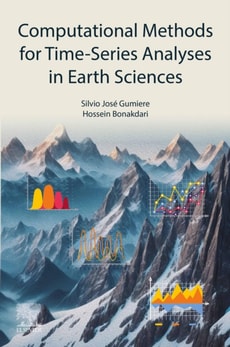
Computational Methods for Time-Series Analyses in Earth Sciences bridges the gap between theoretical knowledge and practical application, offering a deep dive into the utilization of R programming for managing, analyzing, and forecasting time-series data within the realm of Earth sciences.
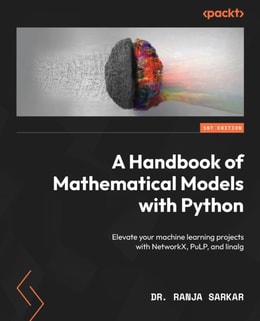
Master the art of mathematical modeling through practical examples, use cases, and machine learning techniquesKey FeaturesGain a profound understanding of various mathematical models that can be integrated with machine learningLearn how to implement optimization algorithms to tune machine learning modelsBuild optimal solutions for practical use casesPurchase of the print or Kindle book includes a free PDF eBookBook DescriptionMathematical modeling is the art of transforming a business problem into a well-defined mathematical formulation.
Decision Support Systems for Sustainable Computing investigates recent technological advances in decision support systems models designed to solve real world applications.
Corporate Financial Analysis with Microsoft(R) Excel(R) visualizes spreadsheets as an effective management tool both for financial analysis and for coordinating its results and actions with marketing, sales, production and service operations, quality control, and other business functions.
With the increasing concern regarding human factors in system development, the concepts of humanized technology and human-related systems have become the focus of more and more research.