oneAPI is a unified programming model and software development kit (SDK) from Intel that empowers software developers to generate high-performance applications that can run on different devices, comprising CPUs, GPUs, FPGAs, and other accelerators.
oneAPI is a unified programming model and software development kit (SDK) from Intel that empowers software developers to generate high-performance applications that can run on different devices, comprising CPUs, GPUs, FPGAs, and other accelerators.
Visualization and analysis tools, techniques, and algorithms have undergone a rapid evolution in recent decades to accommodate explosive growth in data size and complexity and to exploit emerging multi- and many-core computational platforms.
The book aims to develop methodologies and throw light on the advances in empirical research of various machine learning systems through data mining and parallel programming using GPU approaches.
The book aims to develop methodologies and throw light on the advances in empirical research of various machine learning systems through data mining and parallel programming using GPU approaches.
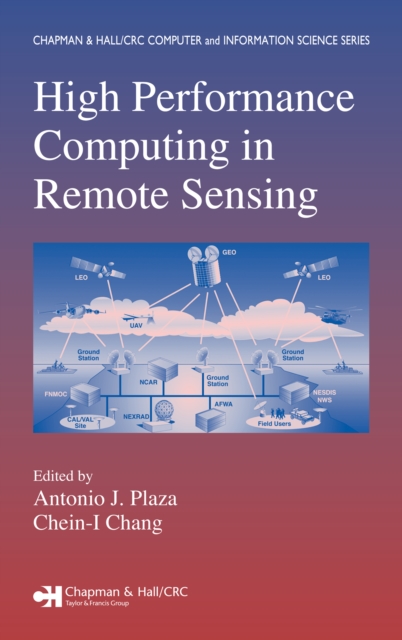
Solutions for Time-Critical Remote Sensing ApplicationsThe recent use of latest-generation sensors in airborne and satellite platforms is producing a nearly continual stream of high-dimensional data, which, in turn, is creating new processing challenges.
The hybrid/heterogeneous nature of future microprocessors and large high-performance computing systems will result in a reliance on two major types of components: multicore/manycore central processing units and special purpose hardware/massively parallel accelerators.
A Thorough Overview of the Next Generation in ComputingPoised to follow in the footsteps of the Internet, grid computing is on the verge of becoming more robust and accessible to the public in the near future.
Full of practical examples, Introduction to Scheduling presents the basic concepts and methods, fundamental results, and recent developments of scheduling theory.
With multicore processors now in every computer, server, and embedded device, the need for cost-effective, reliable parallel software has never been greater.
Gain Critical Insight into the Parallel I/O EcosystemParallel I/O is an integral component of modern high performance computing (HPC), especially in storing and processing very large datasets to facilitate scientific discovery.
Integrating Information with GI Technology examines the components necessary for building infrastructure to support the panoly of Geographic Information (GI) research and services.
This is one of the first parallel computing books to focus exclusively on parallel data structures, algorithms, software tools, and applications in data science.
Unmatched: 50 Years of Supercomputing: A Personal Journey Accompanying the Evolution of a Powerful ToolThe rapid and extraordinary progress of supercomputing over the past half-century is a powerful demonstration of our relentless drive to understand and shape the world around us.
Unmatched: 50 Years of Supercomputing: A Personal Journey Accompanying the Evolution of a Powerful ToolThe rapid and extraordinary progress of supercomputing over the past half-century is a powerful demonstration of our relentless drive to understand and shape the world around us.
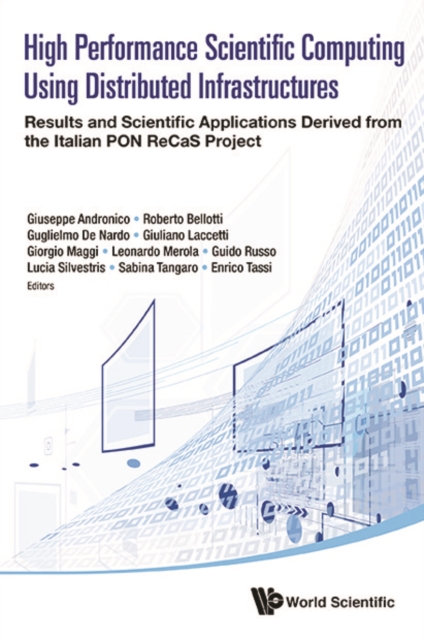
This book aims to provide a deep look into Italian actions taken in some fields of science and high performance computing (HPC), and the Italian effort to bridge the HPC gap with respect to Europe.
This book aims to provide a deep look into Italian actions taken in some fields of science and high performance computing (HPC), and the Italian effort to bridge the HPC gap with respect to Europe.
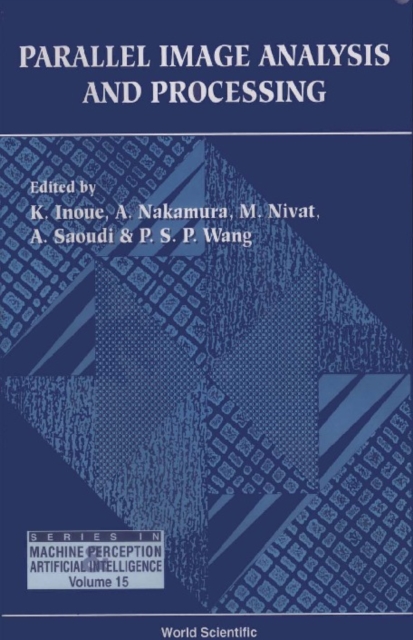
This review volume contains a selection of papers by leading experts in the areas of Parallel Image Analysis, 2-D, 3-D Grammars and Automata and Neural Nets and Learning.
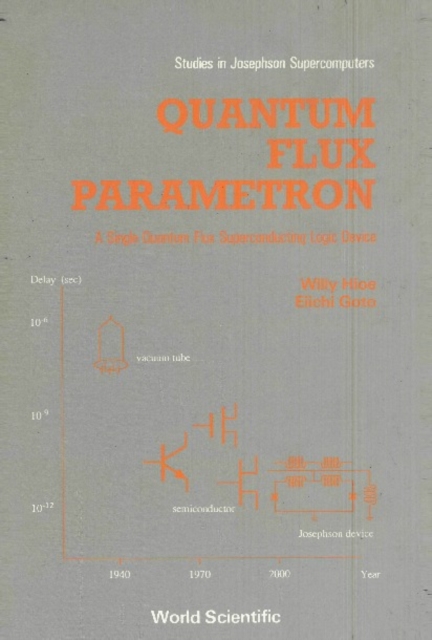
This book concerns a Josephson device for supercomputers which has extremely low heat dissipation (about 106 times less than semiconductor devices and 103 times less than voltage-based Josephson devices).
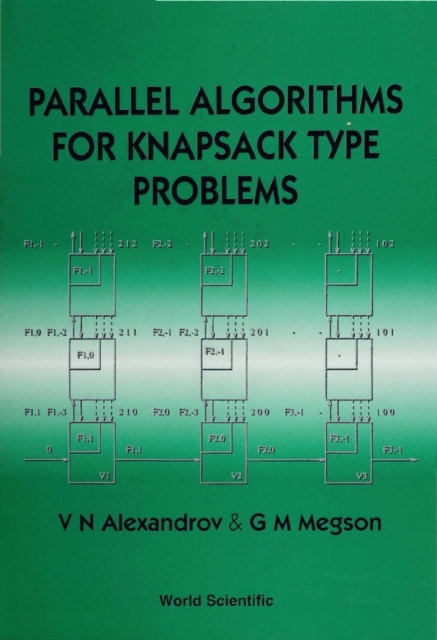
This book brings together current research direction in the mapping of dynamic programming recurrence equations for Knapsack Type problems, which include Unbounded Knapsack Problem, 0/1 Knapsack Problem, Subset Sum Problem, Change Making Problem, onto so-called regular parallel architectures.
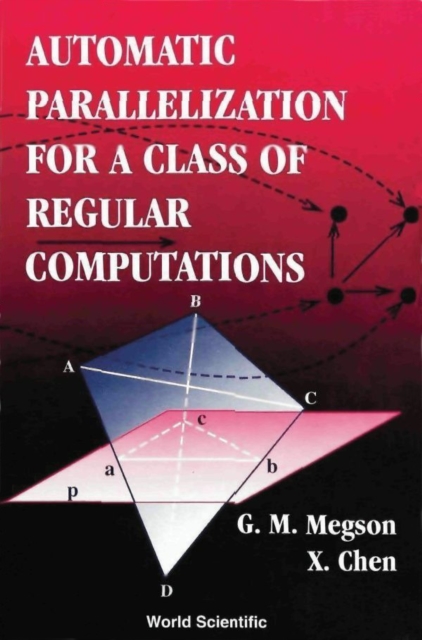
The automatic generation of parallel code from high level sequential description is of key importance to the wide spread use of high performance machine architectures.
Obstacle Avoidance in Multi-robot Systems: Experiments in Parallel Genetic Algorithms offers a novel framework for solving the path planning problem for robot manipulators.
ICA3PP 2000 was an important conference that brought together researchers and practitioners from academia, industry and governments to advance the knowledge of parallel and distributed computing.
Continuing the Series on Scalable Computing launched in 1999, this volume presents five articles reviewing significant current developments in the field.
A collection of seven long articles, this book comprehensively discusses significant projects in scalable computing in various research organizations around the world.
The book provides a practical guide to computational scientists and engineers to help advance their research by exploiting the superpower of supercomputers with many processors and complex networks.
Die ersten Kapitel konzentrieren sich auf die Informatik und beinhalten informatische Grundbegriffe, Rechnerarchitekturen und ein Performancemodell, OpenMP als Programmierumgebung für Mehrkernrechner und MPI und PVM als Programmiermodelle für Rechner mit verteiltem Speicher.
High-Performance Computing for Big Data: Methodologies and Applications explores emerging high-performance architectures for data-intensive applications, novel efficient analytical strategies to boost data processing, and cutting-edge applications in diverse fields, such as machine learning, life science, neural networks, and neuromorphic engineering.
Integrating Information with GI Technology examines the components necessary for building infrastructure to support the panoly of Geographic Information (GI) research and services.
Use the GPU Successfully in Your Radiotherapy PracticeWith its high processing power, cost-effectiveness, and easy deployment, access, and maintenance, the graphics processing unit (GPU) has increasingly been used to tackle problems in the medical physics field, ranging from computed tomography reconstruction to Monte Carlo radiation transport simulation.