This three-volume set LNCS 11139-11141 constitutes the refereed proceedings of the 27th International Conference on Artificial Neural Networks, ICANN 2018, held in Rhodes, Greece, in October 2018.
Computational Intelligence: Concepts to Implementations provides the most complete and practical coverage of computational intelligence tools and techniques to date.
This three-volume set LNCS 11139-11141 constitutes the refereed proceedings of the 27th International Conference on Artificial Neural Networks, ICANN 2018, held in Rhodes, Greece, in October 2018.
Evolving from an elementary discussion, this book develops the Euclidean algorithm to a very powerful tool to deal with general continued fractions, non-normal Pade tables, look-ahead algorithms for Hankel and Toeplitz matrices, and for Krylov subspace methods.
The Self-Organizing Map, or Kohonen Map, is one of the most widely used neural network algorithms, with thousands of applications covered in the literature.
This book provides an introduction to chemical engineering analysis- which reviews the processes and designs used to manufacture, use, and dispose of chemical products-and to Mathematica, one of the most powerful mathematical software tools available for symbolic, numerical, and graphical computing.
In recent years Genetic Algorithms (GA) and Artificial Neural Networks (ANN) have progressively increased in importance amongst the techniques routinely used in chemometrics.
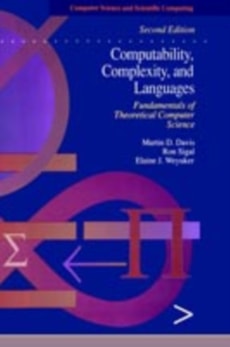
Computability, Complexity, and Languages is an introductory text that covers the key areas of computer science, including recursive function theory, formal languages, and automata.
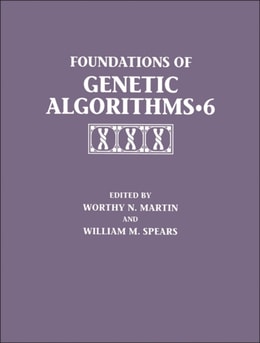
Foundations of Genetic Algorithms, Volume 6 is the latest in a series of books that records the prestigious Foundations of Genetic Algorithms Workshops, sponsored and organised by the International Society of Genetic Algorithms specifically to address theoretical publications on genetic algorithms and classifier systems.
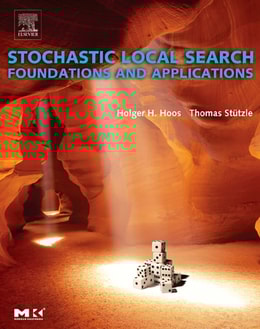
Stochastic local search (SLS) algorithms are among the most prominent and successful techniques for solving computationally difficult problems in many areas of computer science and operations research, including propositional satisfiability, constraint satisfaction, routing, and scheduling.
How computational methods can expand how we see, read, and listen to Holocaust testimonyThe Holocaust is one of the most documentedand now digitizedevents in human history.
How computational methods can expand how we see, read, and listen to Holocaust testimonyThe Holocaust is one of the most documentedand now digitizedevents in human history.