Fuzzy sets have long been employed to handle imprecise and uncertain information in the real world, but their limitations in dealing with incomplete and inconsistent data led to the emergence of neutrosophic sets.
Solving complex optimization problems with parallel metaheuristics Parallel Metaheuristics brings together an international group of experts in parallelism and metaheuristics to provide a much-needed synthesis of these two fields.
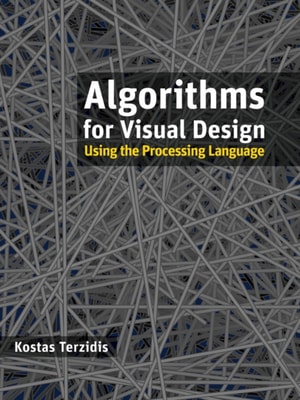
As the first book to share the necessary algorithms for creating code to experiment with design problems in the processing language, this book offers a series of generic procedures that can function as building blocks and encourages you to then use those building blocks to experiment, explore, and channel your thoughts, ideas, and principles into potential solutions.
The purpose of this book is to provide a practical approach for IT professionals to acquire the necessary knowledge and expertise in data modeling to function effectively.
Building on the success of the first edition, which offered a practical introductory approach to the techniques of error concealment, this book, now fully revised and updated, provides a comprehensive treatment of the subject and includes a wealth of additional features.
While Computer Security is a broader term which incorporates technologies, protocols, standards and policies to ensure the security of the computing systems including the computer hardware, software and the information stored in it, Cyber Security is a specific, growing field to protect computer networks (offline and online) from unauthorized access, botnets, phishing scams, etc.
While Computer Security is a broader term which incorporates technologies, protocols, standards and policies to ensure the security of the computing systems including the computer hardware, software and the information stored in it, Cyber Security is a specific, growing field to protect computer networks (offline and online) from unauthorized access, botnets, phishing scams, etc.
Advanced data structures is a core course in Computer Science which most graduate program in Computer Science, Computer Science and Engineering, and other allied engineering disciplines, offer during the first year or first semester of the curriculum.
Advanced data structures is a core course in Computer Science which most graduate program in Computer Science, Computer Science and Engineering, and other allied engineering disciplines, offer during the first year or first semester of the curriculum.
Soft computing methods such as neural networks and genetic algorithms draw on the problem solving strategies of the natural world which differ fundamentally from the mathematically-based computing methods normally used in engineering.
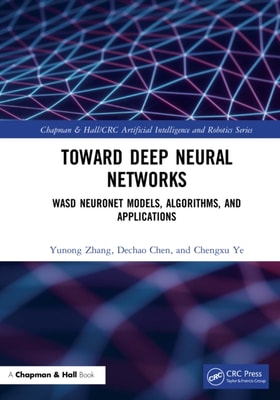
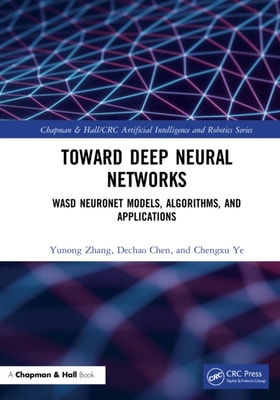
Toward Deep Neural Networks: WASD Neuronet Models, Algorithms, and Applications introduces the outlook and extension toward deep neural networks, with a focus on the weights-and-structure determination (WASD) algorithm.
Toward Deep Neural Networks: WASD Neuronet Models, Algorithms, and Applications introduces the outlook and extension toward deep neural networks, with a focus on the weights-and-structure determination (WASD) algorithm.
Practical Numerical and Scientific Computing with MATLAB(R) and Python concentrates on the practical aspects of numerical analysis and linear and non-linear programming.
Practical Numerical and Scientific Computing with MATLAB(R) and Python concentrates on the practical aspects of numerical analysis and linear and non-linear programming.
Crypto-Finance, Law and Regulation investigates whether crypto-finance will cause a paradigm shift in regulation from a centralised model to a model based on distributed consensus.
Throughout the industry, financial institutions seek to eliminate cumbersome authentication methods, such as PINs, passwords, and security questions, as these antiquated tactics prove increasingly weak.
Crypto-Finance, Law and Regulation investigates whether crypto-finance will cause a paradigm shift in regulation from a centralised model to a model based on distributed consensus.
Throughout the industry, financial institutions seek to eliminate cumbersome authentication methods, such as PINs, passwords, and security questions, as these antiquated tactics prove increasingly weak.
Synthetic Aperture Radar Automatic Detection Algorithms (SARADA) for Oil Spills conveys the pivotal tool required to fully comprehend the advanced algorithms in radar monitoring and detection of oil spills, particularly quantum computing and algorithms as a keystone to comprehending theories and algorithms behind radar imaging and detection of marine pollution.