Based on the Fourth International Conference on Quantum Communication, Measurement and Computing, this volume brings together scientists working in the interdisciplinary fields of quantum communication science and technology.
The architectural concept of a memory hierarchy has been immensely successful, making possible today's spectacular pace of technology evolution in both the volume of data and the speed of data access.
Semantic Models for Multimedia Database Searching and Browsing begins with the introduction of multimedia information applications, the need for the development of the multimedia database management systems (MDBMSs), and the important issues and challenges of multimedia systems.
Information intermediation is the foundation stone of some of the most successful Internet companies, and is perhaps second only to the Internet Infrastructure companies.
The Center for Intelligent Information Retrieval (CIIR) was formed in the Computer Science Department ofthe University ofMassachusetts, Amherst in 1992.
Data Mining in Finance presents a comprehensive overview of major algorithmic approaches to predictive data mining, including statistical, neural networks, ruled-based, decision-tree, and fuzzy-logic methods, and then examines the suitability of these approaches to financial data mining.
High Performance Computing Systems and Applications contains the fully refereed papers from the 13th Annual Symposium on High Performance Computing, held in Kingston, Canada, in June 1999.
Middleware Networks: Concept, Design and Deployment of Internet Infrastructure describes a framework for developing IP Service Platforms and emerging managed IP networks with a reference architecture from the AT&T Labs GeoPlex project.
High Performance Data Mining: Scaling Algorithms, Applications and Systems brings together in one place important contributions and up-to-date research results in this fast moving area.
Since the early eighties IFIP/Sec has been an important rendezvous for Information Technology researchers and specialists involved in all aspects of IT security.
Current database technology and computer hardware allow us to gather, store, access, and manipulate massive volumes of raw data in an efficient and inexpensive manner.
In recent years, tremendous research has been devoted to the design of database systems for real-time applications, called real-time database systems (RTDBS), where transactions are associated with deadlines on their completion times, and some of the data objects in the database are associated with temporal constraints on their validity.
This book lays out the theoretical groundwork for personalized search and reputation management, both on the Web and in peer-to-peer and social networks.
This book takes readers on a captivating journey through the history of social engineering, tracing its evolution from the mechanical marvels of the clockwork era and the rise of automata to the modern age of artificial intelligence and the looming dawn of quantum computing.
This book takes readers on a captivating journey through the history of social engineering, tracing its evolution from the mechanical marvels of the clockwork era and the rise of automata to the modern age of artificial intelligence and the looming dawn of quantum computing.
This book explores the transformative potential of blockchain technology and shows how blockchain can promote equitable access to resources and bridge societal gaps.
Engineering Swarms for Cyber-Physical Systems covers the whole design cycle for applying swarm intelligence in Cyber-Physical Systems (CPS) and guides readers through modeling, design, simulation, and final deployment of swarm systems.
The study of one-shot devices such as automobile airbags, fire extinguishers, or antigen tests, is rapidly becoming an important problem in the area of reliability engineering.
John Maeda is one of the world's preeminent thinkers on technology and design, and in How to Speak Machine, he offers a set of simple laws that govern not only the computers of today, but the unimaginable machines of the future.
A spell-binding quest for the one algorithm capable of deriving all knowledge from data, including a cure for cancerSociety is changing, one learning algorithm at a time, from search engines to online dating, personalized medicine to predicting the stock market.
This book provides an essential update for experienced data processing professionals, transaction managers and database specialists who are seeking system solutions beyond the confines of traditional approaches.
Solutions for modular, functional, reactive, GUI, network, and multithreaded programmingKey FeaturesExplore the latest features of Java 11 to implement efficient and reliable codeDevelop memory-efficient applications, understanding new garbage collection in Java 11Create restful webservices and microservices with Spring boot 2 and DockerBook DescriptionFor more than three decades, Java has been on the forefront of developing robust software that has helped versatile businesses meet their requirements.
An understanding of the theory and application of logic is fundamental both to successful software and hardware development, and to gain a thorough grasp of modern computing.
Jumping Computation: Updating Automata and Grammars for Discontinuous Information Processing is primarily a theoretically oriented treatment of jumping automata and grammars, covering all essential theoretical topics concerning them, including their power, properties, and transformations.
Exploring the application and formulation of the EM algorithm, The EM Algorithm and Related Statistical Models offers a valuable method for constructing statistical models when only incomplete information is available, and proposes specific estimation algorithms for solutions to incomplete data problems.
Iterative algorithms often rely on approximate evaluation techniques, which may include statistical estimation, computer simulation or functional approximation.
The design of approximation algorithms for spanning tree problems has become an exciting and important area of theoretical computer science and also plays a significant role in emerging fields such as biological sequence alignments and evolutionary tree construction.
The TransNav 2011 Symposium held at the Gdynia Maritime University, Poland in June 2011 has brought together a wide range of participants from all over the world.
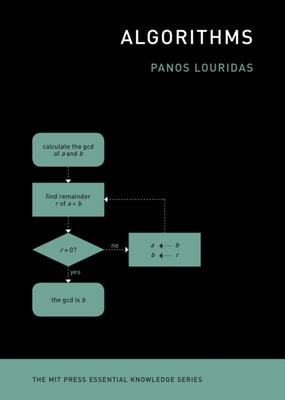
While many think of algorithms as specific to computer science, at its core algorithmic thinking is defined by the use of analytical logic to solve problems.