Sparse models are particularly useful in scientific applications, such as biomarker discovery in genetic or neuroimaging data, where the interpretability of a predictive model is essential.
Although traditional texts present isolated algorithms and data structures, they do not provide a unifying structure and offer little guidance on how to appropriately select among them.
This book is a short book about public key cryptosystems, digital signature algorithms, and their basic cryptanalysis which are provided at a basic level so that it can be easy to understand for the undergraduate engineering students who can be defined as the core audience.
Highlights the Progression of Meshing Technologies and Their ApplicationsFinite Element Mesh Generation provides a concise and comprehensive guide to the application of finite element mesh generation over 2D domains, curved surfaces, and 3D space.
Digital Technology in Public Health and Rehabilitation Care: COVID Era provides an in-depth examination on how digital technology has impacted public health and rehabilitation during the COVID-19 pandemic.
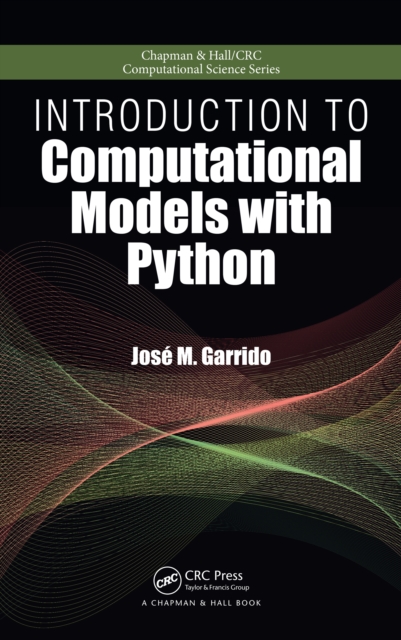
Introduction to Computational Models with Python explains how to implement computational models using the flexible and easy-to-use Python programming language.
This book gathers a collection of high-quality peer-reviewed research papers presented at the 6th International Conference on Data and Information Sciences (ICDIS 2024), held at Raja Balwant Singh Engineering Technical Campus, Agra, India, on May 24-25, 2024.
This book gathers a collection of high-quality peer-reviewed research papers presented at the 6th International Conference on Data and Information Sciences (ICDIS 2024), held at Raja Balwant Singh Engineering Technical Campus, Agra, India, on May 24-25, 2024.
Presenting a complementary perspective to standard books on algorithms, A Guide to Algorithm Design: Paradigms, Methods, and Complexity Analysis provides a roadmap for readers to determine the difficulty of an algorithmic problem by finding an optimal solution or proving complexity results.
An effective blend of carefully explained theory and practical applications, this text imparts the fundamentals of both information theory and data compression.
Focusing on algorithms for distributed-memory parallel architectures, Parallel Algorithms presents a rigorous yet accessible treatment of theoretical models of parallel computation, parallel algorithm design for homogeneous and heterogeneous platforms, complexity and performance analysis, and essential notions of scheduling.
This book aims to explore how to automate, innovate, design, and deploy emerging technologies in actuarial work transformations for the insurance and finance sector.
Learn C++ game programming through real-world demos of AI systems, animation, and rendering to build scalable, high-performance games using patterns you can reuse across any game engineFree with your book: DRM-free PDF version + access to Packt's next-gen Reader*Key FeaturesBuild real-time 2D and 3D games using C++ with practical, executable examplesGain proficiency in game programming domains like AI pathfinding, camera systems, animation, and rendering effectsBoost runtime efficiency with object pooling, LOD patterns, and terrain partitioning to create smoother, more responsive gameplay systems*Email sign-up and proof of purchase requiredBook DescriptionCreating responsive, intelligent games takes more than just following engine tutorials.
Algorithms are ubiquitous in the contemporary technological world, and they ultimately consist of finite sequences of instructions used to accomplish tasks with necessary input values.
Numerical Methods for Scientists and Engineers: With Pseudocodes is designed as a primary textbook for a one-semester course on Numerical Methods for sophomore or junior-level students.
This textbook introduces the fundamental concepts and techniques used in biometric recognition to students, practitioners, and non-experts in the field.
This is one of the first parallel computing books to focus exclusively on parallel data structures, algorithms, software tools, and applications in data science.
The topic of using views to answer queries has been popular for a few decades now, as it cuts across domains such as query optimization, information integration, data warehousing, website design, and, recently, database-as-a-service and data placement in cloud systems.
Complex Networks: An Algorithmic Perspective supplies the basic theoretical algorithmic and graph theoretic knowledge needed by every researcher and student of complex networks.
This book presents some exceptional developments in chaotic attractor theory encompassing several new directions of research such as three-dimensional axiom A-diffeomorphisms, Shilnikov attractors, dendrites and finite graphs.
This textbook features new material on advanced topics, such as calculating Fourier transforms, finding minimum cost flows in graphs, and using automata in string problems.