Formal Methods for Open Object-Based Distributed Systems presents the leading edge in several related fields, specifically object-orientated programming, open distributed systems and formal methods for object-oriented systems.
Formal Methods for Open Object-Based Distributed Systems IV presents the leading edge in the fields of object-oriented programming, open distributed systems, and formal methods for object-oriented systems.
Formal Methods for Open Object-Based Distributed Systems V brings together research in three important and related fields: Formal methods; Distributed systems; Object-based technology.
In the past few decades Computer Hardware Description Languages (CHDLs) have been a rapidly expanding subject area due to a number of factors, including the advancing complexity of digital electronics, the increasing prevalence of generic and programmable components of software-hardware and the migration of VLSI design to high level synthesis based on HDLs.
For more and more systems, software has moved from a peripheral to a central role, replacing mechanical parts and hardware and giving the product a competitive edge.
Usability has become increasingly important as an essential part of the design and development of software and systems for all sectors of society, business, industry, government and education, as well as a topic of research.
M-Solid Varieties of Algebras provides a complete and systematic introduction to the fundamentals of the hyperequational theory of universal algebra, offering the newest results on M-solid varieties of semirings and semigroups.
This book integrates coverage of random/probabilistic algorithms, assertion-based program reasoning, and refinement programming models, providing a highly focused survey on probabilistic program semantics.
Assembly language continues to hold a core position in the programming world because of its similar structure to machine language and its very close links to underlying computer-processor architecture and design.
System Level Design of Reconfigurable Systems-on-Chip provides insight in the challenges and difficulties encountered during the design of reconfigurable Systems-on-Chip (SoCs).
A Software Process Model Handbook for Incorporating People's Capabilities offers the most advanced approach to date, empirically validated at software development organizations.
Software Process Modeling brings together experts to discuss relevant results in software process modeling, and expresses their personal view of this field.
An invited collection of peer-reviewed papers surveying key areas of Roger Needham's distinguished research career at Cambridge University and Microsoft Research.
The second half of the twentieth century saw an astonishing increase in computing power; today computers are unbelievably faster than they used to be, they have more memory, they can communicate routinely with remote machines all over the world - and they can fit on a desktop.
This book provides an accelerated introduction to Maple for scientific programmers who already have experience in other computer languages (such as C, Pascal, or FORTRAN).
CREATE FIENDISHLY FUN tinyAVR MICROCONTROLLER PROJECTSThis wickedly inventive guide shows you how to conceptualize, build, and program 34 tinyAVR microcontroller devices that you can use for either entertainment or practical purposes.
Build Java-based microservices architecture using the Spring Boot framework by evolving an application from a small monolith to an event-driven architecture composed of several services.
CREATE FIENDISHLY FUN tinyAVR MICROCONTROLLER PROJECTSThis wickedly inventive guide shows you how to conceptualize, build, and program 34 tinyAVR microcontroller devices that you can use for either entertainment or practical purposes.
SystemC has received a wide acceptance by users and tool vendors as the next generation system description language in order to deal with higher levels of abstraction for complex SoC designs.
xv From the Old to the New xvii Acknowledgments xxi 1 Verilog - A Tutorial Introduction 1 Getting Started 2 A Structural Description 2 Simulating the binaryToESeg Driver 4 Creating Ports For the Module 7 Creating a Testbench For a Module 8 11 Behavioral Modeling of Combinational Circuits Procedural Models 12 Rules for Synthesizing Combinational Circuits 13 14 Procedural Modeling of Clocked Sequential Circuits Modeling Finite State Machines 15 Rules for Synthesizing Sequential Systems 18 Non-Blocking Assignment ("e;
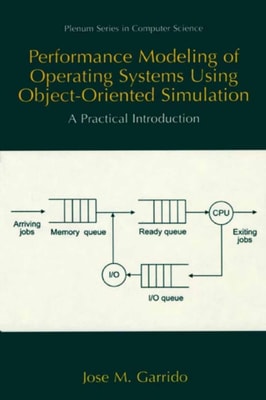
This book introduces the fundamental concepts and practical simulation te- niques for modeling different aspects of operating systems to study their g- eral behavior and their performance.
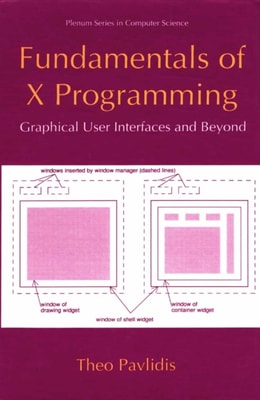
This book provides an overview of the X Window System focusing on characteristics that have significant impact on the development of both application programs and widgets.