Mastering Primary Design and Technology introduces the primary design and technology curriculum and helps trainees and teachers learn how to plan and teach inspiring lessons that make design and technology learning irresistible.
Mastering Primary Design and Technology introduces the primary design and technology curriculum and helps trainees and teachers learn how to plan and teach inspiring lessons that make design and technology learning irresistible.
In this book, John Vince has reviewed and edited the third edition and added chapters on statistics, Georg Riemann's hypothesis, eigen vectors, curves, analytic geometry and Fourier analysis.
An In-Depth, Practical Guide to GPGPU Programming Using Direct3D 11GPGPU Programming for Games and Science demonstrates how to achieve the following requirements to tackle practical problems in computer science and software engineering:RobustnessAccuracySpeedQuality source code that is easily maintained, reusable, and readableThe book primarily add
Consumers today expect extremely realistic imagery generated in real time for interactive applications such as computer games, virtual prototyping, and scientific visualisation.
Practical Algorithms for 3D Computer Graphics, Second Edition covers the fundamental algorithms that are the core of all 3D computer graphics software packages.
GPU Pro4: Advanced Rendering Techniques presents ready-to-use ideas and procedures that can help solve many of your day-to-day graphics programming challenges.
Walk with veteran author Andrew Glassner; see exactly how each of his pieces evolves, including the mistakes he's made along the way (and how to fix them!
The graphics terminal makes it possible for people who are not computer specialists to communicate with computers on an inter- active basis, without the delay or inconvenience of working constantly through an intermediary.
Physics-Based Deformable Models presents a systematic physics-based framework for modeling rigid, articulated, and deformable objects, their interactions with the physical world, and the estimate of their shape and motion from visual data.
Since the establishment of the CAAD Futures Foundation in 1985, CAAD experts from all over the world meet every two years to present and document the state of the art of research in Computer Aided Architectural Design.
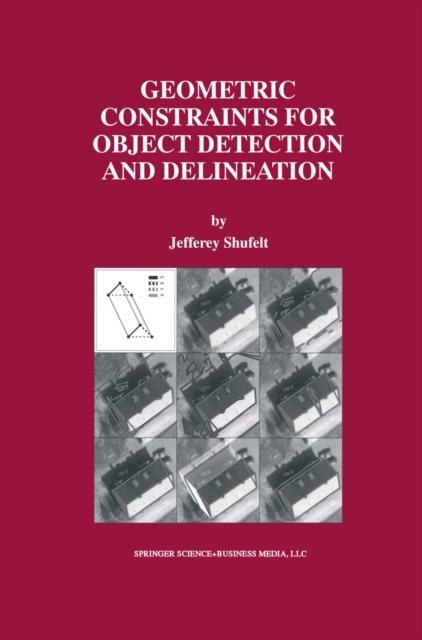
The ability to extract generic 3D objects from images is a crucial step towards automation of a variety of problems in cartographic database compilation, industrial inspection and assembly, and autonomous navigation.
The premise behind developing powerful declarative database languages is compelling: by enabling users to specify their queries (and their integrity constraints) in a clear, non-operational way, they make the user's task easier, and provide the database system with more opportunities for optimization.
Computer systems that analyze images are critical to a wide variety of applications such as visual inspections systems for various manufacturing processes, remote sensing of the environment from space-borne imaging platforms, and automatic diagnosis from X-rays and other medical imaging sources.
Multi-Frame Motion-Compensated Prediction for Video Transmission presents a comprehensive description of a new technique in video coding and transmission.
Software Visualization: From Theory to Practice was initially selected as a special volume for "e;The Annals of Software Engineering (ANSE) Journal"e;, which has been discontinued.
This book describes recent innovations in 3D media and technologies, with coverage of 3D media capturing, processing, encoding, and adaptation, networking aspects for 3D Media, and quality of user experience (QoE).
Disney Stories: Getting to Digital explores how Disney, the man and the company, used technological innovation to create characters and stories that engage audiences in many different media, in particular in Video Games and on the Internet.