Our understanding of real-time systems is rapidly approaching a level of maturity which calls for a consolidation of our present knowledge and experience.
The RLISP '88 programming system introduces an evolutionary approach to software development that enables small groups of programmers to advance the state of the art over a period of many years.
The primary aim of this monograph is to present the current research efforts that have gone into/or going on in the systematic design of real-time programs.
The term "e;software visualisation"e; refers to the graphical display of characteristics and behaviour of all aspects of software: design and analysis methods, systems, programs and algorithms.
This is the first book that attempts to provide a framework in which to embed an automatic programming system based on evolutionary learning (genetic programming) into a traditional software engineering environment.
This unique volume is the first publication on software engineering and computational intelligence (CI) viewed as a synergistic interplay of neurocomputing, granular computation (including fuzzy sets and rough sets), and evolutionary methods.
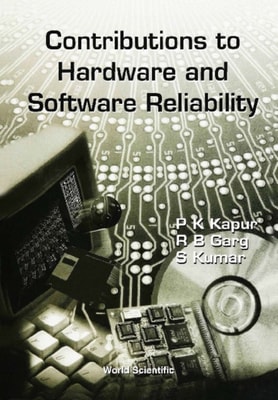
With better computing facilities now available, there is an ever-increasing need to ensure that elegant theoretical results on hardware reliability are computationally available.
This is the first handbook to cover comprehensively both software engineering and knowledge engineering - two important fields that have become interwoven in recent years.
This is the first handbook to cover comprehensively both software engineering and knowledge engineering - two important fields that have become interwoven in recent years.
Soft computing (SC) consists of several computing paradigms, including neural networks, fuzzy set theory, approximate reasoning, and derivative-free optimization methods such as genetic algorithms.
Soft computing has been presented not only with the theoretical developments but also with a large variety of realistic applications to consumer products and industrial systems.
This book provides an up-to-date study of the fundamental facets of supporting information technologies: organisation and people, data and information, presentation of information, and process.
Continuing the Series on Scalable Computing launched in 1999, this volume presents five articles reviewing significant current developments in the field.
The 2004 Asian International Workshop on Advanced Reliability Modeling is a symposium for the dissemination of state-of-the-art research and the presentation of practice in reliability engineering and related issues in Asia.
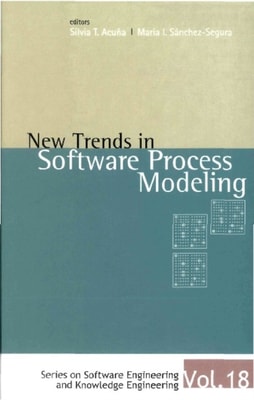
Over the years, a variety of software process models have been designed to structure, describe and prescribe the software systems construction process.
This book introduces SpecDB, an intelligent database created to represent and host software specifications in a machine-readable format, based on the principles of artificial intelligence and unit testing database operations.
Program debugging has always been a difficult and time-consuming task in the context of software development, where spectrum-based fault localization (SBFL) is one of the most widely studied families of techniques.
The intention of this book is to show how algebraic specification methods can be used for software development to support reliability, modifiability and reusability.
This is a textbook for a course in object-oriented software engineering at advanced undergraduate and graduate levels, as well as for software engineers.