By presenting state-of-the-art research results on various aspects of formal and visual modeling of software and systems, this book commemorates the 60th birthday of Hartmut Ehrig.
The LNCS Journal on Data Semantics is devoted to the presentation of notable work that, in one way or another, addresses research and development on issues related to data semantics.
The 8th ERCIM Workshop "e;User Interfaces for All"e; was held in Vienna, Austria, on 28-29 June 2004, building upon the results of the seven previous workshops held in Heraklion, Crete, Greece, 30-31 October 1995; Prague, Czech Republic, 7-8 Nov- ber 1996; Obernai, France, 3-4 November 1997; Stockholm, Sweden, 19-21 October 1998; Dagstuhl, Germany, 28 November - 1 December 1999; Florence, Italy, 25-26 October 2000; and Paris (Chantilly), France, 24-25 October 2002.
Evolutionary algorithms (EAs) is now a mature problem-solving family of heuristics that has found its way into many important real-life problems and into leading-edge scientific research.
Automatic person authentication, the identification and verification of an individual as such, has increasingly been acknowledged as a significant aspect of various security applications.
One aspect of the new economy is a transition to a networked society, and the emergence of a highly interconnected, interdependent and complex system of networks to move people, goods and information.
This book contains the written contributions to the International Symposium on th Medical Simulation (ISMS'04) held in Cambridge, Massachusetts, USA on June 17 th and June 18 , 2004.
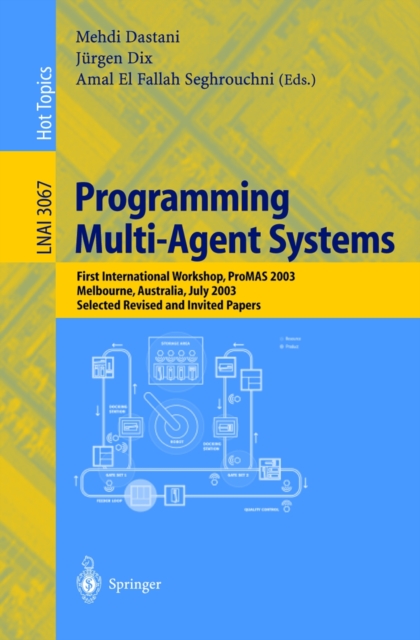
Autonomous agents and multi-agent systems have grown into a promising technology offering a credible alternative for the design of intelligent and cooperative systems.
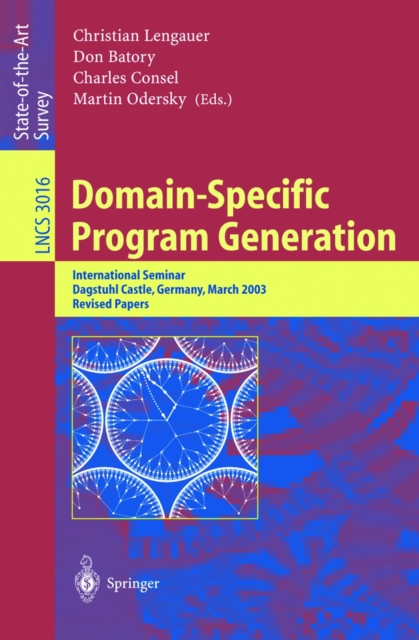
Program generation holds the promise of helping to bridge the gap between application-level problem solutions and efficient implementations at the level of today's source programs as written in C or Java.
Evolutionary Computation (EC) deals with problem solving, optimization, and machine learning techniques inspired by principles of natural evolution and - netics.
The explosive growth of application areas such as electronic commerce, ent- prise resource planning and mobile computing has profoundly and irreversibly changed our views on software systems.
The Workshop on Approximation and Online Algorithms (WAOA 2003) focused on the design and analysis of algorithms for online and computationally hard problems.
Your guide to the programming language that's revolutionizing software development Ready to learn Rust, the language that combines blazing performance with memory safety?
This textbook, which has become the leading source for empirical software engineering research through its earlier editions, provides an in-depth introduction to experimentation in software engineering.
Domine el potencial de la Raspberry Pi:de la iniciación al desarrollo de aplicaciones inteligentes¿Desea explorar todo lo que puede lograr con su Raspberry Pi?
The LNCS journal Transactions on Computational Science reflects recent developments in the field of Computational Science, conceiving the field not as a mere ancillary science but rather as an innovative approach supporting many other scientific disciplines.
Dieses Buch bietet eine systematische Einführung in die Programmierung mit der objektorientierten Programmiersprache Object Pascal sowie eine Darstellung der zugrundeliegenden Entwicklungsumgebung Delphi von Borland.
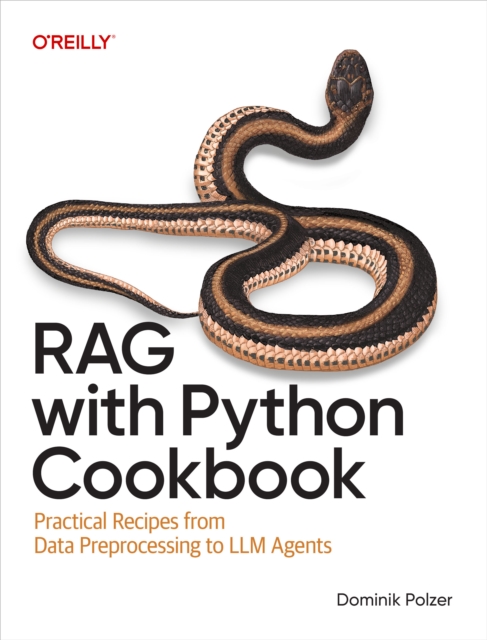
As businesses race to unlock the full potential of large language models (LLMs), a critical challenge has emerged: How do you connect these tools to real-time, external data to solve real-world problems?
As businesses race to unlock the full potential of large language models (LLMs), a critical challenge has emerged: How do you connect these tools to real-time, external data to solve real-world problems?
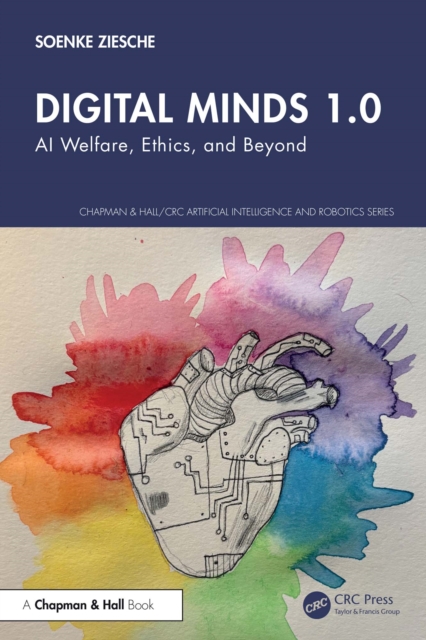
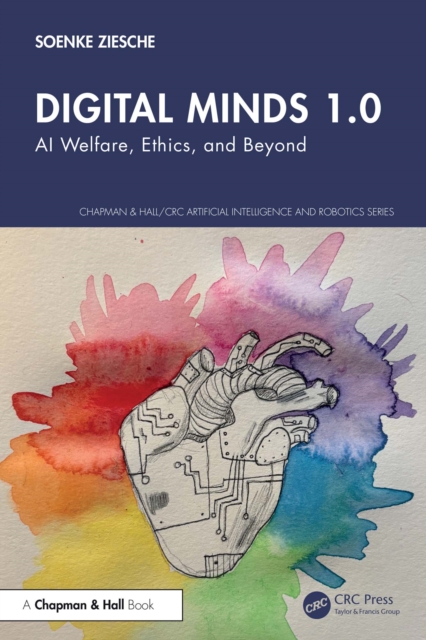
This seminal volume delivers a comprehensive introduction to the emerging field of digital minds, exploring the moral implications of AI systems that can potentially think, feel and experience the world around them in ways that are likely to be very different from humans.
This seminal volume delivers a comprehensive introduction to the emerging field of digital minds, exploring the moral implications of AI systems that can potentially think, feel and experience the world around them in ways that are likely to be very different from humans.
To describe the true behavior of most real-world systems with sufficient accuracy, engineers have to overcome difficulties arising from their lack of knowledge about certain parts of a process or from the impossibility of characterizing it with absolute certainty.