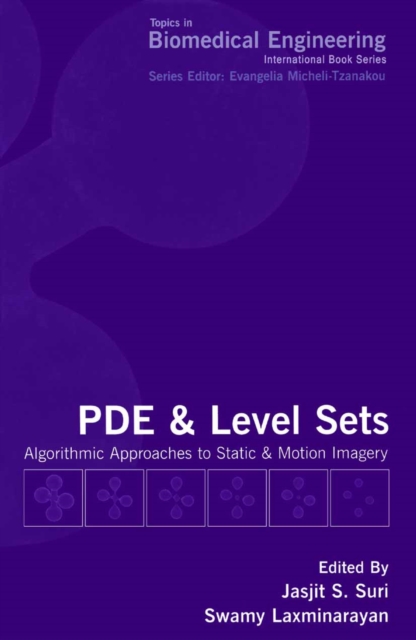
PDE & Level Sets: Algorithmic Approaches to Static & Motion Imagery is specially dedicated to the segmentation of complex shapes from the field of imaging sciences using level sets and PDEs.
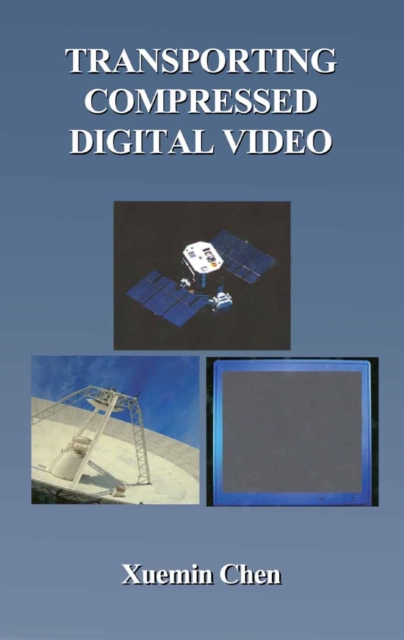
The purpose of Transporting Compressed Digital Video is to introduce fundamental principles and important technologies used in design and analysis of video transport systems for many video applications in digital networks.
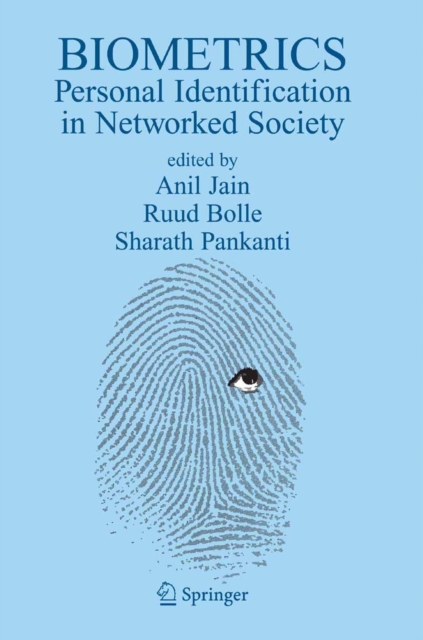
Biometrics: Personal Identification in Networked Society is a comprehensive and accessible source of state-of-the-art information on all existing and emerging biometrics: the science of automatically identifying individuals based on their physiological or behavior characteristics.
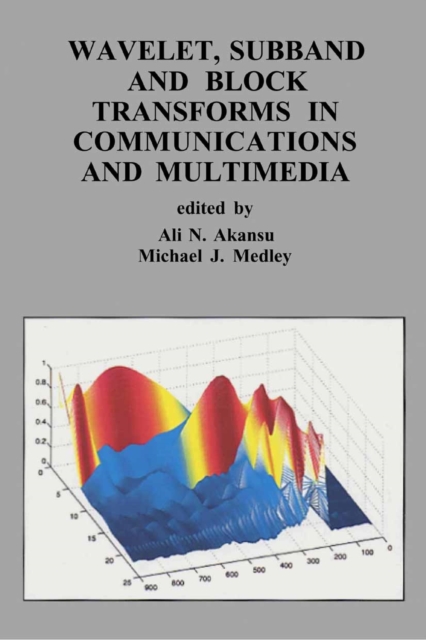
An exciting new development has taken place in the digital era that has captured the imagination and talent of researchers around the globe - wavelet image compression.
Delivering MPEG-4 Based Audio-Visual Services investigates the different aspects of end-to-end multimedia services; content creation, server and service provider, network, and the end-user terminal.
Master GenAI techniques to create images and text using variational autoencoders (VAEs), generative adversarial networks (GANs), LSTMs, and large language models (LLMs)Key FeaturesImplement real-world applications of LLMs and generative AIFine-tune models with PEFT and LoRA to speed up trainingExpand your LLM toolbox with Retrieval Augmented Generation (RAG) techniques, LangChain, and LlamaIndexPurchase of the print or Kindle book includes a free eBook in PDF formatBook DescriptionBecome an expert in Generative AI through immersive, hands-on projects that leverage today's most powerful models for Natural Language Processing (NLP) and computer vision.
The three volume proceedings LNAI 10534 - 10536 constitutes the refereed proceedings of the European Conference on Machine Learning and Knowledge Discovery in Databases, ECML PKDD 2017, held in Skopje, Macedonia, in September 2017.
Image Acquisition and Processing With LabVIEWa combines the general theory of image acquisition and processing, the underpinnings of LabVIEW and the NI Vision toolkit, examples of their applications, and real-world case studies in a clear, systematic, and richly illustrated presentation.
Fragmentation characteristics influence mucking productivity, crusher throughput and energy consumption, plant efficiency, yield and recovery, or the price itself of the end product in the case of industrial minerals and aggregates.
Computational Modelling of Objects Represented in Images: Fundamentals, Methods and Applications III contains all contributions presented at the International Symposium CompIMAGE 2012 - Computational Modelling of Object Presented in Images: Fundamentals, Methods and Applications (Rome, Italy, 5-7 September 2012).
Light detection and ranging, or LiDAR, is an advanced active remote sensing technology developed in the last 30 years to measure variable distances to the Earth.
This comprehensive text/reference presents a broad review of diverse domain adaptation (DA) methods for machine learning, with a focus on solutions for visual applications.
The five-volume set LNCS 11536, 11537, 11538, 11539 and 11540 constitutes the proceedings of the 19th International Conference on Computational Science, ICCS 2019, held in Faro, Portugal, in June 2019.
This volume gathers papers presented at the Workshop on Computational Diffusion MRI (CDMRI'18), which was held under the auspices of the International Conference on Medical Image Computing and Computer Assisted Intervention in Granada, Spain on September 20, 2018.
The four-volume set LNCS 11746-11749 constitutes the proceedings of the 17th IFIP TC 13 International Conference on Human-Computer Interaction, INTERACT 2019, held in Paphos, Cyprus, in September 2019.
The two-volume set LNCS 11961 and 11962 constitutes the thoroughly refereed proceedings of the 25th International Conference on MultiMedia Modeling, MMM 2020, held in Daejeon, South Korea, in January 2020.
Bring a new degree of interconnectivity to your world by building your own intelligent robotsKey FeaturesLeverage fundamentals of AI and roboticsWork through use cases to implement various machine learning algorithmsExplore Natural Language Processing (NLP) concepts for efficient decision making in robotsBook DescriptionArtificial Intelligence for Robotics starts with an introduction to Robot Operating Systems (ROS), Python, robotic fundamentals, and the software and tools that are required to start out with robotics.
Create image processing, object detection and face recognition apps by leveraging the power of machine learning and deep learning with OpenCV 4 and Qt 5Key FeaturesGain practical insights into code for all projects covered in this bookUnderstand modern computer vision concepts such as character recognition, image processing and modificationLearn to use a graphics processing unit (GPU) and its parallel processing power for filtering images quicklyBook DescriptionOpenCV and Qt have proven to be a winning combination for developing cross-platform computer vision applications.
This insightful text presents a guide to video distribution networks (VDNs), providing illuminating perspectives on reducing power consumption in IP-based video networks from an authoritative selection of experts in the field.
Printed in ColorDevelop an array of effective strategies and blueprints to approach any new data analysis on the Kaggle platform and create Notebooks with substance, style and impactLeverage the power of Generative AI with Kaggle ModelsPurchase of the print or Kindle book includes a free PDF eBookKey FeaturesMaster the basics of data ingestion, cleaning, exploration, and prepare to build baseline modelsWork robustly with any type, modality, and size of data, be it tabular, text, image, video, or soundImprove the style and readability of your Notebooks, making them more impactful and compellingBook DescriptionDeveloping Kaggle Notebooks introduces you to data analysis, with a focus on using Kaggle Notebooks to simultaneously achieve mastery in this fi eld and rise to the top of the Kaggle Notebooks tier.
Deep Network Design for Medical Image Computing: Principles and Applications covers a range of MIC tasks and discusses design principles of these tasks for deep learning approaches in medicine.
Advanced AI and Data Science Applications explores how the latest developments in artificial intelligence (AI) and data science are transforming diverse domains.
Biomedical Image Synthesis and Simulation: Methods and Applications presents the basic concepts and applications in image-based simulation and synthesis used in medical and biomedical imaging.
Deep Learning Models for Medical Imaging explains the concepts of Deep Learning (DL) and its importance in medical imaging and/or healthcare using two different case studies: a) cytology image analysis and b) coronavirus (COVID-19) prediction, screening, and decision-making, using publicly available datasets in their respective experiments.
Computer-Aided Oral and Maxillofacial Surgery: Developments, Applications, and Future Perspectives is an ideal resource for biomedical engineers and computer scientists, clinicians and clinical researchers looking for an understanding on the latest technologies applied to oral and maxillofacial surgery.
The four-volume set LNCS 13311 - 13314 constitutes the refereed proceedings of the 14th International Conference on Cross-Cultural Design, CCD 2022, which was held as part of HCI International 2022 and took place virtually during June 26 - July 1, 2022.
The four-volume set LNCS 13311 - 13314 constitutes the refereed proceedings of the 14th International Conference on Cross-Cultural Design, CCD 2022, which was held as part of HCI International 2022 and took place virtually during June 26 - July 1, 2022.
Hybrid Computational Intelligence: Challenges and Utilities is a comprehensive resource that begins with the basics and main components of computational intelligence.
This book discusses recent advances in wearable technologies and personal monitoring devices, covering topics such as skin contact-based wearables (electrodes), non-contact wearables, the Internet of things (IoT), and signal processing for wearable devices.
Quantitative Magnetic Resonance Imaging is a 'go-to' reference for methods and applications of quantitative magnetic resonance imaging, with specific sections on Relaxometry, Perfusion, and Diffusion.
This book discusses computer vision, a noncontact as well as a nondestructive technique involving the development of theoretical and algorithmic tools for automatic visual understanding and recognition which finds huge applications in agricultural productions.
This book reviews the state of the art in deep learning approaches to high-performance robust disease detection, robust and accurate organ segmentation in medical image computing (radiological and pathological imaging modalities), and the construction and mining of large-scale radiology databases.