This book contains original, peer-reviewed research articles from the 5th International Conference on Recent Trends in Machine Learning, IoT, Smart Cities, and Applications, held in Hyderabad, India on 28-29 March 2024.
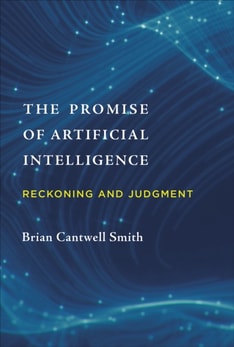
An examination of the implications for society of rapidly advancing artificial intelligence systems, combining a humanities perspective with technical analysis; includes exercises and discussion questions.
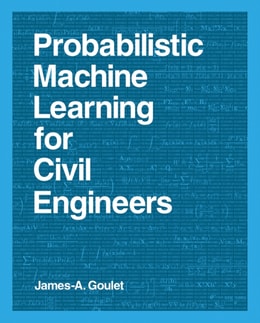
An introduction to key concepts and techniques in probabilistic machine learning for civil engineering students and professionals; with many step-by-step examples, illustrations, and exercises.
A clear-eyed look at how AI can complement (rather than eliminate) human jobs, with real-world examples from companies that range from Netflix to Walmart.
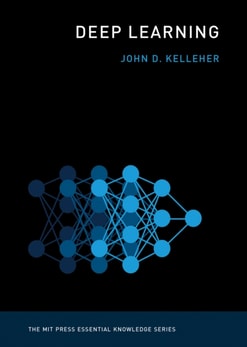
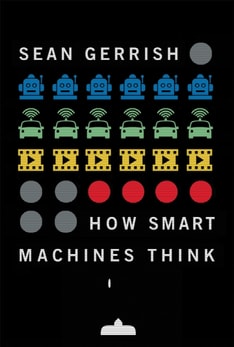
An accessible introduction to the artificial intelligence technology that enables computer vision, speech recognition, machine translation, and driverless cars.
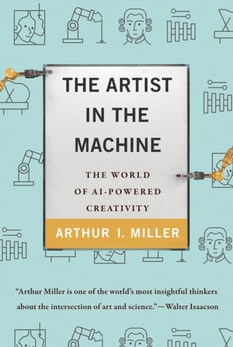
An authority on creativity introduces us to AI-powered computers that are creating art, literature, and music that may well surpass the creations of humans.
Key concepts, definitions, examples, and historical contexts for understanding smart cities, along with discussions of both drawbacks and benefits of this approach to urban problems.
An accessible synthesis of ethical issues raised by artificial intelligence that moves beyond hype and nightmare scenarios to address concrete questions.
The significantly expanded and updated new edition of a widely used text on reinforcement learning, one of the most active research areas in artificial intelligence.
How deep learning—from Google Translate to driverless cars to personal cognitive assistants—is changing our lives and transforming every sector of the economy.
A hands-on approach to tasks and techniques in data stream mining and real-time analytics, with examples in MOA, a popular freely available open-source software framework.
An argument that qualitative representations—symbolic representations that carve continuous phenomena into meaningful units—are central to human cognition.
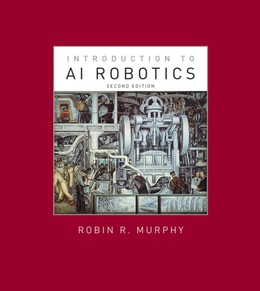
A comprehensive survey of artificial intelligence algorithms and programming organization for robot systems, combining theoretical rigor and practical applications.
An introduction to a broad range of topics in deep learning, covering mathematical and conceptual background, deep learning techniques used in industry, and research perspectives.
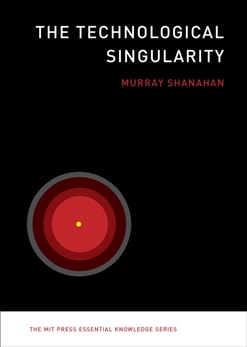
How developments in science and technology may enable the emergence of purely digital minds—intelligent machines equal to or greater in power than the human brain.
A concise, nontechnical overview of the development of machine translation, including the different approaches, evaluation issues, and major players in the industry.
An overarching framework for comparing and steering complex adaptive systems is developed through understanding the mechanisms that generate their intricate signal/boundary hierarchies.
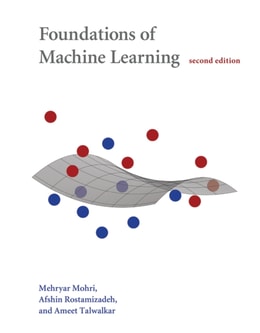
Cutting-edge machine learning principles, practices, and applicationsThis comprehensive textbook explores the theoretical under pinnings of learning and equips readers with the knowledge needed to apply powerful machine learning techniques to solve challenging real-world problems.
This comprehensive guide, featuring hand-picked examples of daily use cases, will walk you through the end-to-end predictive model-building cycle using the latest techniques and industry tricks.
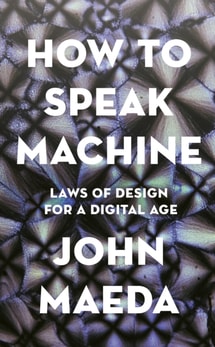
John Maeda is one of the world's preeminent thinkers on technology and design, and in How to Speak Machine, he offers a set of simple laws that govern not only the computers of today, but the unimaginable machines of the future.
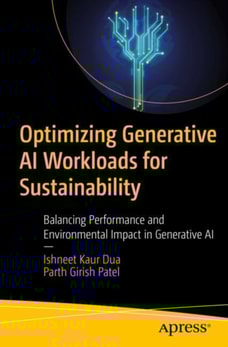
This guide covers the fundamental technical principles and various business applications of Generative AI for planning, developing, and evaluating AI-driven products.
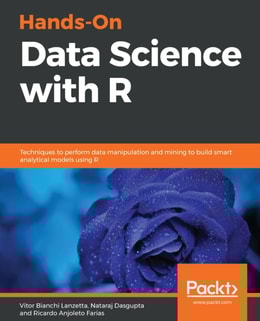
A hands-on guide for professionals to perform various data science tasks in RKey FeaturesExplore the popular R packages for data scienceUse R for efficient data mining, text analytics and feature engineeringBecome a thorough data science professional with the help of hands-on examples and use-cases in RBook DescriptionR is the most widely used programming language, and when used in association with data science, this powerful combination will solve the complexities involved with unstructured datasets in the real world.
Insightful projects to master deep learning and neural network architectures using Python and KerasKey FeaturesExplore deep learning across computer vision, natural language processing (NLP), and image processingDiscover best practices for the training of deep neural networks and their deploymentAccess popular deep learning models as well as widely used neural network architecturesBook DescriptionDeep learning has been gradually revolutionizing every field of artificial intelligence, making application development easier.