This volume discusses recent advances in Artificial Intelligence (AI) applications in smart, internet-connected societies, highlighting three key focus areas.
This book explores how visualization provides an effective way of improving not only the interpretability but also the generalization capabilities of machine learning models.
This book is written both for readers entering the field, and for practitioners with a background in AI and an interest in developing real-world applications.
This book is devoted to the emerging field of integrated visual knowledge discovery that combines advances in artificial intelligence/machine learning and visualization/visual analytic.
This book is the result of a multi-year research project led and sponsored by the University of Chieti-Pescara, National Chengchi University, University of Salamanca, and Osaka University.
This book sheds light on the challenges facing social media in combating malicious accounts, and aims to introduce current practices to address the challenges.
This SpringerBrief presents novel methods of approaching challenging problems in the reconstruction of accurate 3D models and serves as an introduction for further 3D reconstruction methods.
This book encompasses a systematic exploration of Cybersecurity Data Science (CSDS) as an emerging profession, focusing on current versus idealized practice.
This book constitutes the refereed proceedings of the Second MICCAI Workshop on Domain Adaptation and Representation Transfer, DART 2020, and the First MICCAI Workshop on Distributed and Collaborative Learning, DCL 2020, held in conjunction with MICCAI 2020 in October 2020.
This proceedings book includes the results from the International Conference on Deep Learning, Artificial Intelligence and Robotics, held in Malaviya National Institute of Technology, Jawahar Lal Nehru Marg, Malaviya Nagar, Jaipur, Rajasthan, 302017.
This textbook describes the hands-on application of data science techniques to solve problems in manufacturing and the Industrial Internet of Things (IIoT).
This book constitutes the refereed proceedings of the 10th International Workshop on Clinical Image-Based Procedures, CLIP 2021, Second MICCAI Workshop on Distributed and Collaborative Learning, DCL 2021, First MICCAI Workshop, LL-COVID19, First Secure and Privacy-Preserving Machine Learning for Medical Imaging Workshop and Tutorial, PPML 2021, held in conjunction with MICCAI 2021, in October 2021.
This second edition textbook covers a coherently organized framework for text analytics, which integrates material drawn from the intersecting topics of information retrieval, machine learning, and natural language processing.
This book presents a unique, understandable view of machine learning using many practical examples and access to free professional software and open source code.
Artificial intelligent systems, which offer great improvement in healthcare sector assisted by machine learning, wireless communications, data analytics, cognitive computing, and mobile computing provide more intelligent and convenient solutions and services.
This textbook presents methods and techniques for time series analysis and forecasting and shows how to use Python to implement them and solve data science problems.
The book first explores the cybersecurity's landscape and the inherent susceptibility of online communication system such as e-mail, chat conversation and social media in cybercrimes.
This book analyzes the multimodal verbal and nonverbal behavior of humans in both an artificial game, based on the well-known Mafia and Resistance games, as well as selected other settings.
This book constitutes late breaking papers from the 22nd International Conference on Human-Computer Interaction, HCII 2020, which was held in July 2020.
This book discusses the principles and practical applications of data science, addressing key topics including data wrangling, statistics, machine learning, data visualization, natural language processing and time series analysis.
This book presents the proceedings of The 2020 International Conference on Machine Learning and Big Data Analytics for IoT Security and Privacy (SPIoT-2020), held in Shanghai, China, on November 6, 2020.
This book constitutes the proceedings of the 12th International Workshop on Statistical Atlases and Computational Models of the Heart, STACOM 2021, as well as the M&Ms-2 Challenge: Multi-Disease, Multi-View and Multi-Center Right Ventricular Segmentation in Cardiac MRI Challenge.
The two-volume set LNCS 12572 and 1273 constitutes the thoroughly refereed proceedings of the 27th International Conference on MultiMedia Modeling, MMM 2021, held in Prague, Czech Republic, in June2021.
This book reviews the development of physics-based modeling and sensor-based data fusion for optimizing medical decision making in connection with spatiotemporal cardiovascular disease processes.
This handbook discusses challenges and limitations in existing solutions, and presents state-of-the-art advances from both academia and industry, in big data analytics and digital forensics.
This contributed volume provides the state-of-the-art development on security and privacy for cyber-physical systems (CPS) and industrial Internet of Things (IIoT).
With approximately 2500 problems, this book provides a collection of practical problems on the basic and advanced data structures, design, and analysis of algorithms.
This book includes chapters which discuss effective and efficient approaches in dealing with various aspects of social media analysis by using machine learning techniques from clustering to deep learning.
This guide covers the fundamental technical principles and various business applications of Generative AI for planning, developing, and evaluating AI-driven products.
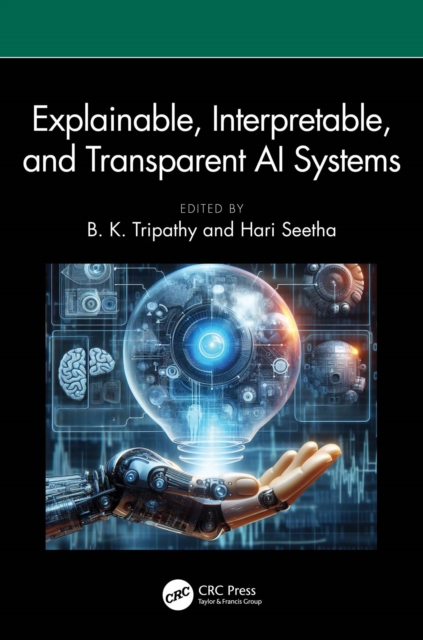
Transparent Artificial Intelligence (AI) systems facilitate understanding of the decision-making process and provide opportunities in various aspects of explaining AI models.
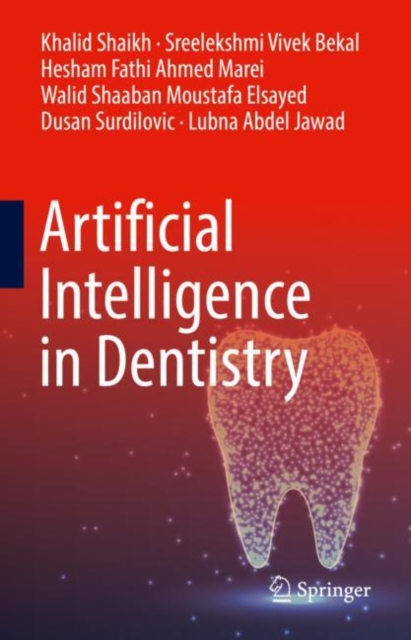
This book provides an introduction to next-generation applications and technologies for improving diagnostic accuracy and prediction of treatment outcomes in dentistry through the use of artificial intelligence (AI) and machine learning (ML).
This book provides an accessible introduction to the foundations of machine learning and deep learning in medicine for medical students, researchers, and professionals who are not necessarily initiated in advanced mathematics but yearn for a better understanding of this disruptive technology and its impact on medicine.
Machine learning and artificial intelligence (AI) are powerful tools that create predictive models, extract information, and help make complex decisions.
Reinforcement learning is a powerful tool in artificial intelligence in which virtual or physical agents learn to optimize their decision making to achieve long-term goals.