In the ever-accelerating tapestry of our digital age, the symbiotic relationship between computational intelligence and cyber security has become the linchpin of progress.
Identifying some of the most influential algorithms that are widely used in the data mining community, The Top Ten Algorithms in Data Mining provides a description of each algorithm, discusses its impact, and reviews current and future research.
With social media producing such huge amounts of data, the importance of gathering this rich data, often called "e;the digital gold rush"e;, processing it and retrieving information is vital.
A Framework for Managing, Measuring, and Predicting Attributes of Software Development Products and ProcessesReflecting the immense progress in the development and use of software metrics in the past decades, Software Metrics: A Rigorous and Practical Approach, Third Edition provides an up-to-date, accessible, and comprehensive introduction to software metrics.
The book discusses the foundations of intelligent quantum information processing applied to several real-life engineering problems, including intelligent quantum systems, intelligent quantum communication, intelligent process optimization, and intelligent quantum distributed networks.
oneAPI is a unified programming model and software development kit (SDK) from Intel that empowers software developers to generate high-performance applications that can run on different devices, comprising CPUs, GPUs, FPGAs, and other accelerators.
oneAPI is a unified programming model and software development kit (SDK) from Intel that empowers software developers to generate high-performance applications that can run on different devices, comprising CPUs, GPUs, FPGAs, and other accelerators.
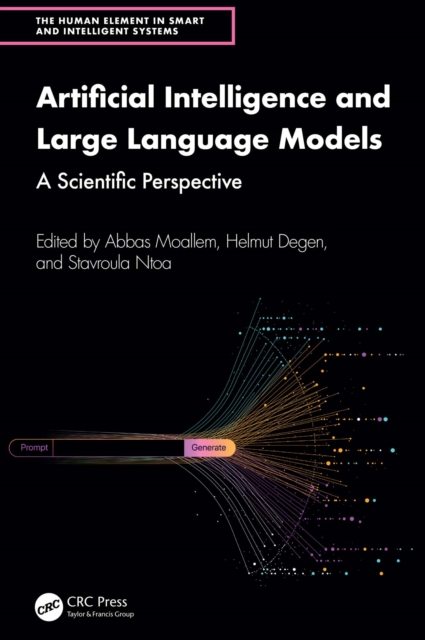
With the latest developments in generative artificial intelligence (AI) and large language model (LLM) applications, like ChatGPT and Gemini, millions of people have started using them in their personal and professional lives.
The book discusses the foundations of intelligent quantum information processing applied to several real-life engineering problems, including intelligent quantum systems, intelligent quantum communication, intelligent process optimization, and intelligent quantum distributed networks.
This book provides an in-depth analysis of the design and implementation of a smartphone sensor-based Human Activity Recognition (HAR) system using advanced learning models.
The breadth of problems that can be solved with data science is astonishing, and this book provides the required tools and skills for a broad audience.
This book presents cutting-edge, effective methods of artificial intelligence and machine learning for data modeling, with applications to the important and challenging area of air pollution.
Based on the author's introductory course at the University of Oregon, Explorations in Computing: An Introduction to Computer Science focuses on the fundamental idea of computation and offers insight into how computation is used to solve a variety of interesting and important real-world problems.
Introduction to Mathematical Modeling and Computer Simulations, Second Edition continues to serve as an engaging and accessible textbook for undergraduates studying mathematical modeling and computer simulations.
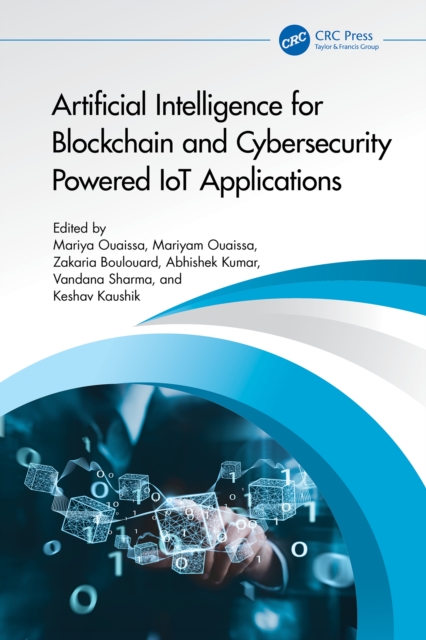
The objective of this book is to showcase recent solutions and discuss the opportunities that AI, blockchain, and even their combinations can present to solve the issue of Internet of Things (IoT) security.
Introduction to Mathematical Modeling and Computer Simulations, Second Edition continues to serve as an engaging and accessible textbook for undergraduates studying mathematical modeling and computer simulations.
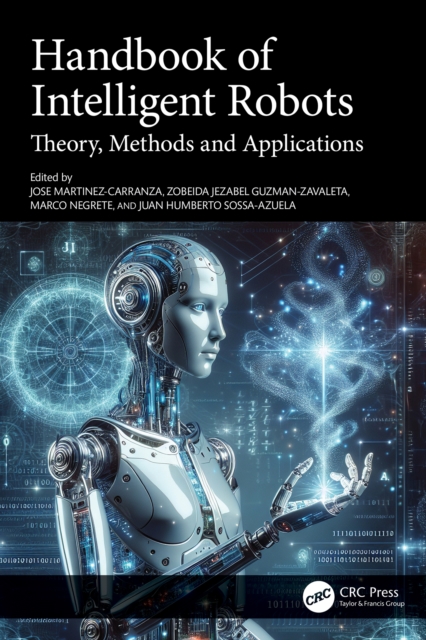
This handbook introduces some of the most relevant techniques used to develop intelligent robotic systems and provides several examples of applications where robots equipped with AI are deployed to solve a task.
The objective of this book is to showcase recent solutions and discuss the opportunities that AI, blockchain, and even their combinations can present to solve the issue of Internet of Things (IoT) security.
Used by corporations, industry, and government to inform and fuel everything from focused advertising to homeland security, data mining can be a very useful tool across a wide range of applications.
With the latest developments in generative artificial intelligence (AI) and large language model (LLM) applications, like ChatGPT and Gemini, millions of people have started using them in their personal and professional lives.
Computer vision has made enormous progress in recent years, and its applications are multifaceted and growing quickly, while many challenges still remain.
Effective decision support systems (DSS) are quickly becoming key to businesses gaining a competitive advantage, and the effectiveness of these systems depends on the ability to construct, maintain, and extract information from data warehouses.
Artificial Intelligence for Natural Language Processing offers a comprehensive exploration of how advanced computational methods are transforming the way machines understand human language.
DDoS Attacks: Evolution, Detection, Prevention, Reaction, and Tolerance discusses the evolution of distributed denial-of-service (DDoS) attacks, how to detect a DDoS attack when one is mounted, how to prevent such attacks from taking place, and how to react when a DDoS attack is in progress, with the goal of tolerating the attack.
Multi-objective programming (MOP) can simultaneously optimize multi-objectives in mathematical programming models, but the optimization of multi-objectives triggers the issue of Pareto solutions and complicates the derived answers.
With social media producing such huge amounts of data, the importance of gathering this rich data, often called "e;the digital gold rush"e;, processing it and retrieving information is vital.
This book offers a comprehensive and application-oriented exploration of Artificial Intelligence (AI) and Natural Language Processing (NLP), addressing both foundational principles and modern, data-driven methodologies.
This book explores and highlights the latest techniques and applications of artificial intelligence (AI) and fuzzy logic in the development of intelligent transportation systems (ITS).
Data and security breaches can cost organizations millions and result in bad publicity and lost income, with humans often being regarded as the "e;weakest link"e; in cybersecurity incidents.
Artificial Intelligence for Natural Language Processing offers a comprehensive exploration of how advanced computational methods are transforming the way machines understand human language.
This handbook introduces some of the most relevant techniques used to develop intelligent robotic systems and provides several examples of applications where robots equipped with AI are deployed to solve a task.
The research area of music information retrieval has gradually evolved to address the challenges of effectively accessing and interacting large collections of music and associated data, such as styles, artists, lyrics, and reviews.
The area of biologically inspired computing, or biological computation, involves the development of new, biologically based techniques for solving difficult computational problems.
Most of the research aimed at counterterrorism, fraud detection, or other forensic applications assumes that this is a specialized application domain for mainstream knowledge discovery.
Statistical Data Mining Using SAS Applications, Second Edition describes statistical data mining concepts and demonstrates the features of user-friendly data mining SAS tools.