Updated for OpenCV 4 and Python 3, this book covers the latest on depth cameras, 3D tracking, augmented reality, and deep neural networks, helping you solve real-world computer vision problems with practical codeKey FeaturesBuild powerful computer vision applications in concise code with OpenCV 4 and Python 3Learn the fundamental concepts of image processing, object classification, and 2D and 3D trackingTrain, use, and understand machine learning models such as Support Vector Machines (SVMs) and neural networksBook DescriptionComputer vision is a rapidly evolving science, encompassing diverse applications and techniques.
Create real-world machine learning solutions using NumPy, pandas, matplotlib, and scikit-learnKey FeaturesDevelop a range of healthcare analytics projects using real-world datasetsImplement key machine learning algorithms using a range of libraries from the Python ecosystemAccomplish intermediate-to-complex tasks by building smart AI applications using neural network methodologiesBook DescriptionMachine Learning (ML) has changed the way organizations and individuals use data to improve the efficiency of a system.
Create image processing, object detection and face recognition apps by leveraging the power of machine learning and deep learning with OpenCV 4 and Qt 5Key FeaturesGain practical insights into code for all projects covered in this bookUnderstand modern computer vision concepts such as character recognition, image processing and modificationLearn to use a graphics processing unit (GPU) and its parallel processing power for filtering images quicklyBook DescriptionOpenCV and Qt have proven to be a winning combination for developing cross-platform computer vision applications.
Simplify next-generation deep learning by implementing powerful generative models using Python, TensorFlow and KerasKey FeaturesUnderstand the common architecture of different types of GANsTrain, optimize, and deploy GAN applications using TensorFlow and KerasBuild generative models with real-world data sets, including 2D and 3D dataBook DescriptionDeveloping Generative Adversarial Networks (GANs) is a complex task, and it is often hard to find code that is easy to understand.
Build and train scalable neural network models on various platforms by leveraging the power of Caffe2Key FeaturesMigrate models trained with other deep learning frameworks on Caffe2Integrate Caffe2 with Android or iOS and implement deep learning models for mobile devicesLeverage the distributed capabilities of Caffe2 to build models that scale easilyBook DescriptionCaffe2 is a popular deep learning library used for fast and scalable training and inference of deep learning models on various platforms.
Turn futuristic ideas about computer vision and machine learning into demonstrations that are both functional and entertainingKey FeaturesBuild OpenCV 4 apps with Python 2 and 3 on desktops and Raspberry Pi, Java on Android, and C# in UnityDetect, classify, recognize, and measure real-world objects in real-timeWork with images from diverse sources, including the web, research datasets, and various camerasBook DescriptionOpenCV 4 is a collection of image processing functions and computer vision algorithms.
A practical guide to building high performance systems for object detection, segmentation, video processing, smartphone applications, and moreKey FeaturesDiscover how to build, train, and serve your own deep neural networks with TensorFlow 2 and KerasApply modern solutions to a wide range of applications such as object detection and video analysisLearn how to run your models on mobile devices and web pages and improve their performanceBook DescriptionComputer vision solutions are becoming increasingly common, making their way into fields such as health, automobile, social media, and robotics.
Learn how to deploy effective deep learning solutions on cross-platform applications built using TensorFlow Lite, ML Kit, and FlutterKey FeaturesWork through projects covering mobile vision, style transfer, speech processing, and multimedia processingCover interesting deep learning solutions for mobileBuild your confidence in training models, performance tuning, memory optimization, and neural network deployment through every projectBook DescriptionDeep learning is rapidly becoming the most popular topic in the mobile app industry.
Implement supervised and unsupervised machine learning algorithms using C++ libraries such as PyTorch C++ API, Caffe2, Shogun, Shark-ML, mlpack, and dlib with the help of real-world examples and datasetsKey FeaturesBecome familiar with data processing, performance measuring, and model selection using various C++ librariesImplement practical machine learning and deep learning techniques to build smart modelsDeploy machine learning models to work on mobile and embedded devicesBook DescriptionC++ can make your machine learning models run faster and more efficiently.
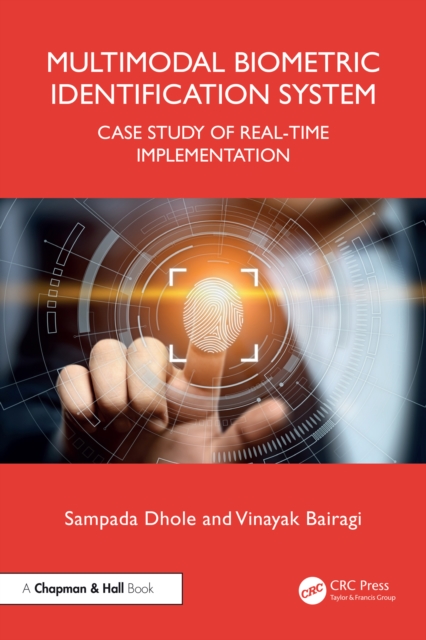
This book presents a novel method of multimodal biometric fusion using a random selection of biometrics, which covers a new method of feature extraction, a new framework of sensor-level and feature-level fusion.
Anomaly detection in video surveillance stands at the core of numerous real-world applications that have broad impact and generate significant academic and industrial value.
Deep Learning for Multimedia Processing Applications is a comprehensive guide that explores the revolutionary impact of deep learning techniques in the field of multimedia processing.
Automatic biometrics recognition techniques are increasingly important in corporate and public security systems and have increased in methods due to rapid field development.
Anomaly detection in video surveillance stands at the core of numerous real-world applications that have broad impact and generate significant academic and industrial value.
This is the first book on digital fingerprinting that comprehensively covers the major areas of study in a range of information security areas including authentication schemes, intrusion detection, forensic analysis and more.
"e;Ultra Low Bit-Rate Speech Coding"e; focuses on the specialized topic of speech coding at very low bit-rates of 1 Kbits/sec and less, particularly at the lower ends of this range, down to 100 bps.
Many industry experts consider unsupervised learning the next frontier in artificial intelligence, one that may hold the key to general artificial intelligence.
Many industry experts consider unsupervised learning the next frontier in artificial intelligence, one that may hold the key to general artificial intelligence.
In the second edition of this practical book, four Cloudera data scientists present a set of self-contained patterns for performing large-scale data analysis with Spark.
In the second edition of this practical book, four Cloudera data scientists present a set of self-contained patterns for performing large-scale data analysis with Spark.
Apply the Processing language to tasks involved in computer vision--tasks such as edge and corner detection, recognition of motion between frames in a video, recognition of objects, matching of feature points and shapes in different frames for tracking purposes, and more.
This book is meant as a textbook for undergraduate and graduate students who are willing to understand essential elements of machine learning from both a theoretical and a practical perspective.
Current cameras are poor imitations of the human eye and close descen- dants in their design of ideas and a technology that are more than a century old.
In the fall of 1999, I was asked to teach a course on computer intrusion detection for the Department of Mathematical Sciences of The Johns Hopkins University.
The papers in this volume discuss important methodological advances in several important areas, including multivariate failure time data and interval censored data.
An attempt is made in this book to give scientists a detailed working knowledge of the powerful mathematical tools available to aid in data interpretation, especially when con- fronted with large data sets incorporating many parameters.
Automatic personal authentication using biometric information is becoming more essential in applications of public security, access control, forensics, banking, etc.