The two-volume set LNCS constitutes the proceedings of the 32nd European Conference on Parallel and Distributed Processing, Euro-Par 2026, which took place in Pisa, Italy, during August 24–28, 2026.
This book gathers research papers presented at DoSIER 2025 (Seventh Doctoral Symposium on Intelligence Enabled Research, to be held at RCC Institute of Information Technology, Kolkata, West Bengal, India, from 21-22 November 2025).
This book gathers research papers presented at DoSIER 2025 (Seventh Doctoral Symposium on Intelligence Enabled Research, to be held at RCC Institute of Information Technology, Kolkata, West Bengal, India, from 21-22 November 2025).
This book provides a comprehensive collection of recent research addressing practical and emerging challenges in intelligent technologies and smart environments.
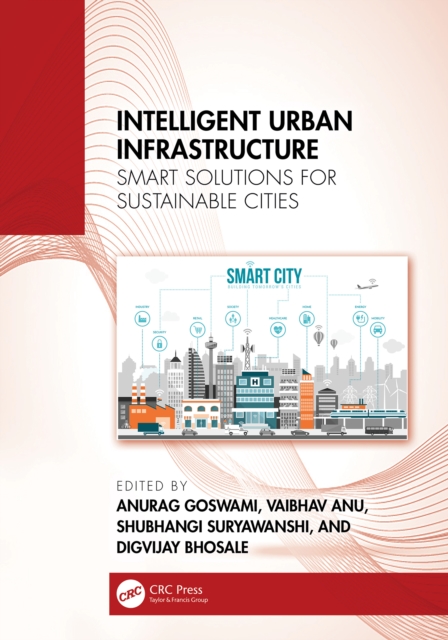
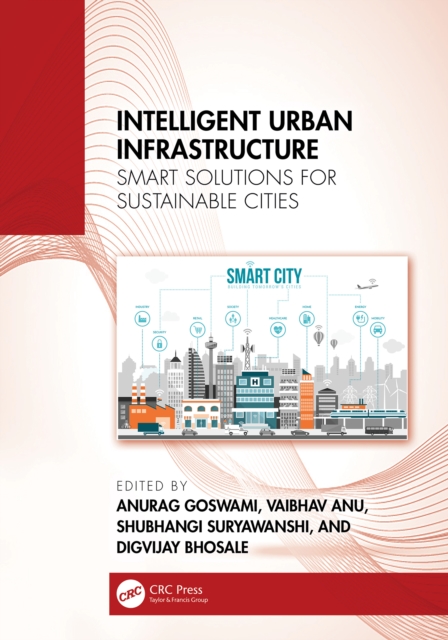
Intelligent Urban Infrastructure: Smart Solutions for Sustainable Cities explores how emerging digital technologies are reshaping the design, management, and sustainability of modern cities.
This book constitutes the proceedings of the 1st Workshop on EI-MiGA@IJCAI 2026 for Human Behavior Analysis and Interaction for Emotional Intelligence, in conjunction with IJCAI 2026, held in Bremen, Germany, during August 15-21, 2026.
This book constitutes the proceedings of the 1st Workshop on EI-MiGA@IJCAI 2026 for Human Behavior Analysis and Interaction for Emotional Intelligence, in conjunction with IJCAI 2026, held in Bremen, Germany, during August 15-21, 2026.
Intelligent Urban Infrastructure: Smart Solutions for Sustainable Cities explores how emerging digital technologies are reshaping the design, management, and sustainability of modern cities.
This book explores the transformative impact of Artificial Intelligence (AI) on precision agriculture and rural labor markets, critically analyzing the adoption dynamics of AI tools, such as machine learning, computer vision, and expert systems, while addressing broader socio-economic implications, particularly related to employment transformation and digital skills development.
This book constitutes the proceedings of the 26th International Conference on Internet Computing and IoT, ICOMP 2025, and the 27th International Conference on Artificial Intelligence, ICAI 2025.
This book provides a comprehensive overview of adaptive modeling techniques and explores various modeling approaches, including system dynamics, agent-based modeling, and integrated assessment modeling, with a focus on key environmental challenges.
This book explores the transformative impact of Artificial Intelligence (AI) on precision agriculture and rural labor markets, critically analyzing the adoption dynamics of AI tools, such as machine learning, computer vision, and expert systems, while addressing broader socio-economic implications, particularly related to employment transformation and digital skills development.
These CCIS five-part volumes constitutes the referred proceedings of the 14th International Symposium on Information and Communication Technology, SOICT 2025, held in Nha Trang, Vietnam, during December 12–14, 2025.
These CCIS five-part volumes constitutes the referred proceedings of the 14th International Symposium on Information and Communication Technology, SOICT 2025, held in Nha Trang, Vietnam, during December 12–14, 2025.
The 4-volume set LNCS 16972-16975 constitutes the proceedings of the 20th International Conference on Document Analysis and Recognition, ICDAR 2026, which took place in Vienna, Austria, from August 31 to September 2, 2026.
The two-volume set LNCS constitutes the proceedings of the 32nd European Conference on Parallel and Distributed Processing, Euro-Par 2026, which took place in Pisa, Italy, during August 24–28, 2026.
This book provides a comprehensive collection of recent research addressing practical and emerging challenges in intelligent technologies and smart environments.
This book addresses all aspects of artificial perception in forest environments, including localization, mapping, traversability analysis, semantic segmentation, metric-semantic mapping, scene understanding, and multi-robot architectures.
This volume presents peer-reviewed papers accepted for presentation at the 2026 International Conference on Information Technology & Systems (ICITS’26), held at the Universidad Tecnológica de Honduras (UTH), Roatán Island, Honduras, from February 16 to 18, 2026.
This five-volume set, LNCS 16985–16989, constitutes the refereed proceedings of the 19th International Conference on Parallel Problem Solving from Nature, PPSN 2026, held in Trento, Italy, during August 29-September 2, 2026.
This book systematically reviews XAI techniques and introduces how these XAI techniques can be systematically applied to SCM, including methodology, system architecture, and applications.
This five-volume set, LNCS 16985–16989, constitutes the refereed proceedings of the 19th International Conference on Parallel Problem Solving from Nature, PPSN 2026, held in Trento, Italy, during August 29-September 2, 2026.
This book provides a comprehensive collection of recent research addressing practical and emerging challenges in intelligent technologies and smart environments.
The book highlights emerging developments in intelligent computing, communication technologies, robotics, embedded systems, and data-driven innovations that are shaping the future of smart and autonomous systems.
This book constitutes the refereed proceedings of the 9th EAI International Conference on Future Access Enablers for Ubiquitous and Intelligent Infrastructures, FABULOUS 2025, held in Stará Lesná, Slovakia, during October 8–10, 2025.
This book constitutes the refereed proceedings of the 9th EAI International Conference on Future Access Enablers for Ubiquitous and Intelligent Infrastructures, FABULOUS 2025, held in Stará Lesná, Slovakia, during October 8–10, 2025.
Advanced Smart Grid Technologies: Industry Applications and Integration Strategies offers a comprehensive exploration of the cutting-edge innovations and integration techniques shaping the future of power systems.
Digital Underworld and Cybercrime: A Technical and Legal Perspective provides a timely and in-depth exploration of cybercrime as a defining challenge of the digital age.
What if your AI systems could retrieve information, reason over complex knowledge, plan actions, and continuously learnwith enterprise-grade security and compliance?
From Algorithms to Evidence: Using GenAI in Evaluation Practice offers a timely, practice-grounded guide for evaluators and development professionals navigating the fast-moving world of generative AI.
Digital Underworld and Cybercrime: A Technical and Legal Perspective provides a timely and in-depth exploration of cybercrime as a defining challenge of the digital age.
Is artificial intelligence (AI) a question answering machine, a helpful companion, a persuasive storyteller, a deceitful often hidden system, or a global industry?
This book focuses on theories and applications of mathematics, statistics, and computing, where they intersect to address real-world problems in various industries.